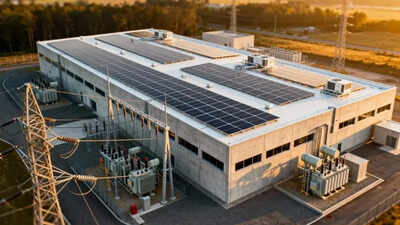
 According to a Gallup poll, most Americans oppose building artificial intelligence-powered data centers near their homes more than they oppose nuclear power plants. This shows that people are more afraid of AI technologies having a direct impact on the environment and communities.A recent survey found that 71% of U.S. adults oppose the construction of local AI data centers, with 48% strongly opposed. In contrast, 53% of respondents opposed locating a nuclear power plant nearby. Gallup noted that opposition to nuclear power has never exceeded 63% since it began asking the question in 2001. The results come as AI companies continue to expand their infrastructure to support growing demand for computing power, while local communities raise concerns about water use, power consumption, traffic, and noise.
A.I. data center opponents Associated with resource and quality of life concerns
According to a Gallup tracker, about half of respondents who oppose data centers cite the strain on water and energy systems and the potential loss of agricultural land. About 22% expressed concerns about quality of life, including increased traffic, and one in five were concerned about increased utility bills. Noise pollution was also a frequently mentioned concern. Wanny Park, CEO of PADO AI, argued that public resistance is partly due to limited understanding of how data centers operate and their economic impact.“Isn’t that insane?” asked Wanny Park, an energy industry veteran and CEO of PADO AI, an LG NOVA-backed platform for data center energy management. “I think uninformed stakeholders just don’t really understand what the opportunities are.” he told Fortune.Mr. Park added: “It was just a lack of education. There was a lack of proper marketing and communication about what this does. And you want to argue that we didn’t do a good enough job of that, right?”
Demand for AI infrastructure continues to grow
The growing demands of AI workloads have made data centers increasingly resource-intensive. Data centers in the United States account for approximately 4.4% of the nation’s electricity consumption, up from 1.9% in 2018, and some estimates suggest that this number could rise to 12% by 2028. Total demand from U.S. data centers is expected to increase from 80 GW in 2025 to 150 GW in 2028. Studies cited in the report also show that AI alone could account for 24 million to 44 million tonnes of CO₂ emissions each year by 2030. Additionally, data centers have been found to use approximately 17 billion gallons of water in 2023, three times the amount used in 2014.Despite the growing opposition, Park said restrictions or moratoriums may simply move projects elsewhere rather than halt development.“The people developing these sites just don’t care. If they want to shut us down here, we’re going to go somewhere else.” he added.Park also pointed to the continued demand for AI computing infrastructure, saying: “Even if you track it, I’m an XYZ developer and this site I’m going to develop is going to be online in three years, and that compute is already pre-booked, like three years in advance. That’s the amount of demand.”