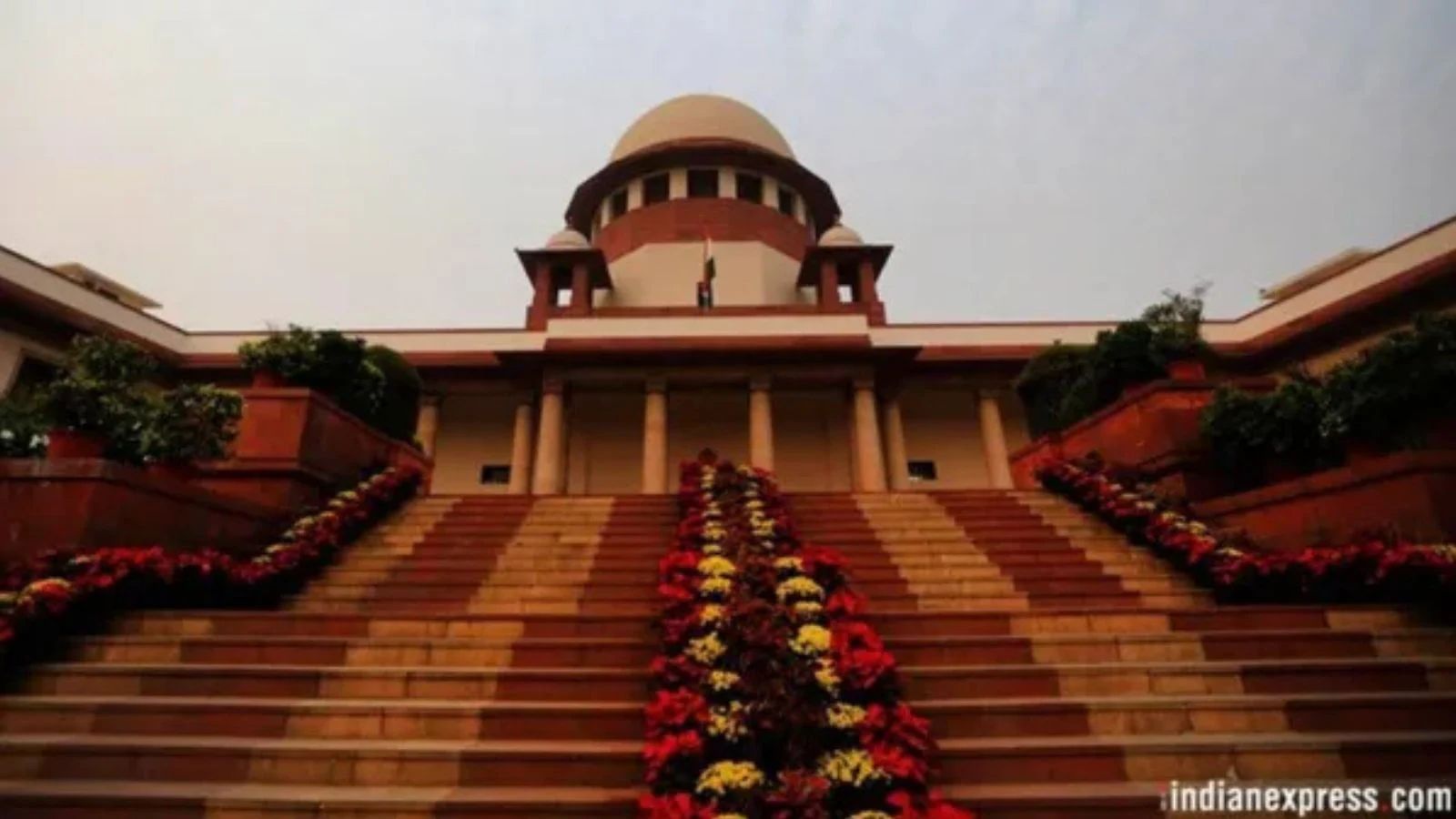
The Supreme Court on Thursday warned against the use of artificial intelligence (AI) in the courts, saying, “If left unregulated…[artificial intelligence]could infiltrate our intellectual work ethic and eventually make us dependent on its vast capabilities.”
A bench of Justices PS Narasimha and Alok Alade stayed the orders of the National Company Law Tribunal (NCLT) and the National Company Law Appellate Tribunal (NCLAT) for relying on AI-generated fake judgments. The report pointed out that the NCLT order of August 28, 2024 and the NCLAT order of September 11, 2025 cite non-existent judgments and, if the citations are correct, the content contains AI-generated paragraphs.
“Judicial proceedings and impugned judgments are tainted by the use of materials that are called precedents, but in reality they are unrealistic, fake and do not exist at all. Judgments of courts and judicial authorities based on fake and illusory materials are not judgments at all and amount to the destruction of the rule of law. Such judgments are unsustainable and should be set aside as soon as possible,” the Supreme Court said.
The court also asked the Bar Council of India to “constitute a committee to deliberate on this issue of lawyers submitting such fake and hallucinatory materials to courts as if they were precedents.” The council stated, “We must take this issue with the utmost seriousness, seriously deliberate on it, and establish guidelines to prevent such situations as well as disciplinary action for code violations.”
“Zero tolerance for unverified precedents generated by AI”
The court took a strong view of the use of such fake AI materials in judgments, stating that “people in charge of deciding judgments and disputes The byproduct of this, the creation of false, non-existent, hallucinatory material and its use as legal precedent, is like the release of methyl isocyanate in the field of law and justice: invisible, insidious, and by the time anyone notices it, it not only pollutes, but deprives the very lifeblood of judicial decisions.”
The court called for a “zero-tolerance mode” for courts against “the unverified creation, citation, and use of AI-generated precedents,” stating that “quoting such judgments without verifying them is misconduct on the part of advocates.” It also said that the judge’s reliance on “false or hallucinatory AI-generated material as precedent to support the decision” was an equally serious lapse.
“We have no hesitation in declaring that such a decision is not a decision from the point of view of the law, irrespective of whether such material is directly or indirectly involved in decision-making. Even if a large amount of false or hallucinatory material enters the decision-making process, such a decision should be set aside as it would violate the sanctity of the judgment. Maintaining integrity in decision-making is It is absolutely necessary and we reiterate our zero tolerance to lawyers as well as to lawyers. Courts may not cite, refer to or rely on such materials. It has also been made clear that our judgment does not concern the legitimate use of AI, but rather the presentation or reliance on false or hallucinatory materials as if they were legal precedent.”
Story continues below this ad
“Use of AI requires extreme caution”
The Supreme Court said that reliance on technology has never been a problem for the administration of justice because courts have seamlessly absorbed technology and made it an integral part of the court system. “However, the unfolding AI story is different and indeed transformative, because AI not only assists us in our work, but also replaces our own thinking, reasoning, and even decision-making. We need to be especially careful in this regard, because unregulated use of AI could insidiously intrude into legal practice, and thus into the very process of judicial decision-making and decision-making,” the court warned.
“Wisdom and foresight compel us to recognize human weaknesses and seek comfort in delegation, but when thought is delegated and it becomes a habit, it profoundly affects the core of human existence, which lies in the ability of thinking to distinguish between right and wrong, truth and falsehood, virtue and vice, dharma and adharma. This ability is innate. “It is not a given, it is not superimposed, but it comes from deliberate and disciplined action. It is a systematic training of the mind with lived experience, a struggle of the mind against the magic caused by the uncertainty between fact and fiction, what is real and unreal, what is just and unjust,” the court further stated.
“This intellectual training, coupled with experience and foresight, allows us to choose between competing values, to make difficult decisions with courage and conviction, and to strike a beautiful balance between the need for order and the search for justice in the struggle to reach the truth. Yes, that is sadhana. In fact, the secret lies in sadhana itself, because without this deliberate, conscious and continuous practice of scientific temperament, we would lose the ability to distinguish what is right.”If we lost this, we would have lost everything. ”
Requires “absolute control” over the use of AI
The Supreme Court emphasized that “absolute and complete control over the application and use of AI is unavoidable and necessary.” “The point of regulation is to stay two steps ahead of its application and make thoughtful choices about when and where to apply it. We recognize that this is not a problem that can be solved by judicial orders or declaratory judgments, but only by public policy and enforceable rules and regulations. We also know that a process has been initiated and regulations are being considered and will be notified in due course following due process.”
Story continues below this ad
He added: “But the real success lies not in the creation of rules and regulations, but in the willpower of courts and tribunals to harness this science and apply it carefully and judiciously. No other aspect of law and its practice has required greater and deeper support and coordination between courts and tribunals than the application of AI to identifying, deciding, adjudicating and adjudicating disputes.”