
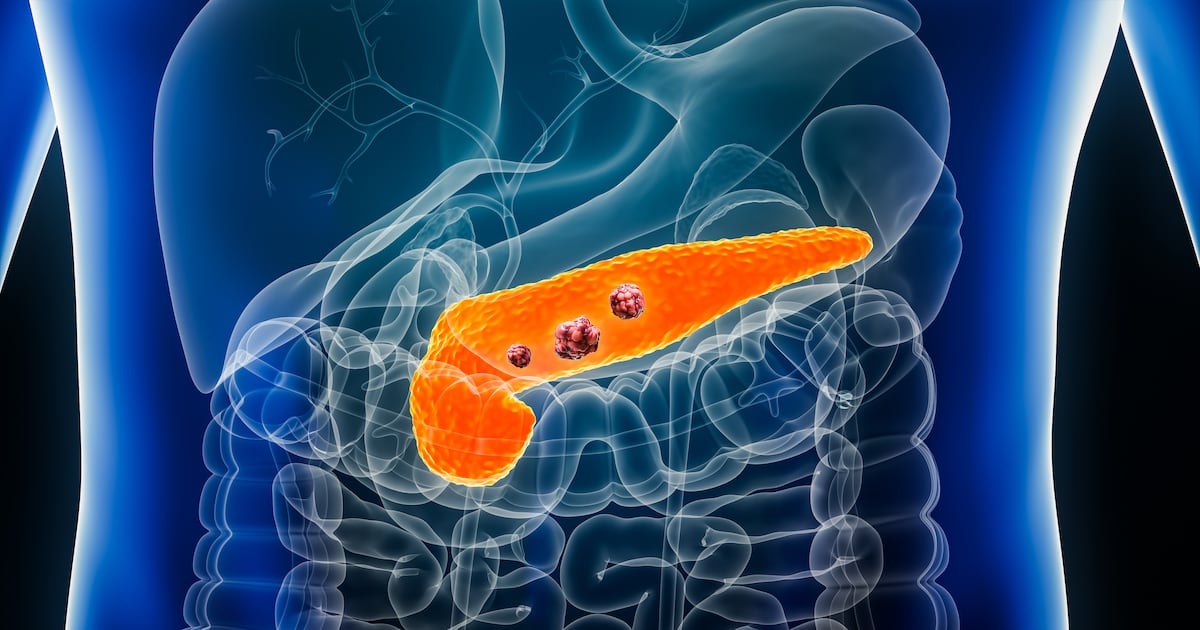
An artificial intelligence (AI) model developed by the Mayo Clinic can help detect pancreatic cancer on routine abdominal CT scans up to three years before diagnosis, a study shows.
A potential major advance is that this model identifies subtle signs of disease before tumors are visible, at a time when treatments to eradicate them may become possible.
The findings were announced Wednesday and published in a leading journal intestinewas announced after years of Mayo Clinic research efforts to improve early detection of one of the world’s deadliest cancers.
The study validated the AI model using data and workflows that mirror clinical settings, such as CT scans.
The researchers used the model to analyze about 2,000 CT scans, including scans from patients who were later diagnosed with pancreatic cancer. All of these were initially interpreted as normal.
The system, called the Radiomics-Based Early Detection Model (REDMOD), identified 73% of prediagnosis cancers with a median time of about 16 months before diagnosis. This is almost double the detection rate when experts examine the same scans without the aid of artificial intelligence, the study showed.
Furthermore, it was highlighted that the benefits were even greater at earlier times. In scans taken more than two years before diagnosis, AI identified nearly three times as many early-stage cancers that would not have been detected otherwise.
Pancreatic cancer remains one of the deadliest cancers, as it is often undetected until it has started metastasizing and has a survival rate of less than 5%.
Projections predict that by 2030, it will become the second leading cause of cancer-related deaths in the United States.
“The biggest obstacle to saving lives from pancreatic cancer is our inability to monitor pancreatic cancer when it is still curable,” said study lead author Ajit Goenka, a radiologist and nuclear medicine expert at the Mayo Clinic.
“This AI can now identify signs of cancer from a normal-looking pancreas, and can now do so reliably over time and across different clinical settings.”
REDMOD measures hundreds of quantitative image features that describe tissue texture and structure, capturing subtle biological changes as cancer begins to develop.
The model is designed to analyze CT scans already obtained for other reasons, especially those of high-risk patients such as those with new onset diabetes, and flag increased risk before a visible mass appears.
The study showed that the model’s predictions were also stable over time. For patients who underwent multiple scans, the AI produced consistent results over months apart, supporting its use for long-term monitoring and early detection.
Researchers are now advancing this study into clinical trials.
The study is part of Mayo Clinic’s Precure Initiative, which aims to predict and prevent disease by identifying the body’s earliest biological changes before symptoms begin.
This research was supported by the National Institutes of Health, the Hoveida Family Foundation, the Mayo Clinic Comprehensive Cancer Center, and the Funk-Gitiello Foundation’s Champions for Hope Pancreatic Cancer Research Program.


