mega doctor news
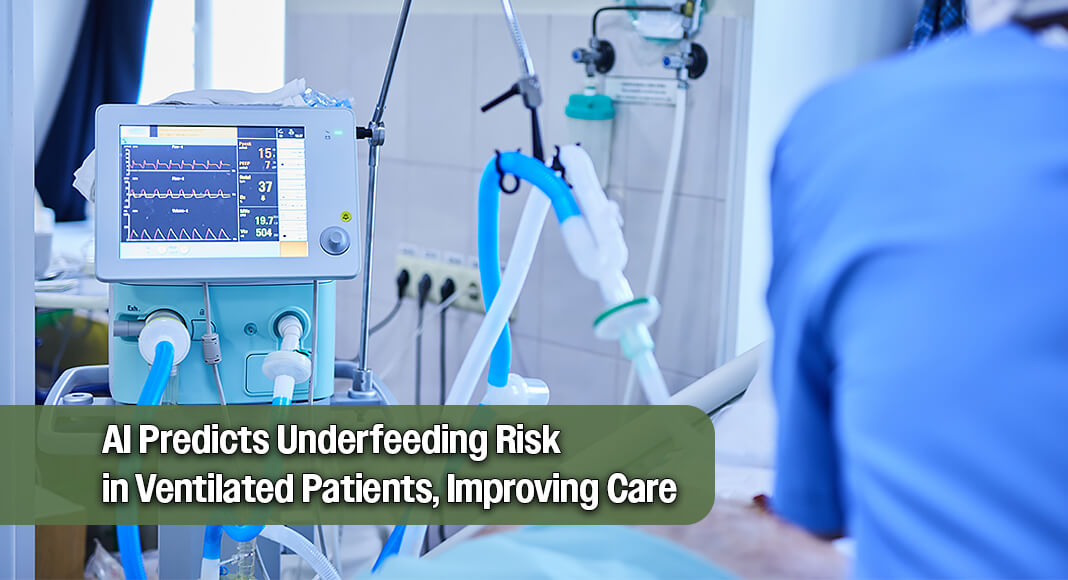
Mount Sinai – New York – A new study by researchers at the Icahn School of Medicine at Mount Sinai suggests that artificial intelligence (AI) can help predict which critically ill patients on ventilators are at risk for nutritional deficiencies, allowing clinicians to make early nutritional adjustments and improve patient care. Details of the study were published online on December 17th. nature communications
The first week on a ventilator is especially important for providing adequate nutrition, as patients' needs often change rapidly during this period, researchers said. “Too many patients on ventilators in intensive care units (ICUs) are not getting the nutrition they need during their critical first week,” said co-senior author Ankit Sakuja, MBBS, MSc, associate professor of artificial intelligence and human health and medicine (data-driven and digital medicine). “Their needs are changing rapidly, and it's easy for them to fall behind. We wanted to explore an easy and timely way to identify who is most at risk of nutritional deficiencies so that clinicians can intervene early to coordinate care and ensure each patient receives the right support when it matters most.”
The research team built an AI tool called NutriSightT. The tool analyzes routine ICU data such as vital signs, test results, medications, and feeding information to predict hours in advance which patients are likely to become malnourished on days 3 to 7 of ventilation. Using large anonymized ICU datasets from Europe and the United States, the model was trained and validated to update predictions every 4 hours in response to changes in patient status.
This study identified several important insights that may guide patient care.
- Underfeeding is common during the early stages of ICU care. Approximately 41 to 53 percent of patients were malnourished by day 3, and 25 to 35 percent remained malnourished by day 7.
- This model is dynamic and interpretable, showing that everyday factors such as blood pressure, sodium concentration, and sedation influence the risk of underfeeding.
- This research may support individualized nutritional planning, guide nutritional teams, and inform clinical trials to determine the most effective nutritional strategies for individual patients.
Researchers stress that NutriSighT is not intended to replace clinicians. Rather, it may serve as an early warning system to guide timely nutritional intervention.
The research team's next steps include a prospective, multicenter trial to test whether acting on these predictions improves patient outcomes, careful integration into electronic health records, and expansion into broader personalized nutritional targets.
“The significance of our findings is that for the first time we can identify which patients are at risk for underfeeding early in their ICU stay, potentially allowing us to tailor care to individual needs,” said co-senior author Girish N. Nadkarni, MD, MPH, Windreich Chair of Artificial Intelligence and Human Health, Director of the Hasso Plattner Institute for Digital Health, and Irene and Arthur M. Fishberg Professor. from the Icahn School of Medicine at Mount Sinai and serves as Chief AI Officer for the Mount Sinai Health System. “This represents an important step toward providing clinicians with better information to make nutrition decisions. The ultimate goal is to provide the right amount of nutrition to the right patient at the right time. This can improve recovery and outcomes for critically ill patients and lay the foundation for more personalized care strategies.”
The paper is titled “NutriSighT: An interpretable trans-model for dynamic prediction of enteral nutritional deficiencies in mechanically ventilated patients.”
Study authors listed in the journal are Mateen Jangda, Jayshil Patel, Akhil Vaid, Jaskirat Gill, Paul McCarthy, Jacob Desman, Rohit Gupta, Dhruv Patel, Nidhi Kavi, Shruti Bakare, Eyal Klang, Robert Freeman, Anthony Mansia, John Oropello, Lili Chan, Mayte Suarez-Farinas, and Alexander. W. Charney, Roopa Kohli-Seth, Girish N. Nadkarni, Ankit Sakuja.
This research was supported by National Institutes of Health (NIH) grant K08DK131286. For more information on conflicts of interest, please refer to the journal article. nature communications.
For more news about Mount Sinai Artificial Intelligence, visit https://icahn.mssm.edu/about/artificial-intelligence.