
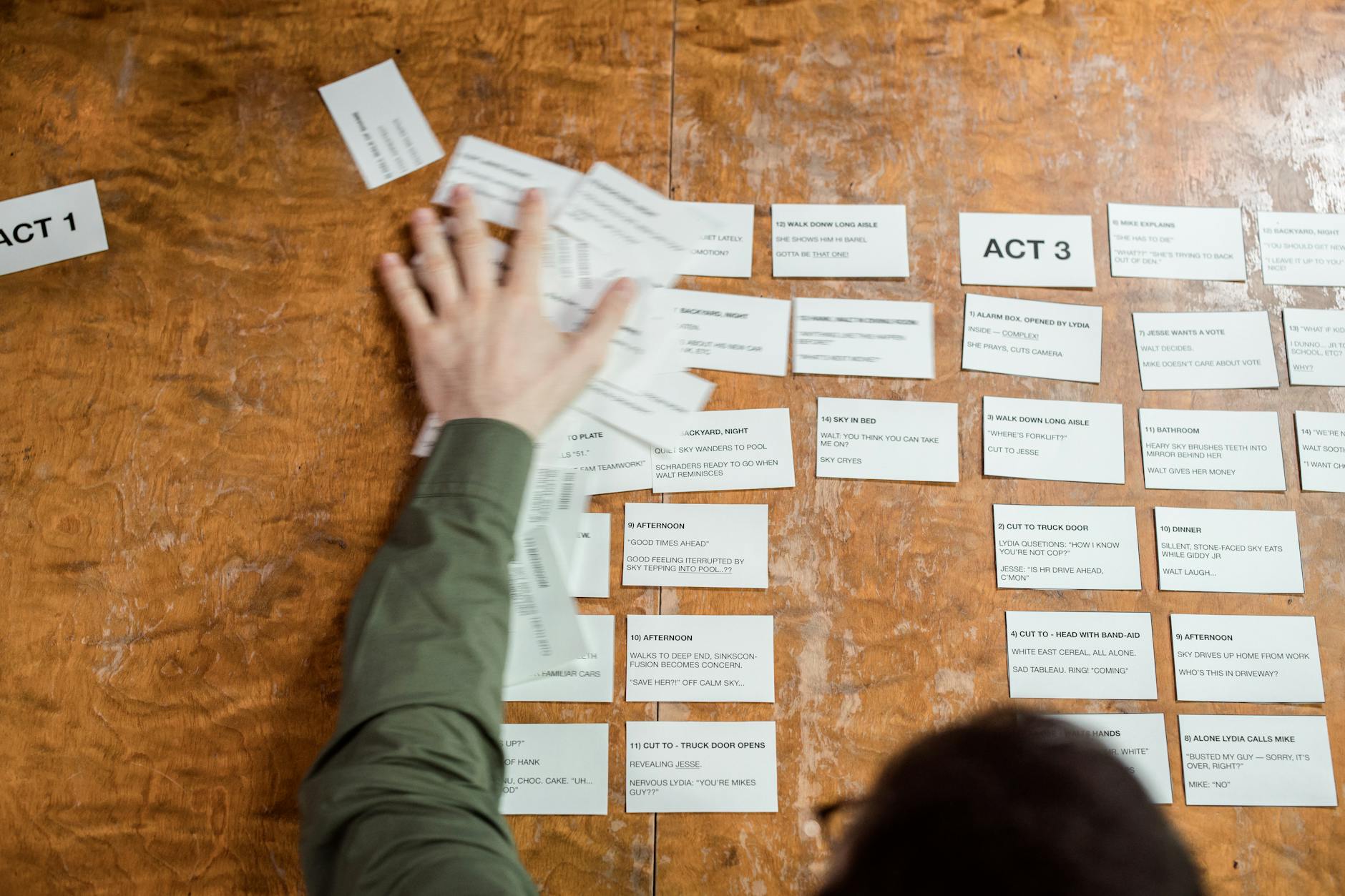
What every marketing team wants is one powerful idea that works everywhere. In fact, content tends to be fragmented. TikTok feels rushed, Instagram Reels feel truncated, YouTube Shorts lose their hook, and ads feel like watered-down leftovers.
This is not a question of creativity. It’s a matter of planning.
By providing Pippit, teams can move upstream in the process and design content before it breaks. And by starting with one adaptable visual plan powered by an AI storyboard generator, marketers can stop thinking first about the platform and start thinking first about the narrative. One story. many shapes. Zero guesses.
Instead of rewriting a concept four times, the team storyboards it once and lets the structure do the heavy lifting.
Why platform-first thinking kills story flow
Most cross-platform strategies start with constraints. TikTok requires speed. Instagram needs some polish. YouTube needs clarity. Advertising needs focus.
The team then treats each platform as its own creative brief, generating parallel ideas that never quite match up. The hook will come out of place. The visual logic changes. I feel like the brand voice is inconsistent.
Storyboarding turns all this on its head. Rather than asking how this relates to TikTok or how this works in Reels, the team asks much deeper questions. In other words, what is the essential visual story?
If you understand the nitty-gritty, the platform is just a variation, not an invention.
Storyboard as a master blueprint
A storyboard is not a scripted document. A storyboard is an “intent map.”
Each scene defines:
- What the audience sees
- Featured destinations
- how the moments pass
Once that is understood, content adaptation is merely mechanical as opposed to creative stretching. The wide shot is a harvest. A pause is a loop. Caption is an overlay.
The truth remains. The format will be adapted.
Design scenes that will survive trimming and pacing
To be successful cross-platform, you need to use scenes that allow for modularity.
Examples of powerful storyboard scenes include:
- High visibility even when cropped vertically
- Emotionally done in less than 3 seconds.
- Can be reordered without losing meaning
This is where the beauty of visual-first planning comes into play. Teams can test whether a scene works as a hook, mid-scrolling moment, or ending before shooting anything.
If it doesn’t survive rearrangement, it doesn’t belong in the core storyboard.
One Story, Some Rhythms
Every platform has its own tempo. TikTok values immediacy, Instagram values rhythm and beauty, YouTube Shorts values clarity and profit, and advertising seeks compression.
Rather than rebuilding content to suit any pace, storyboards allow teams to visually stretch or compress time.
In a single scene you can:
- When placed first, it becomes a hook shape.
- If placed second, it acts as a context
- Appeared at the end as a reward
With a defined visual intent, changes in pacing can occur without disrupting the narrative.
Create one storyboard that can be adapted anywhere with Pippit
Once your team embraces narrative-first planning, the next task is to devise storyboards that can be easily migrated from one platform to another. This can prove beneficial to Pippit’s workflow process.
Step 1: Set up your canvas
First, select the “Image Studio” option from the left panel. Then click on “Image Editor” and another window will open for you to make changes. You need to select the default size and “create” it.
Before adding a scene, you can resize, rotate, and position elements to create a clear visual path.

Step 2: Select and edit a collage template
Click Collage on the left side of the screen to open a variety of ready-to-use templates. Choose a layout that fits your idea, whether it’s linear storytelling, breaking up scenes, or displaying a series of shots using a grid layout.
Use the right panel to adjust the template’s size, transparency, and spacing. To add an image, there is an “Upload” option to upload the image.

Step 3: Refine and finalize your storyboard
Finally, decide on the details and design your storyboard. Emphasize important points in your story with themes, fonts, shapes, stickers, and frames.

You can add visual effects, transitions, and backgrounds to make your story more readable. Once you are satisfied with the final configuration, click Download All in the top right corner.

Reduce friction between marketing and production teams
- Storyboard is the lingua franca
- Marketers should stop over-explaining.
- Designers stop guessing
- Editors will stop fixing structural issues in submissions
- Everyone sees the same plan
This also speeds up remediation. If requirements change due to platform updates, your team can revisit the storyboard instead of starting from scratch. If the message changes, you can swap scenes instead of reshooting. If your visual hierarchy is planned early, it will be easier to make later changes, such as needing to remove text from a video asset.
Visual consistency without visual identity
Just because you post everywhere doesn’t mean it has to look the same everywhere.
Storyboards help teams identify what needs to be consistent.
- Main visual motif
- Scene order logic
- emotional beat
Everything else is changeable. Move crops, change text alignment, change background. Many teams plan their layers in advance so they can reuse elements between formats, and even prepare assets using transparent background makers so scenes can move cleanly between layouts without redesigning. The result is consistency without repetition.
Strategic benefits of creating a storyboard once
When your team creates storyboards in one place and shares them across the board, you can achieve more than just efficiency.
They get:
- Launch campaigns faster
- Better storytelling about your brand
- Fewer creative bottlenecks
- system consistency
Most importantly, they stop reacting to the platform and start leading with narrative intent.
Your team is tired of reinventing the wheel for each of these channels, so it’s time to look upstream. Please develop it once. Reuse infinitely. Embark on the possibilities of visual planning with Pippit. Harness the power of one great storyboard to get your message where it needs to go.
A great story never collapses even if its form changes.
They exist because their structure was intentional from the beginning.
This is where story-driven planning becomes a competitive advantage. Build a visual system rather than following a formality. Rather than recreating content, reuse meaning. And instead of reacting to algorithms, we explicitly guide them.
If you’re ready to take one idea and turn it into many high-performing artifacts without losing consistency, start upstream. Plan visually, think modularly, and tell your story.
See how Pippit helps your team storyboard smarter, work faster, and post anywhere with confidence.
Like NasiLemakTech.com’s Facebook page for more news and detailed reviews. Also, join our Facebook group for insightful information and memes.
Please also subscribe to our YouTube channel!


