Models trained in one region or climate regime often suffer performance in another region or climate regime without recalibration. This may require local calibration (i.e. soil, variety, weather patterns).
3. Uncertainty and interpretability
Farmers (and policy makers) are interested not only in forecasts, but also in the degree of confidence associated with each forecast, as well as factors contributing to the expected yield. Without explanation, the black box model is less reliable.
4. Temporal dynamics and early warning
The forecast must be updated as new weather or satellite data is available throughout the season. Preseason predictions can look very different if the rain is slow or there are pest outbreaks.
5. Infrastructure and Access
Smallholder farmers may not have access to weather stations, high quality internet, and sensors. Translation of predictions into practical information is another area of relative neglect.
6. Economic and risk factors
A good forecast is not useful if farmers do not have access to the inputs needed to work, cash, or response. There is also the risk associated with excessive reliance on predictions that have been found to be incorrect due to unpredictable events (storms, extreme weather).
What works: Design principles and best practices
There are several types of practices, both from the literature and testing of the field, that are likely to have a positive impact on the utility and adoption of ML prediction systems.
Hybrid model: Using process-based crop models (capturing biological/biological understanding) that link with ML models that can capture environmental variability tends to be better than using pure ML or pure crop models.
Explanability Tool: SHAP, feature importance, time-based sensitivity analysis, and more are used to show which inputs drive prediction.
User-centric interface: Present forecasts in ways that farmers can understand (SMS messages, mobile dashboards, visuals) and provide recommendations for actions to take in a variety of forecast situations.
Model verification Area: Beyond statistical verification of the model, it includes field testing in real production systems that reflect economic impacts, whether it is yield or low labor costs.
Future directions and new ideas
Some highlights, or promising new directions, include explanationable AI (XAI) in agriculture. It ensures that farmers understand why predictions were generated.
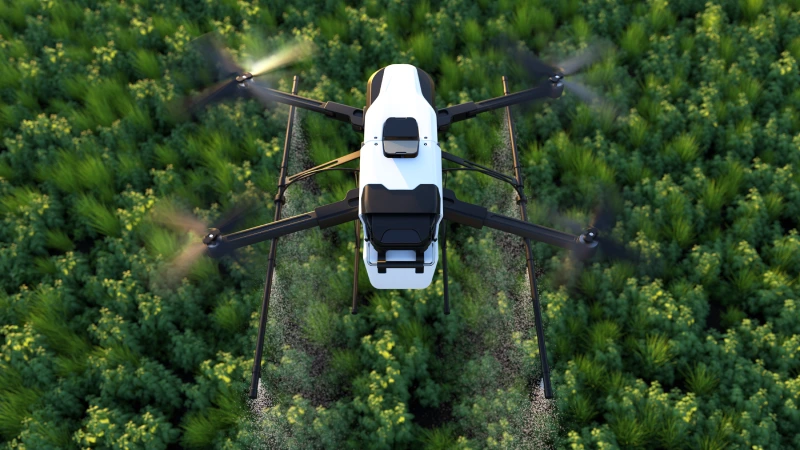
Multimodal Data Fusion: Combining multiple sensors (drone, IoT soil sensors), more satellite bands, and biological measurements (e.g. chlorophyll fluorescence) to monitor stress long before you see the damage. A group led by Ying Sun (Cornell) is looking at solar-induced chlorophyll fluorescence (SIF) remote sensing as a cost-effective and indirect measure of plant health. This indicates the estimated yield. Using ML as an indicator of pest and disease levels using pest trap data, weather, biology, and satellite maps makes it possible for crop systems to improve prediction of insect and disease outbreaks.
Small Farmer-Friendly Tools: Lightweight models, reduced massive and live data collection requirements, offline, smartphone models, and participatory design with farmers make certain aspects of data collection and use sustainable.
Climate resilience: Climate change leads to an increase in unpredictable weather patterns, so predictions should not be averages, but explain the extremes on both sides of the average condition. If ML/AI focused modeling can be adapted similarly every year using changing baseline climate conditions, it could increase resilience to climate change during product losses.
Impact and ethical/policy considerations
Data Access: Government and NGO funding and open > Weather, soil, satellite data, data to the public and private sector.
impartial: You will benefit not only from large commercial farms but also by ensuring small owners, marginal farms and underserved locations.

Risk Sharing and Insurance: Forecasts can better inform crop insurance and risk mitigation strategies. However, how the loss or forecast applies must be fair.
Transparency and false confidence: Overconfidence in the model can lead to misplaced resources, and predictions should share uncertainty.
Environmental impact: Better predictions will reduce pesticides and fertilizer use and provide better sustainability. However, if the prediction is wrong, or if the prediction error leads to inappropriate or misuse, the net outcome can be very negative in the environment.
Conclusion
Machine learning is becoming an increasingly powerful tool for agriculture. It helps farmers and others to better predict yields, pest management, harvest timing and decision-making. Science is mature, with better models, better data sources and more robust ways. However, there is still a long way to go between academic or pilot test results and a system that is trusted, usable and robust usable for environmental fluctuations. The next frontier is to explore new data sources, develop adaptive models (continuous learning), ensure that the models are interpretable, and incorporate predictions into farm-centric workflows.