

According to the India Skills Report 2026, over 40% of India’s IT and gig workforce is now using AI tools, with employability rising to 56%, transforming the country’s digital skills landscape.

Published: November 12, 2025 6:03 PM IST
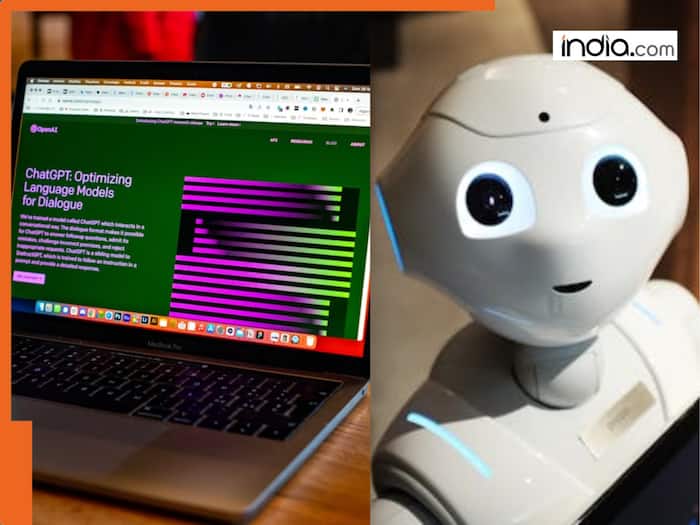
A new report assessing India’s technology and gig economy employment trends reveals that over 40% of India’s IT/gig workforce has adopted artificial intelligence (AI)-based tools to meet new-age labor requirements in areas such as automation, analytics and creative production. Another headline figure states that the employability of the overall talent pool has increased to 56.35 percent from 54.81 percent in the previous assessment.
This report is the 13th edition of the India Skills Report 2026 prepared by ETS in collaboration with industry bodies Confederation of Indian Industry (CII), All India Council for Technical Education (AICTE) and Association of Indian Universities (AIU).
Using artificial intelligence: the new normal
The report notes that the use of generative AI tools is now the norm for more than nine out of 10 employees across all sectors. India’s IT sector and the broader gig economy are seeing increased use of AI in everything from automation to new-age content creation tasks. Over 40% of IT/gig workers say they currently use AI-based tools.

Why it matters: This marks a significant shift from simply “job creation” to “job transformation.” The report suggests that rather than simply filling vacancies, workers are “upskilling” through digital tools. For example, 71% of Gen Z gig workers have received training in the use of AI, demonstrating the extent to which the new generation of freelancers is looking to build along human-machine collaboration lines.
Employability in India: Middle path
While the finding that employability across India has risen to 56.35% is good news, there is also significant room for improvement in the job readiness level of the talent pool. The report highlights that while the numbers remain strong, it is particularly noteworthy that the urban-rural and tier 1 versus tier 2/3 disparities have narrowed. Increased human resource responsiveness has become a feature not only in major cities but also in cities like Lucknow, Kochi and Chandigarh.
Furthermore, for the first time, women’s employability (about 54%) is higher than men’s employability (about 51.5%). Hybrid work models and digital skills programs are cited as two catalysts for this change and can help close the gender gap.
Drivers, recommendations and predictions
The report cites the average age of India’s workforce at 28.4 years as a major factor. This is because it suggests a young “digital native” population is ready and willing to use AI tools.
While policy interventions such as the National Education Policy 2020 (NEP 2020), the ‘Skilling for AI Readiness’ (SOAR) initiative and the Skill India Digital Program are held up as foundational initiatives, it is noted that ‘real transformation’ requires a ‘close convergence’ of academia, industry and government.
In the job market, employment intentions (employers’ hiring plans) for 2026-2027 were 40%, up from 29% the previous year. This reflects the high demand for skilled workers in sectors such as technology, banking, financial services and insurance (BFSI), manufacturing, renewable energy and healthcare.
Projecting long-term developments, the report states that India currently hosts 16% of the world’s AI talent, and that number should rise to 1.25 million professionals by 2027.
The report predicts that the global labor shortage could reach 85 million by 2030, but India will help fill this gap by creating a surplus of 45 million skilled professionals.

