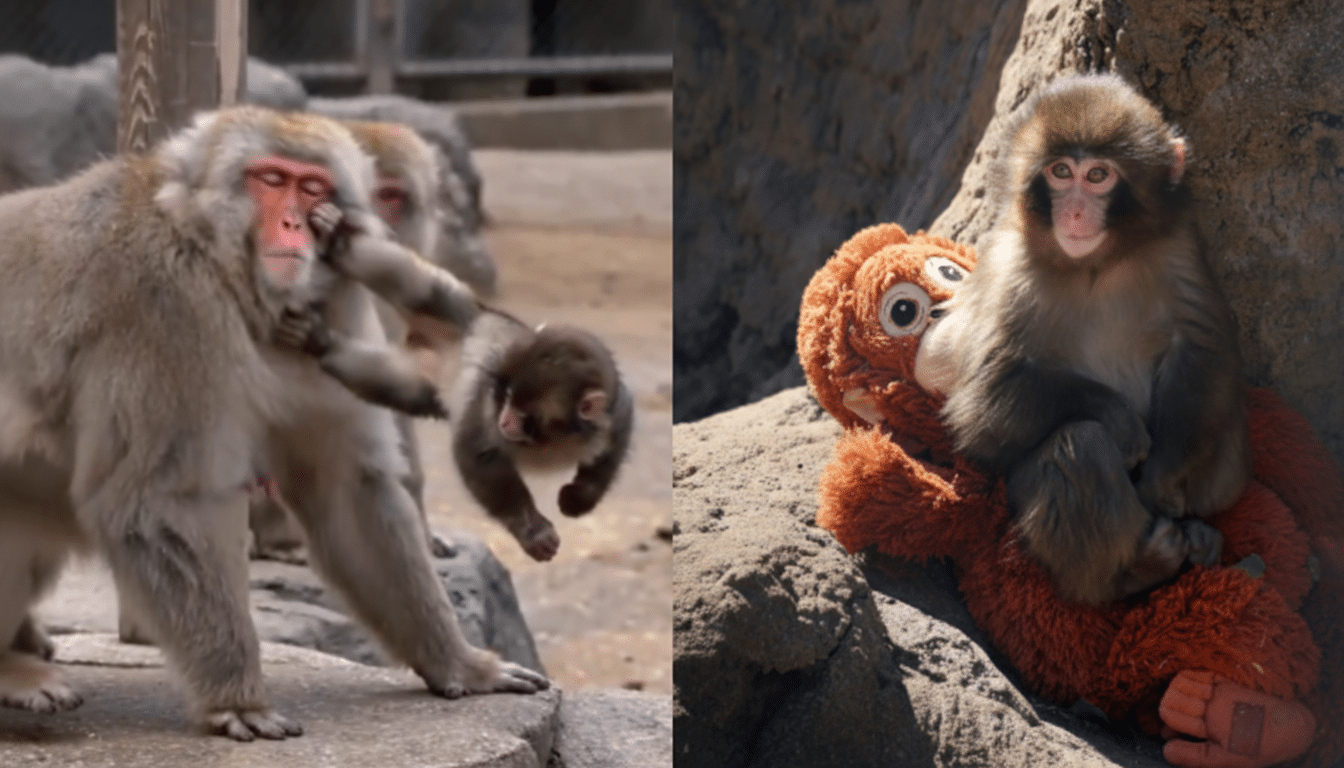
Punch, the internet’s favorite baby monkey, is now everywhere. The same goes for fake AI. While authentic clips from his home at Japan’s Ichikawa Zoo captivate millions, a parallel wave of synthetic “punch” videos is gaining views, blurring the lines between heartwarming reality and algorithmic fantasy.
Some creators call their works parodies. Others don’t. The result is endearing but contrived scenes, such as Punch being embraced by a perfectly gentle surrogate mother or enacting cartoonish revenge, that seem convincing at first glance but fall apart under scrutiny. Here, we’ll show you how to quickly identify tells and why this particular story became ground zero for viral AI slop.
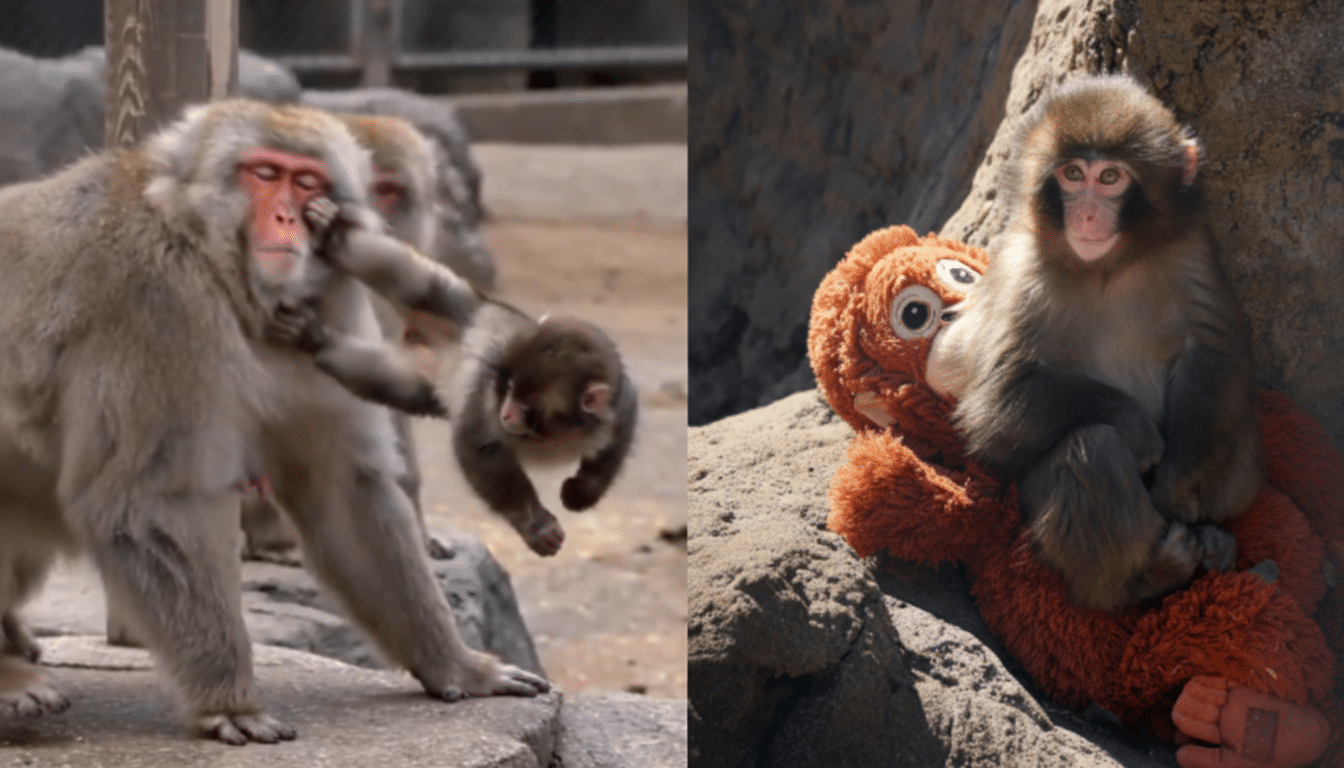
Why Punch has become the primary AI fodder for fake videos
Cute, high-contrast subjects with predictable settings are perfect for current text-to-video models. Punch checks all the boxes: expressive eyes, soft fur, simple background, and great engagement. Low-quality content manufacturers know this and produce a ton of short “aha” clips to garner attention and ad revenue.
Public uncertainty is an accelerant. The Pew Research Center reports that 52% of U.S. adults say they are more concerned than excited about the growing role of AI in everyday content, and the Reuters Institute found that more than half of news consumers worry they won’t be able to tell the difference between real and fake online. That anxiety encourages sharing and discussion. That’s exactly what engagement gaming accounts want.
Speech in the frame that exposes AI deception
Look for physics that doesn’t cooperate. In some viral punch clips, limbs subtly interpenetrate, with an arm slipping through another or a stuffed animal caught in its fur. Actual contact creates compression and shifts the fur and skin. Fakes often “ghost” at touchpoints.
Scan textures and edges. AI-rendered fur can have highlights that don’t match the scene’s lighting and can look too shiny or uniformly perfect. The edges of the ears and whiskers may shimmer or wobble from frame to frame. Teeth and nails often look like ceramic or are too bright. In one widely shared fake, the thoracic anatomy of an adult monkey appears very realistic and oddly symmetrical. When you stop, the details jump out.
Background continuity is a gift. The repeating patterns of the rails, the subtly deforming mesh of the enclosure, and the gibberish text signs betray the generation tools. Shadows and reflections must work consistently. It is suspicious if the punch moves but the shadow is “stuck”.
Sound and motion red flags in punch videos
AI video favors dreamy camera motions, including slow dollies, perfect focus, and strong stabilization. The actual mobile phone footage taken at the zoo is more shaky and has a lot of micro-tremors. Fake motion blur can be too clean or evenly smudged, especially around the tips of fingers and tails.
Audio rarely catches up. Looping ambience, common “natural” soundbeds, or lip and jaw movements that don’t match coos or shrieks indicate synthesis. Real zoo clips typically contain cluttered audio, such as crowd chatter, PA announcements, gate banging, and overlapping animal sounds.
Clip length alone is not proof, but context is important. While many public tools (Runway Gen-3, Pika, Luma) tend to produce elegant 5-20 second bursts, OpenAI’s Sora demo shows up to about 1 minute per shot. If you see a long, continuous, cinematic-smooth scene with unrealistic lighting, remain skeptical.
Check context and source before sharing
Let’s start with the poster. Does this account regularly upload animal clips with the same vibe and vague captions? Was this video published alongside a bunch of similarly shiny shorts? That pattern screams “synthetic fodder.” Look for disclaimers such as “AI” or “parody.” However, don’t rely on them. Labels may disappear when you re-upload a clip.
Cross-reference with trusted callers. For the latest information on Punch, look for posts and reports from Ichikawa City Zoo as well as major Japanese news outlets such as NHK, Asahi Shimbun, and Kyodo News. BBC Verify, AFP Fact Check, and AP Fact Check frequently analyze viral animal clips. If the scene looks unusual, see if they have taken it into account.
Geography and seasonality are important. Does the casing match a known photo? Do the keeper’s uniform, sign language, autumn leaves, etc. match Chiba Prefecture? AI often stumbles on localized details from eyewitness footage.
Punch Clip 60 Second Validation Playbook
- Pause at points of contact, such as your hands, ears, or any other body touch. Check for clipping, unnatural compaction, or loss of fur.
- Scrub frame by frame. Monitor shadows, reflections, and background grids for morphing and jitter.
- Close your eyes and listen. Looping ambiences and canned animal sounds are common in fakes.
- Extract some frames and perform a reverse image search. Previous uploads and originals may appear when using tools such as InVID or Google Image Search.
- Track uploaders. Check their history, how often they post, and whether they credit zoos or news sources. It’s a red flag if a newly created account only posts short videos that have the potential to go viral.
What platforms and experts say about AI animal fakes
Major platforms have rolled out synthetic media policies, with YouTube and Meta requiring disclosure of significantly altered content and TikTok saying AI-generated posts must be labeled. Enforcement remains uneven. Newsrooms with open source intelligence teams such as BBC Verify and Bellingcat recommend combining provenance checks with frame-level analysis, rather than relying solely on labels.
Researchers at MIT CSAIL and the University of California, Berkeley say that while state-of-the-art detectors are improving, they can be vulnerable when videos are resized, filtered, and re-encoded by social apps. Practical vigilance such as source, context, and frame-by-frame checking still outweighs automatic detection of fast-moving feeds.
Punch Fans and Responsible Sharing Essentials
It’s okay to love a real punch, but it’s still okay to look the other way at a perfect cinematic punch. Slow down before sharing, reward accounts that give credit to originals and zoos, and treat moments that are too cute to be true as confirmation prompts. The more we practice finding the seams, the less oxygen there is in the AI slop factory that rides on Punch’s fame.