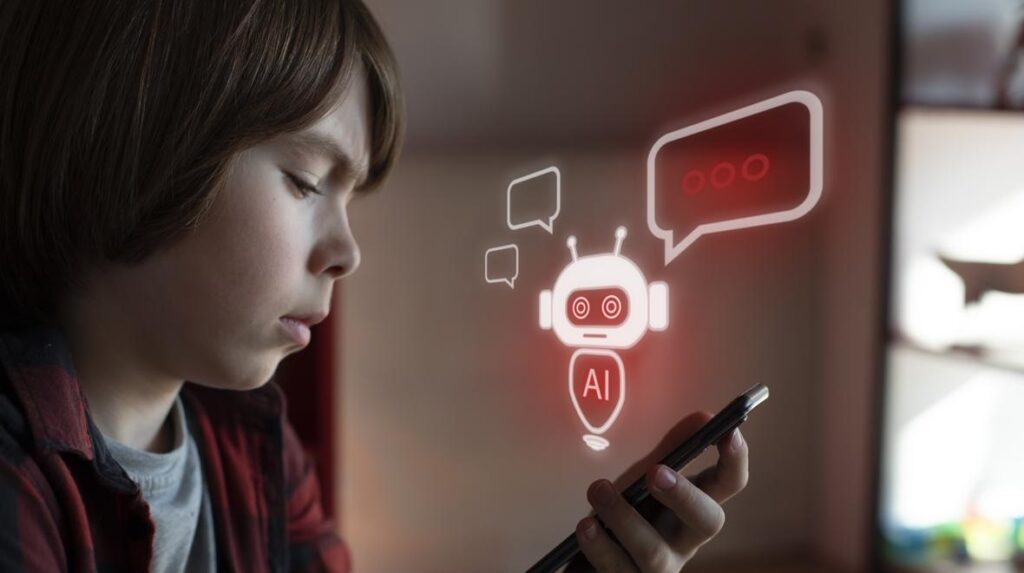
A recent study revealed a huge disconnect between what parents think their children are using artificial intelligence and what teens are actually doing with it, from homework to emotional support.
AI plays an important role in the life of Isis Joseph, a 17-year-old student in New York City. She uses it every day for schoolwork, deciding where to eat, and even to generate ideas for poetry. Sometimes she asks the AI for advice on personal issues.
She understands why some parents see AI as a threat, but believes that if used responsibly, it can mostly be beneficial.
Joseph’s experience reflects a broader trend. Research from Pew Research Center and Common Sense Media shows that there is a significant gap between parents’ perceptions and teenagers’ actual use of AI. Even more surprising, many parents have little or no idea how their children actually use these tools.
This highlights an obvious problem. That means families aren’t talking about AI enough. According to Pew, 40% of parents have never discussed AI with their children. Researchers say this lack of communication leads teens to explore technology on their own without guidance.
When parents were asked if their child uses AI, only 51% said yes. In contrast, 64% of teens reported using an AI chatbot. This suggests that millions of parents are unaware of what is happening on their children’s screens.
Experts say families should work together on AI, rather than letting teenagers understand it alone.
Emotional support and social use
One of the most surprising discoveries is how some teens are using AI for emotional support. 58% of parents said they were uncomfortable with the idea, but it’s already happening.
Some teens are using AI to talk about their feelings and get advice on difficult situations. While many people understand that AI is not human and are cautious about its responses, there are concerns about relying on it too much.
A small but significant number of teens (12%) say they use AI for emotional support, and 16% say they use it for casual conversations. These percentages may seem low, but they represent millions of young users.
Researchers also found differences between demographic groups, revealing that some teens were more likely to seek help from AI than others. However, the reasons behind these differences are still unclear.
Experts suggest that teens with fewer support systems may become more reliant on AI because it is always available and easily accessible. Still, they caution that AI should not replace real-life human relationships.
Academics, Cheating, and Entertainment
The use of AI, which is most common among teenagers, is more expected. Many people use this tool to look up information, study, and get help with homework, especially in math and writing. Some teachers even recommend its use, as long as it supports learning rather than replacing it.