

– Your Excellency, you have experience establishing the Ministry of AI in 2017, and now Kazakhstan has established a similar institution. What important mistakes did the first province see that Kazakhstan can avoid based on your experience? We're talking about 2017 and 2025, so what are the changes in our approach to AI development?
-Thank you for welcoming me. It is a joy to be part of this important gathering of the greatest minds of artificial intelligence. When it comes to establishing missions from scratch and setting a vision, it is important to focus on areas that continue to provide value in the long term.
Here is an example. In the past, when it comes to artificial intelligence, it focused on self-driving cars and computer vision systems. No one was talking about large language models. However, the UAE did not focus on this technology. In particular, we focused on human capital development. And the human capital we developed in the UAE led to the results we see today.
And from what I have heard from His Excellency from the President and his Minister of Excellence, it really focuses on that of Kazakhstan. This proves that Kazakhstan is very positive and hopes that we will get great results from now on.
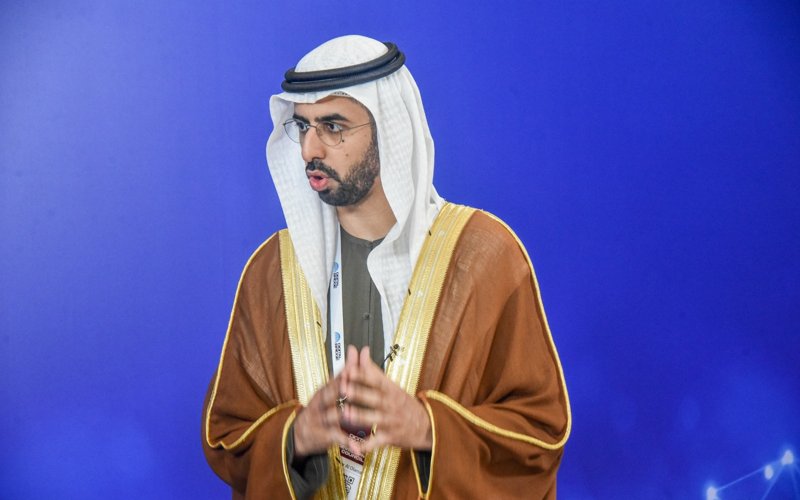
-How do you think the “success” of the Ministry of AI can measure? What are the specific indicators or outcomes such ministries should achieve within 1-2 and 5 years to demonstrate that it is working effectively?
– There are three main domains that encourage you to focus on Kazakhstan. The first is savings. This is a good metric. But it's not just about how much money you save, it's about improving quality of life. So, citizen satisfaction with the services being deployed is my first indicator, along with the financial benefits from the savings created.
The second is a clear metric to measure, but the number of people in Kazakhstan technically able to use artificial intelligence. Everyone who can use AI effectively is more productive than people who don't use AI in their daily lives. So I think the utilization rate, especially during the first period, is very important.
And the third is the number of companies that will become AI native companies that begin within Kazakhstan, and how their growth will be measured over time. I'm sure there are many startups in Kazakhstan, and we can see two ways. One is how much of them pivot towards artificial intelligence. The second is how many companies start with AI, as a core principle. One of the things that was extremely beneficial in the UAE was to launch trade licensing with a special focus on AI companies.
So, when you set up a company and show that you are an AI company, for example, trade licenses are different from normal digital businesses. And we measure the number of companies starting with their core principles about how they do business.
– The United Arab Emirates strengthened its position by integrating Arabic into AI systems, developing its own models, and actively promoting digital cultural and linguistic projects. For Kazakhstan, similar challenges exist with the Kazakh language. What were the main difficulties in integrating Arabic, and what steps are useful for Kazakhstan and Kazakh?
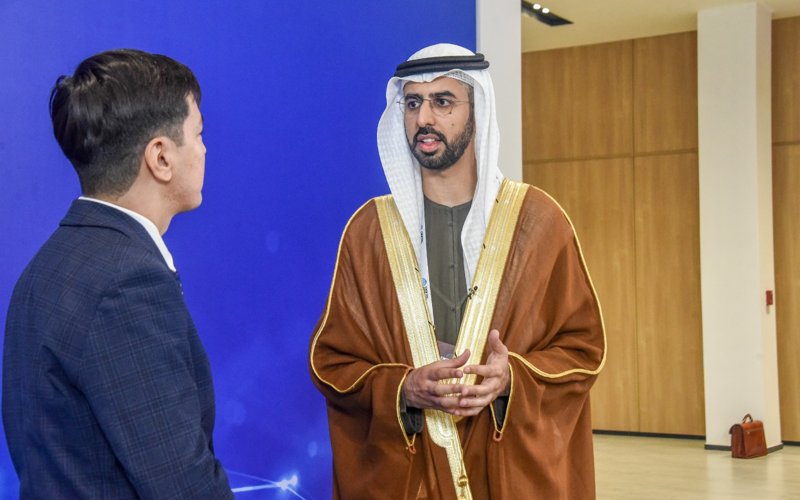
– I don't know if the challenge is related to Kazakhstan, but there are so many different dialects of Arabic in the United Arab Emirates and the Middle Eastern region. One of the challenges in implementing AI in Arabic was how AI could understand all the dialects and nuances associated with them. I think this can be addressed when it comes to Kazakhstan by providing more training to large-scale language models.
The second thing, and I think I was actually very impressed with his Excellency in the President, but the number of languages spoken. His presidential ministers spoke in multiple languages skilled in English, Kazakh and other languages, even during council meetings. One of the challenges we face in the UAE is that we don't just need an Arabic-focused model. Although Arabic is the core language, it is also highly diverse and multilingual population that requires you to speak English effectively, just like Arabic.
So I think this is one of those things that I strongly encourage Kazakhstan to partner with other countries and not start from scratch every time, start from somewhere away from everyone else and build a very robust ecosystem when it comes to linguistics.
– The world is rapidly moving towards AI regulations. The EU has launched AI laws, the US is discussing new transparency standards, and the UN has established an advisory body on AI. In your view, is it possible to develop unified global rules, or regulations remain fragmented – will they be divided into blocks and regions?
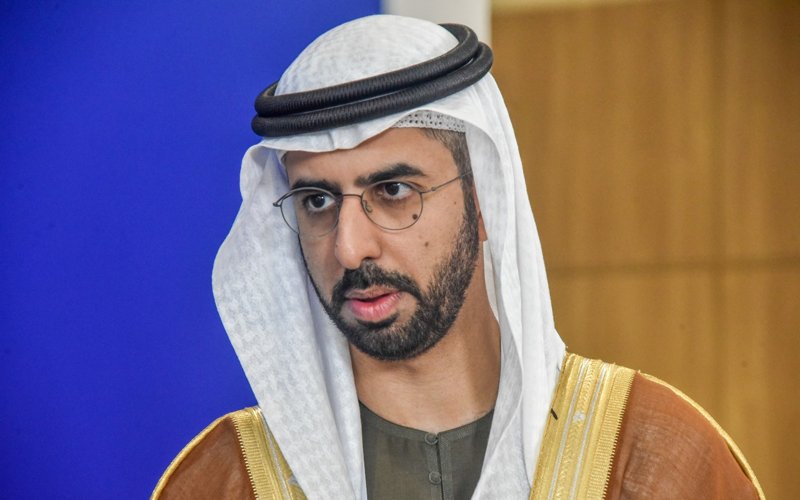
– That's a great question and I think there are two parts. The first part is that certain things cannot be actually regulated until they become global. For example, deepfakes are extremely difficult to regulate unless there is a global regulation.
In other parts it concerns local regulations. What I think needs to happen is that Kazakhstan should have a very agile legislative process to deploy regulations whenever necessary on important issues when there is domestic control.
For example, if not, deep fakes can be produced anywhere on the planet and spread to your country. Therefore, it is very difficult to regulate it in Kazakhstan alone. We need to tackle a global coalition on that front. For such questions, I think the correct answer is to join global coalitions and international organizations, join everyone else and voice, and make sure there is action.
And when it comes to regulations, there is a need to balance local and international efforts.
Previously, Kazinform's press reported that President Tokayev has launched the first meeting of the AI Development Council.


