- NVIDIA (NasdaqGS:NVDA) is expanding its AI footprint through new industrial partnerships with Dassault Systèmes, EPRI, and Prologis.
- The company supports mission-critical industrial AI through Dassault virtual twins and global AI model deployment.
- The multiparty effort between EPRI and Prologis focuses on distributed AI micro-datacenters for edge inference across energy and infrastructure.
- Recent product moves include the GIGABYTE RTX 50 Series gaming bundle and AI-enabled lab automation from Opentrons Labworks.
NVIDIA stock recently closed at $182.81, representing a one-year return of 31.7% and a three-year return of approximately 7x. Over shorter time periods, returns have slowed further, with a 7-day decline of 1.4%, a 30-day decline of 1.8%, and a year-to-date decline of 3.2%. Against this backdrop, these new industry and product partnerships demonstrate how NasdaqGS:NVDA is positioning itself across both enterprise and consumer AI use cases.
A key consideration for investors is how far NVIDIA is expanding beyond traditional GPU sales into areas such as industrial software, edge infrastructure, and robotics. Watching how these partnerships scale and consistently translate into broader AI adoption across sectors such as manufacturing, energy, and life sciences could be useful input into a long-term view of NasdaqGS:NVDA’s role in AI platforms.
Add NVIDIA to your Watchlist or Portfolio to stay up to date on the most important NVIDIA news stories. Or explore our community and discover new perspectives on NVIDIA.
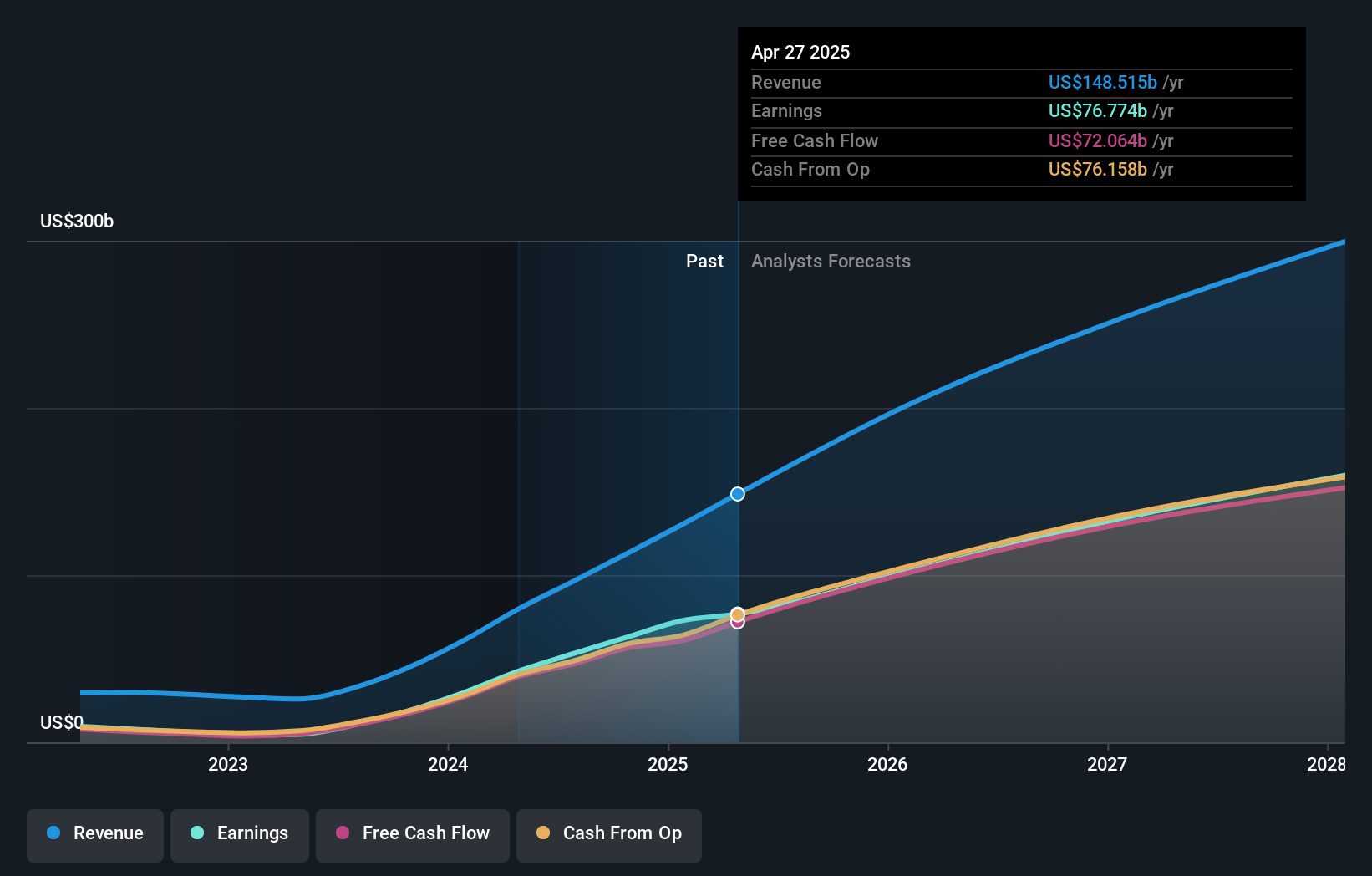
There are two things going well for NVIDIA that aren’t covered in this headline.
NVIDIA’s recent wave of partnerships shows how the company is expanding its AI footprint from cloud data centers to physical infrastructure, industrial software, and everyday devices. The deal with Dassault Systèmes will bring NVIDIA’s AI hardware and software into virtual twin tools used in engineering, manufacturing, and materials science, potentially deepening its role in long-life industrial workflows. EPRI and Prologis’ partnership on distributed AI micro data centers shows that NVIDIA is looking beyond hyperscale facilities to smaller, grid-adjacent sites for real-time inference across sectors such as logistics and healthcare. On the demand side, the GIGABYTE RTX 50 Series Gaming Bundle and Opentrons Labworks Lab Automation work together based on NVIDIA’s new GPU platform to power AI into gaming and wet lab robotics. The common thread for you is that NVIDIA is looking to anchor its GPUs and software stacks in multiple layers of the AI stack, from consumer PCs to industrial twins to edge inference, in a market where rivals like AMD and custom silicon efforts from big cloud providers are competing for share.
How does this fit into the NVIDIA story?
- The Dassault Systèmes, EPRI, and Opentrons partnership supports the narrative that NVIDIA is building a full-stack AI platform that extends beyond cloud data centers to manufacturing, energy, and life sciences, and is consistent with the idea of a multi-year AI infrastructure cycle.
- At the same time, a deep dive into power-constrained micro data centers and industrial AI highlights some of the pressures noted in the story, including energy availability, regulatory attention to data centers, and the need to control execution costs.
- The game bundle and lab automation efforts show that NVIDIA is leaning into consumer and industry-specific demands not fully captured in the data center-focused story, which could add an additional layer of diversification compared to a story focused solely on hyperscaler spending.
Understanding a company’s value starts with understanding its story. Check out one of the top articles on NVIDIA’s Simply Wall St Community and decide what it’s worth to you.
Risks and rewards investors should consider
- ⚠️ Analysts caution that the majority of NVIDIA’s revenue comes from non-cash sources, so it would be good to see how these new partnerships ultimately show up in cash flow, not just reported profits.
- ⚠️ Expanding into regulated sectors such as twin industries, energy-related microdata centers, and healthcare could increase exposure to policy, export controls, and infrastructure constraints that are already cited as key risks.
- 🎁 Revenues have increased 57.5% over the past year and are expected to grow 23.5% annually, with the potential to support a broader AI adoption story by linking NVIDIA’s platform to Dassault’s Virtual Twins, Opentrons’ lab robots, and edge inference projects.
- 🎁 This partnership spans a variety of end markets, from games and creators to biopharma and utilities, and could help diversify NVIDIA’s revenue base beyond a single customer group or use case.
Future points of interest
From here, you can focus on how quickly these partnerships translate into visible deployment and product revenue, rather than mere announcements. For Dassault Systèmes, this could mean tracking the uptake of AI-enabled virtual twins on the 3DEXPERIENCE platform. As for the collaboration between EPRI and Prologis, it will be interesting to see if the pilot micro-data center moves into large-scale deployment and how power grid regulations will impact that pace. On the product side, it will help monitor whether the RTX 50 series gaming bundle drives sustained demand for gaming GPUs compared to competitors such as AMD, and how widely adopted Opentrons’ NVIDIA-powered robots are in major research and biopharma labs. Taken together, these signals will tell us whether NVIDIA is successful in extending its AI stack to durable, real-world workflows, or whether it continues to focus primarily on hyperscale data centers.
To stay on top of how the latest news impacts NVIDIA’s investment story, visit NVIDIA’s community page to stay up to date on the top stories in the community.
This article by Simply Wall St is general in nature. We provide commentary using only unbiased methodologies, based on historical data and analyst forecasts, and articles are not intended to be financial advice. This is not a recommendation to buy or sell any stock, and does not take into account your objectives or financial situation. We aim to provide long-term, focused analysis based on fundamental data. Note that our analysis may not factor in the latest announcements or qualitative material from price-sensitive companies. Simply Wall St has no position in any stocks mentioned.
Evaluation is complex, but we will simplify it here.
Discover whether NVIDIA is undervalued or overvalued with our in-depth analysis. Fair value estimates, potential risks, dividends, insider transactions, and financial condition.
Access free analysis
Do you have feedback on this article? Interested in its content? Please contact us directly. Alternatively, email editorial-team@simplywallst.com.