Interview Kickstart publishes comprehensive 2026 career guide. A structured roadmap outlines how infrastructure expertise translates to production-grade ML engineering skills, including model deployment, workflow retraining, and lifecycle management.

— The rapid acceleration of AI adoption across industries is reshaping not only products but also the role of engineering that supports them. As organizations move machine learning systems from experimentation to production-scale deployments, the demand for engineers who can bridge data infrastructure and model lifecycle management continues to grow. In response to this shift, Interview Kickstart has published an updated career transition guide titled How to Transition from Data Engineer to Machine Learning Engineer, providing a structured roadmap for experienced data engineers looking to expand into applied machine learning roles. The complete guide is available at:
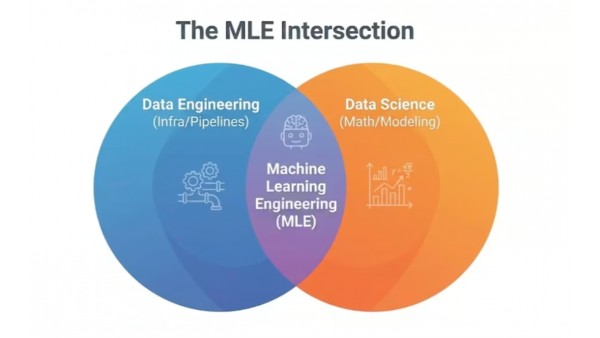
As companies operate AI systems, the need for engineers who understand both large-scale data pipelines and production-grade model deployment becomes increasingly important. Data engineers already manage distributed processing frameworks, ETL pipelines, cloud storage systems, and scalable data workflows. However, machine learning engineering comes with additional responsibilities, including model training pipelines, feature engineering strategies, experiment tracking, evaluation frameworks, and continuous monitoring of model and data drift.
The newly released guide addresses a clear industry trend of data engineers looking to extend their technical scope to machine learning without giving up their infrastructure expertise. While this transition seems significant at first glance, the report outlines how fundamental competencies such as distributed systems architecture, data reliability engineering, pipeline orchestration, and cloud-native infrastructure management provide a strong foundation for ML engineering roles.
Rather than focusing on abstract machine learning theory, this guide focuses on production coordination. Differentiate between the daily priorities of data engineers and machine learning engineers. Data engineering typically focuses on data availability, scalability, integrity, and performance. Machine learning engineering integrates these priorities with model evaluation, workflow retraining, inference optimization, feature consistency, and lifecycle governance.
A key theme of the report is understanding how data quality and system design directly impact model behavior in production. Issues such as feature drift, distribution shifts, and repeatability require engineering discipline beyond model accuracy. This guide highlights how ML systems differ from deterministic software systems and the need for continuous validation, observability, and feedback loops.
This publication presents a structured migration roadmap to help professionals approach migration systematically. We identify skills that are directly transferable, such as data orchestration, cloud deployment, containerization, and monitoring frameworks, and outline areas that require further development, such as the fundamentals of supervised and unsupervised learning, model evaluation strategies, experimental design, and statistical inference.
In addition to mapping competency gaps, this report recommends practical end-to-end projects that align with modern hiring standards. This includes building a feature store, building a scalable inference service, designing a training-to-deployment pipeline, implementing an automatic retraining workflow, and deploying a monitoring system that can detect model degradation. The guide points out that recruiters are increasingly evaluating candidates based on their ability to reason about complete ML systems rather than knowledge of isolated algorithms.
The boundaries between data infrastructure and intelligent systems continue to narrow as AI systems are incorporated into industries such as finance, healthcare, retail, logistics, and enterprise SaaS. Rather than reinvention, the transition from data engineer to machine learning engineer is positioned as a strategic technological evolution, from managing data pipelines to owning systems that generate predictions and automate decision-making.
This guide provides a structured, industry-aligned framework based on production realities and modern machine learning adoption expectations for data engineers evaluating long-term growth in an AI-driven technology environment.
To read the complete guide, visit https://interviewkickstart.com/career-transition/.
About interview kickstart
Founded in 2014, Interview Kickstart is a trusted upskilling platform designed to help technology professionals secure roles at FAANG and other leading technology companies. With over 20,000 success stories, the platform is recognized as a resource for experienced engineers and technology leaders looking to advance their careers.
Interview Kickstart works with a network of over 700 instructors, including hiring managers and senior engineers from FAANG and other Tier-1 technology companies. Its programs combine technical depth, structured preparation, mock interviews, and individual mentorship to support professionals as they navigate evolving engineering roles in the age of AI.
Contact information:
Name: Burhanuddin Pitawala
Email: Send email
Organization: Interview Kickstart
Address: 4701 Patrick Henry Dr Bldg 25, Santa Clara, CA 95054, United States
Phone: +1-209-899-1463
Website: https://interviewkickstart.com
Release ID: 89184770
If you have any problems, inaccuracies, or questions about anything contained in this press release, please let us know immediately by contacting us at error@releasecontact.com (it is important to note that this email is the authorized channel for such issues; sending multiple emails to multiple addresses will not necessarily help expedite your request). Our dedicated team will quickly respond to your concerns within 8 hours and take necessary steps to fix the identified issues or assist with the removal process. Providing accurate and trustworthy information is core to our commitment to our readers.