Integrating artificial intelligence into the classroom
The AI landscape continues to evolve, and its impact extends beyond the workplace. The way children learn is also changing. Schools are currently grappling with how and whether to implement this technology. Kasey Chronis is performing live downtown.
chicago – The artificial intelligence landscape is rapidly evolving, not only changing the workplace but also reshaping the way children learn.
Schools are currently grappling with how and whether to incorporate technology into the classroom.
What we know:
Integrating AI into education raises questions about accuracy, privacy, and traditional learning. As artificial intelligence becomes more entrenched in classrooms, educators, parents, and experts are debating its benefits and risks.
Supporters say this is the way of the future, while critics warn it can hinder critical thinking and social development.
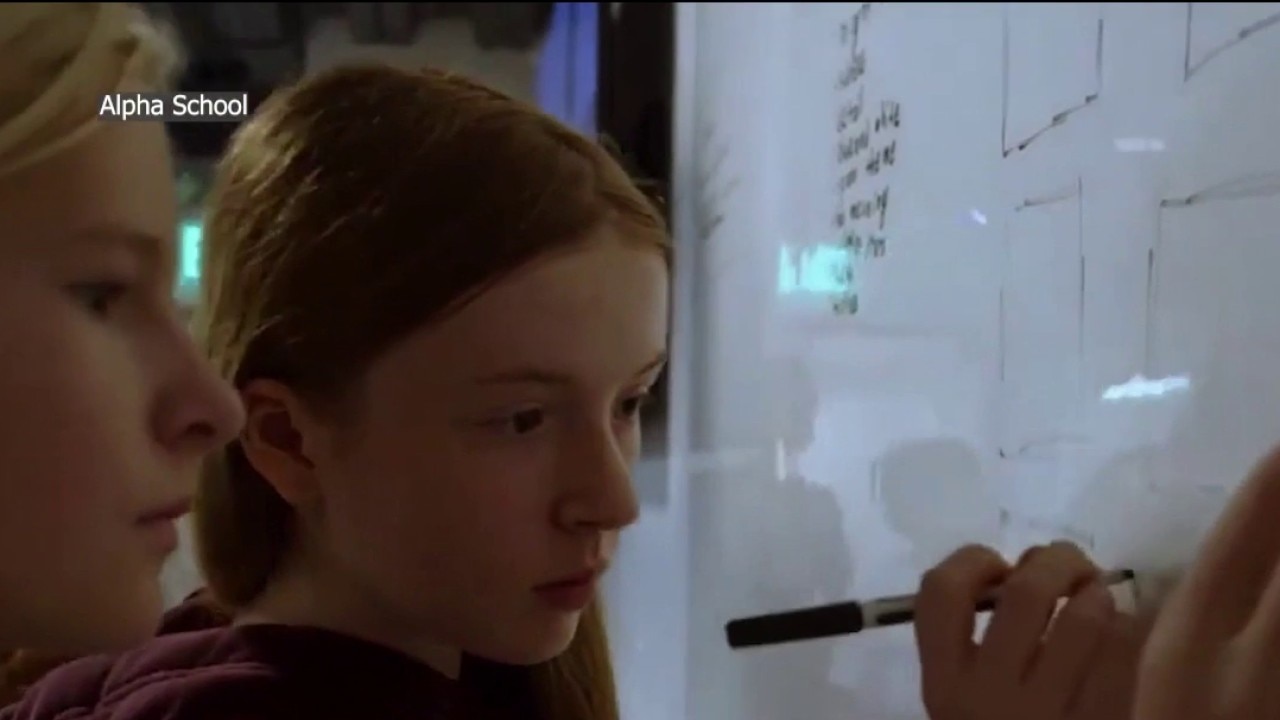
The former GEMS World Academy in Lakeshore East will soon be home to Alpha School, which serves kindergarten through eighth grade.
Founded in 2014 in Texas, this private school replaces traditional classroom instruction with human “guides” and AI tutors.
“Our AI tutors can very accurately identify where students are academically and engage and teach lessons at their pace and level,” said Mackenzie Price, co-founder of Alpha School. “We don’t use chatbots in the education system. Unfortunately, chatbots in education are cheatbots.”
The school already operates in other cities, including Austin, Miami, and New York. Approximately 1,200 students nationwide are enrolled in the Alpha School System.
The model focuses on two hours of education per day taught by AI, with the remaining time moving into life skills and leadership workshops, financial literacy courses, and physical activity.
“I think a lot of people are nervous and wary about what artificial intelligence in education looks like. The Alpha model really shows that AI can improve human intelligence, not just academically, but by providing more time for human connection,” Price said. “The real appeal of our system is that teachers are given the time and space to focus on motivating and connecting with students. Instead of creating lesson plans, delivering lectures, and writing homework assignments, the teacher’s job is to provide motivational connections and really help students find the intersection of their passions and talents.”
This approach comes at a high price. In Chicago, tuition will cost $55,000 a year when Alpha School opens this fall. First, it can accommodate about 100 students.
Let’s dig deeper:
The use of AI in schools is controversial. Education experts from DePaul University explained the potential risks.
“In these schools, computers are giving instructions. Computers aren’t thinking. We thought AI was thinking, but that’s not the case. It’s an algorithm,” said Ann Chee Chen, associate professor of college education at DePaul University. “These providers claim that this allows very instant feedback and an adaptive system that adapts to the needs of individual children. But the problem is, as we all know, there are still serious problems with AI models. So these educational materials are not necessarily accurate.”
Chen also worries that the integration of AI could have a negative impact on public education.
“In the long term, how this information, this method of teaching is being promoted and deployed by companies, may become a bigger concern. And that’s already happening in higher education,” Chen said.
Chen also said he could imagine a future where the roles are reversed, with AI becoming the cheaper option and face-to-face education becoming the more expensive option.
Some public school districts across the country, such as Chicago Public Schools, are already incorporating artificial intelligence into education. CPS released a guidebook on best practices for students and faculty to “ensure educators only utilize generative AI tools that have been vetted and approved by the district in advance.” For example, the guidebook outlines how teachers can use generative AI to enhance lesson planning.
A CPS spokesperson issued the following statement regarding this practice:
“Chicago Public Schools (CPS) welcomes the promising innovations of artificial intelligence (AI) in teaching and learning while protecting the development of students’ foundational skills and critical thinking. As students arrive with an essential understanding of generative AI, district administrators and teachers are working to provide both faculty and students with high-quality, vetted AI tools and implementation guardrails and policies to enhance rigorous, quality education.”
“The District adapts its policies as technology changes and continues to work on its recently updated Acceptable Use Policy and Information Security Policy, which includes AI. To maintain ethical standards, the District’s AI Steering Committee is creating the necessary infrastructure to support long-term technology growth. Additionally, The CPS Artificial Intelligence Guidebook instructs students, staff, and IT professionals on best practices and ensures that educators only use generative AI tools that have been previously vetted and approved by the district.This guidebook is updated quarterly to reflect this in core subjects such as literature, math, science, and social studies. We actively foster innovation by providing curriculum-based applications of AI. For example, after reading a book, teachers can use GenAI to create interactive character personas and conduct class-wide “interviews” where students can ask questions about the characters’ motivations and emotions in the story.
“On Monday, December 22, 2025, CPS officially transitioned to a policy of blocking unapproved third-party AI products from CPS networks. This decision was communicated to faculty, staff, and students, and the district is committed to implementing strict data privacy policies outlined in FERPA, COPPA, and SOPPA. This was done to ensure compliance with legal requirements. By restricting access to these platforms, CPS has reduced the risk of sensitive student information being used to train external models that could result in violations of the law, creating significant liability for the district. ”
“This action also ensures that all staff and students have access to high-quality tools that align with the district’s corporate, security, and ethical standards. The district’s intent is not to restrict access to innovation, but to provide tools and technology for teachers. Teachers can appeal restrictions if they believe their access to certain unapproved AI tools should be reconsidered.”
“With the continued support of the District’s AI Steering Committee and the introduction of the Artificial Intelligence Guidebook, CPS is well-positioned to foster innovation in the classroom while providing students and educators with the tools they need to succeed in an increasingly changing world.”
What’s next:
Alpha School is scheduled to open in Chicago this fall. It is located at 350 E. South Water Street.
source: This article includes reporting from Fox Chicago’s Kasey Chronis.