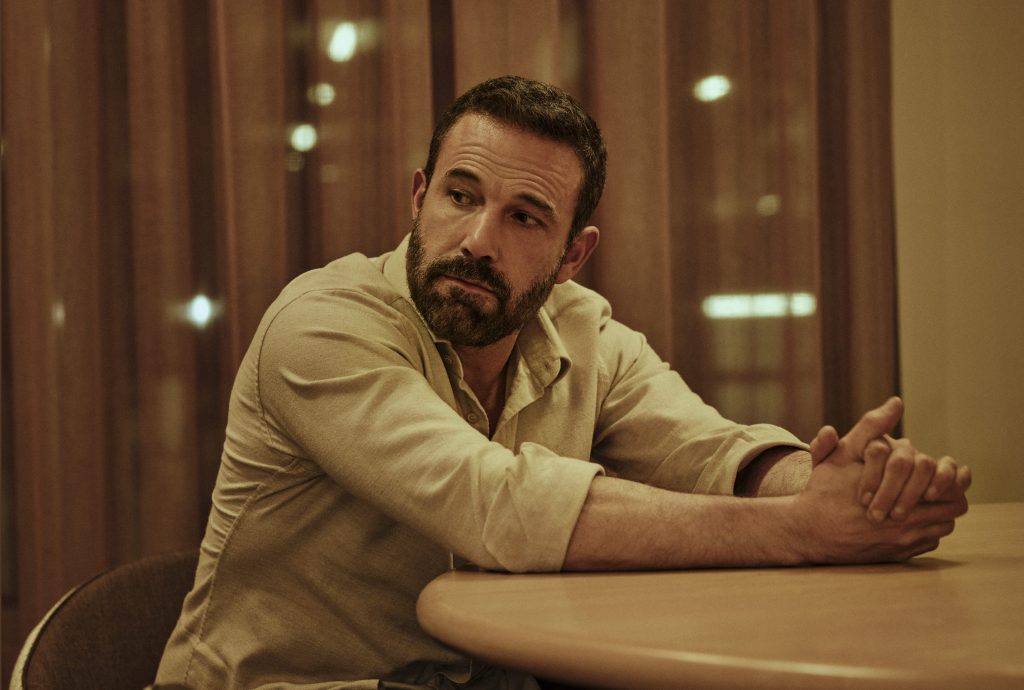
Confirming estimates reported last March, Netflix announced Friday that it paid $587 million to acquire Ben Affleck’s AI company Interpositive.
At the time of the surprise deal announcement, Bloomberg reported that the streaming giant paid about $600 million in the deal. Netflix did not comment on the report, but mentioned the pricing in an SEC filing on Friday. The latest filing is a more thorough overview of second-quarter financial results, which were originally communicated in a short filing and letter to shareholders on Thursday.
Affleck was the sole founder and CEO of Interpositive, which was quietly founded in 2022. As part of the acquisition, Netflix agreed to bring a small number of Netflix’s staff into its fold, with Affleck taking on an advisory role.
Co-CEO Ted Sarandos was asked during the company’s quarterly earnings interview about Interpositive and how the company plans to take advantage of the cost savings it can generate in the future. The topic of AI efficiency is a hot topic for major studios and streamers at the moment, given the creative community’s sensitivity to how AI is disrupting production and complicating the outlook for entertainment workers.
In his remarks, Sarandos portrayed AI tools as a useful and cost-saving aspect of production. As reported by Deadline, cost-cutting factors were emphasized by InterPositive itself prior to the acquisition.
“While it is still early days for InterPositive, we are beginning to see widespread evidence that gen-AI is starting to impact hundreds of our productions,” Sarandos said, citing Eyeline, a visual effects and virtual production shop, and an in-house lab specializing in animation.
“Gen AI is being rapidly scaled across the entire entertainment production process, from concept to previs, post and distribution,” he said. “We are creating high-quality output more quickly and effectively than using traditional methods. Gen AI workflows are currently being used on approximately 300 titles, with the greatest concentration to date being in post-production. We leverage gen AI for the most complex shots and sequences.”
Sarandos said shots of crowds and scenes with fights are examples of opportunities for AI. “In many cases, production companies would have left out these important shots because they didn’t have the budget or couldn’t shoot them within the production timeframe.”Thus, these sequences are saved by the availability and access of these generative AI tools.
One of the recent documentary series american experimentincludes 17 minutes of AI-enhanced footage, Sarandos noted. These minutes are produced “twice as fast and at half the cost compared to previous options,” he added.
That said, Sarandos reaffirmed the company’s belief that “it takes great artists to make great things, and AI isn’t going to change that.”
If the savings materialize, the money “will likely be reinvested into more content on the service, driving higher quality engagement. The whole flywheel of revenue and profit that comes from that is something we’ve been talking about since day one,” the executive said.