

Emil Eifrem, founder and CEO of Neo4j, the world’s leading graph intelligence platform, recently appeared on the Latent Space Podcast to discuss the pivotal role of graph databases in the advancement of artificial intelligence. Eifrem, a long-time advocate of graph technology, shared insights on how Neo4j enables developers to build intelligent applications and AI solutions across a variety of industries.
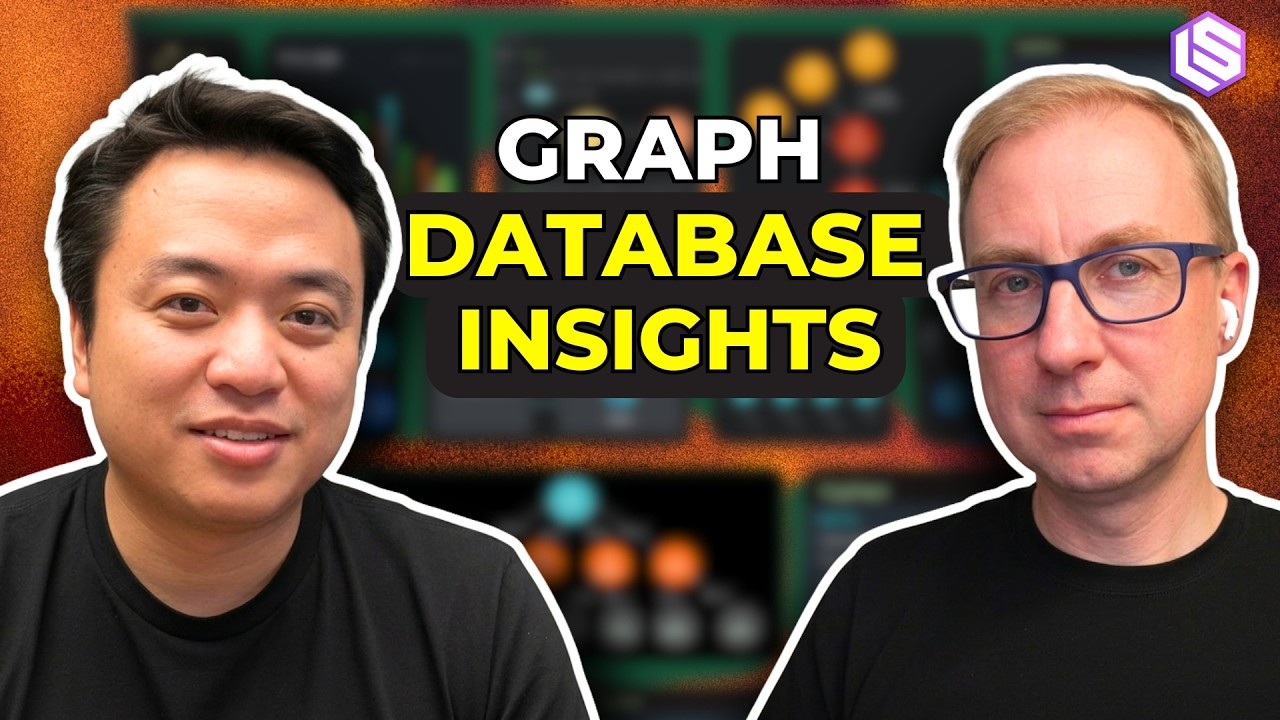
Emil Eifrem: Pioneer of graphing technology
Emil Eifrem is a recognized authority in the field of graph databases. Having been involved with the technology since its early days, he co-founded Neo4j in 2007 and led the company to become a dominant player in the graph database market. Eifrem’s vision has consistently focused on the power of relationships in data, a concept that has become increasingly important in the era of AI and machine learning. His presence on Latent Space Podcast, a platform known for deep dives into AI and its impact, highlights the growing synergy between these two innovative technologies.
The intersection of graphs and AI
The conversation centered on how graph technology is not just a database solution, but a fundamental building block for building advanced AI systems. Eifrem emphasized that while vector databases are effective for certain tasks, such as similarity searches, they often lack the explicit relational context that graph databases provide. He articulated this difference by explaining that vector databases represent data in an abstract, high-dimensional space, making it difficult to understand the “why” behind certain results. Conversely, graph databases store data as nodes and relationships, providing a clear and interpretable structure essential to many AI applications, such as fraud detection, recommendation engines, and identity resolution.
Eifrem highlighted Neo4j’s platform as a tool to transform raw data into actionable knowledge. By connecting and organizing data in a knowledge graph, users gain deeper contextual understanding, improving model accuracy and making predictions more reliable. He emphasized that this approach is particularly useful for complex use cases where understanding the intertwined relationships is paramount.
Main use cases and their importance
The discussion touched on several key application areas where Neo4j is having a significant impact.
- Fraud detection: Eifrem pointed out that graph databases are particularly good at identifying fraudulent patterns by revealing hidden connections and anomalies within transactional data.
- Real-time recommendations: The ability to process relationships in real time makes graph databases ideal for powering personalized recommendation systems and understanding user preferences and item relevance.
- ID resolution: In complex systems with multiple data sources, graph databases excel at resolving identity by linking disparate data points and creating a unified view.
- Supply chain management: Understanding complex dependencies and flows of goods within supply chains is a key use case for graph technology to enable better optimization and resiliency.
- Agent AI: Eifrem also touched on the emerging field of agent AI, where graph databases serve as the memory and reasoning backbone for AI agents, allowing them to navigate complex information environments.
The evolving landscape of data and AI
Eifrem shared his views on the evolution of data management and its impact on AI development. He observed that as AI models become more sophisticated, the need for structured, contextual data is increasing. Graph databases, which can represent complex relationships, are uniquely positioned to meet this demand. He also noted that companies are moving from simply storing data to actively extracting knowledge from it, a shift in which graph technology plays a key role.
He elaborates on the concept of a “knowledge graph” as a bridge between raw data and AI models, providing the context needed for models to learn and reason effectively. This shift from data silos to interconnected knowledge is seen as a critical step towards realizing the full potential of AI.
The future of graph technology in AI
Looking ahead, Eifrem said he is optimistic about the continued integration of graph databases into AI development pipelines. He highlighted the increasing adoption of graph technology by leading companies in the technology industry and the growing recognition of its value in building more intelligent and explainable AI systems. The ability to visualize and understand complex relationships and the capabilities of AI are seen as key differentiators for organizations looking to gain a competitive edge.
The conversation emphasized that graph databases are not just a niche technology, but a fundamental component of the future of AI, enabling deeper insights and more powerful applications across a wide range of fields.


