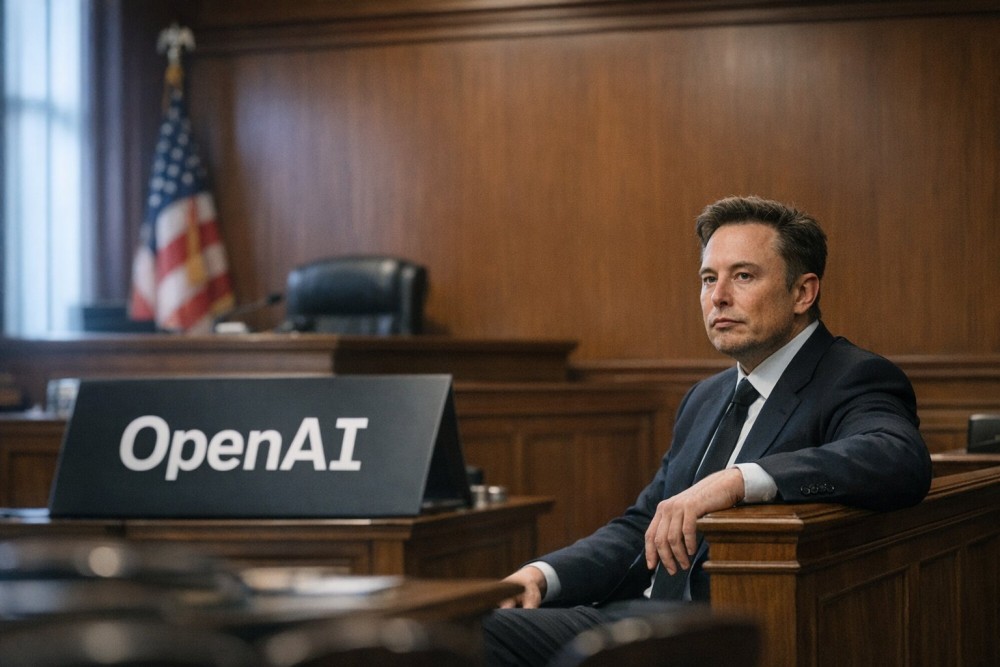
Gotrade News – Elon Musk is back in court for the second day of testimony in his lawsuit against OpenAI. The case focuses on OpenAI’s transition from a nonprofit research institute to a for-profit organization closely tied to Microsoft.
The case comes as the U.S. Senate expands AI safety investigations into major technology companies. This regulatory and legal pressure directly affected Tesla, Microsoft, and chip leader NVIDIA.
Important points:
- After investing about $44 million, Musk is suing OpenAI for allegedly violating its nonprofit mission.
- OpenAI is currently valued at nearly $157 billion thanks to its $10 billion partnership with Microsoft.
- US Senate expands AI safety investigation that could impact TSLA, MSFT, and NVDA.
According to TechBuzz AI, Musk invested about $44 million before resigning from OpenAI’s board in early 2018. He now claims he breached his fiduciary duties in moving from a nonprofit mission to a commercial structure affiliated with Microsoft.
OpenAI entered into a $10 billion partnership with Microsoft and is currently valued at nearly $157 billion. OpenAI’s legal team argues that Musk once supported commercialization, but lost his legal status after leaving the company’s board.
“They’re going to try to kill me,” Musk said in court about the pressure on OpenAI, as reported by TechBuzz AI. This line shows that this dispute is not just a corporate governance battle over a technology institute, but has long been personal.
OpenAI’s lawyers used old tweets and emails to argue that Musk favored the commercial line. The judge will also consider the 2015 founding documents, which both sides cited as core evidence.
Read on Tesla and Microsoft
Tesla stock often tracks legal and public news that involves Mr. Musk personally. The extended testimony increases short-term volatility risk, even though the core fundamentals of electric vehicles have not changed significantly.
Microsoft is a major backer of OpenAI through a $10 billion investment announced in January 2023. A ruling that restores OpenAI to non-commercial status could restructure the licensing of Microsoft Azure technology globally.
Competition is heating up, with Musk’s xAI raising $6 billion and shipping its Grok chatbot. This conflict turns the AI safety narrative into both a competitive weapon and a debate in federal court.
Senate inquiry heightens regulatory risks
The U.S. Senate is expanding AI safety investigations across major laboratories, including OpenAI and direct competitors. Lawmakers are focused on training transparency, access to sensitive data, and the risk of abuse in large-scale language models.
NVIDIA is a major chip supplier to all AI players currently under Senate oversight. Tighter export regulations could limit the sale of advanced chips to certain markets, such as China.
Dual oversight by courts and Congress will increase compliance costs across the global AI supply chain. Retail investors should track all public statements from the Senate, as the impact could be widespread across the big tech sectors.
Analysts see potential for short-term pressure on AI stocks as trials and hearings peak. However, as demand for AI computing remains strong, price declines often recover once sentiment normalizes again.
The Musk v. OpenAI trial and Senate inquiry signal new regulatory pressures on AI globally this year. These three names are worth monitoring closely while legal proceedings and hearings remain active.