
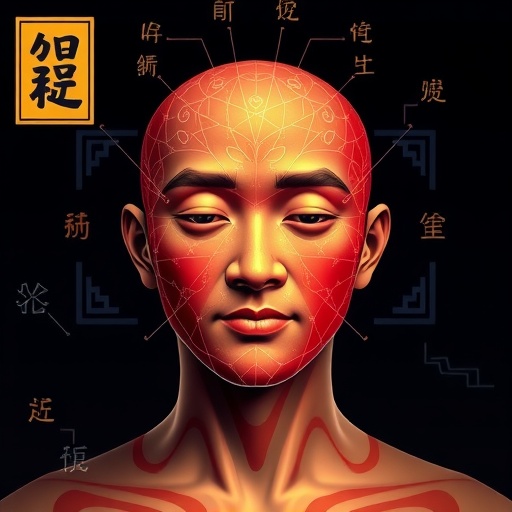
In an enlightening advance in the field of integrative medicine, a recent study by Gu, Nie, and Yang delves into identifying traditional Chinese medicine (TCM) constitution through the innovative application of multimodal deep learning radiomics. The research, scheduled to be published in the Journal of Medical Biological Engineering in 2026, represents a major advance in how ancient practices can be reconciled with cutting-edge technology to improve patient care and personal health. This breakthrough reflects the growing trend of integrating artificial intelligence into health sciences and opens new horizons in personalized medicine.
At the heart of this study is the understanding that TCM is built on the premise of constitution, or individual differences in health, including physical, emotional, and environmental factors. These constitutions serve as fundamental elements in the diagnosis and treatment of diseases. Traditional identification methods rely heavily on subjective assessments, which can lead to variability and inconsistency in patient care. By moving to a data-driven approach using deep learning, researchers aim to standardize this process and make it more accurate and reliable.
This study employs multimodal deep learning, an advanced technique that combines different types of data to improve predictive performance. This methodology enables the analysis of complex datasets including clinical symptoms, genetic markers, and imaging data, providing a comprehensive overview of an individual’s health status. By leveraging radiomics to extract high-dimensional data from medical images, researchers can uncover insights that are often invisible to the naked eye. This fusion of data types maximizes the potential of deep learning algorithms, turning them into powerful diagnostic tools.
One of the key contributions of this study is its focus on radiological features, which are quantitative measurements extracted from medical images that encode detailed information about tissue properties. Utilizing advanced algorithms, researchers can sift through vast datasets and identify patterns associated with different TCM configurations. This allows for the design of algorithms that are not only robust, but trained to recognize nuances not captured by standard clinical assessments. The potential implications of these findings could revolutionize the way healthcare providers approach diagnosis and treatment.
Moreover, using deep learning in this situation not only improves diagnostic accuracy but also efficiency. While traditional assessments can be time-consuming and dependent on physician expertise, automated systems can analyze data within seconds, bringing a new level of responsiveness to patient care. The implications for clinical practice are profound, especially in settings with large patient volumes, as rapid and accurate assessment is critical for effective treatment planning.
This study also highlights the importance of diversity in training datasets. For machine learning algorithms to be effective, they need to be exposed to a wide range of data that accurately represents the population they serve. The researchers emphasize this point, noting that including various demographic factors such as age, gender, and ethnicity improves the generalizability of the model. This focus on comprehensiveness is essential to ensure that future applications of research findings are applicable and beneficial to a wide range of patients.
As the healthcare industry continues to adopt AI technologies, ethical considerations regarding data use and patient privacy become paramount. Researchers are acutely aware of these concerns and are advocating for a responsible approach to data sharing, emphasizing the importance of anonymization and consent. Establishing trust is essential as society grapples with the potential of AI in healthcare, especially with regard to sensitive personal data.
After publication, we expect to see a surge of interdisciplinary interest and collaboration as this research paves the way for future exploration into the integration of traditional knowledge systems and emerging technologies. This synergy between diverse medical paradigms may lead to improved medical outcomes and novel therapeutic interventions. TCM’s potential to inform and shape modern medical practice represents an interesting intersection of history and innovation.
Furthermore, the implications of this research extend beyond clinical practice to the realm of education. As medical education evolves, developing skill sets that include fluency in data analysis and machine learning principles will be essential for future healthcare providers. This study serves as a catalyst for discussions on curriculum reform and interdisciplinary approaches to health education.
In summary, Gu, Nie, and Yang’s work on TCM constitution identification through multimodal deep learning radiomics is a promising exploration at the intersection of ancient wisdom and modern technology. By combining traditional medical knowledge with cutting-edge analytical techniques, this research not only increases our understanding of the composition of TCM, but also heralds a new era of personalized medicine. As the findings emerge, there is no doubt that the potential to transform practice and patient care will resonate throughout the medical community and demand further research and application.
With this pivotal study, the authors urge the scientific community to rethink the boundaries of medical paradigms and embrace a future where diverse methodologies coexist and collaborate to improve global health.
Research theme: Constitutional identification in Chinese medicine based on multimodal deep learning radiomics
Article title: Constitutional identification in Chinese medicine based on multimodal deep learning radiomics
Article references:
Gu, T., Nie, Y., Yang, H. Identification of Chinese medical constitution based on multimodal deep learning radiomics.
J. Med. Biol. Engineering (2026). https://doi.org/10.1007/s40846-025-01000-y
image credits:AI generation
Toi: https://doi.org/10.1007/s40846-025-01000-y
keyword: traditional Chinese medicine, deep learning, radiomics, artificial intelligence, personalized medicine, medical image processing, machine learning, healthcare innovation.
Tags: Artificial intelligence in integrative medicineDeep learning applications in traditional medicineApplicationsEnhance patient care with AIHealth data analysis technologyInnovative medical technologyMultimodal deep learning in medicineAdvances in personalized medicineRadiomics in medical researchStandardization of TCM practiceSubjective and objective health assessmentIdentification of TCM constitutionDiagnosis of traditional Chinese medicine


