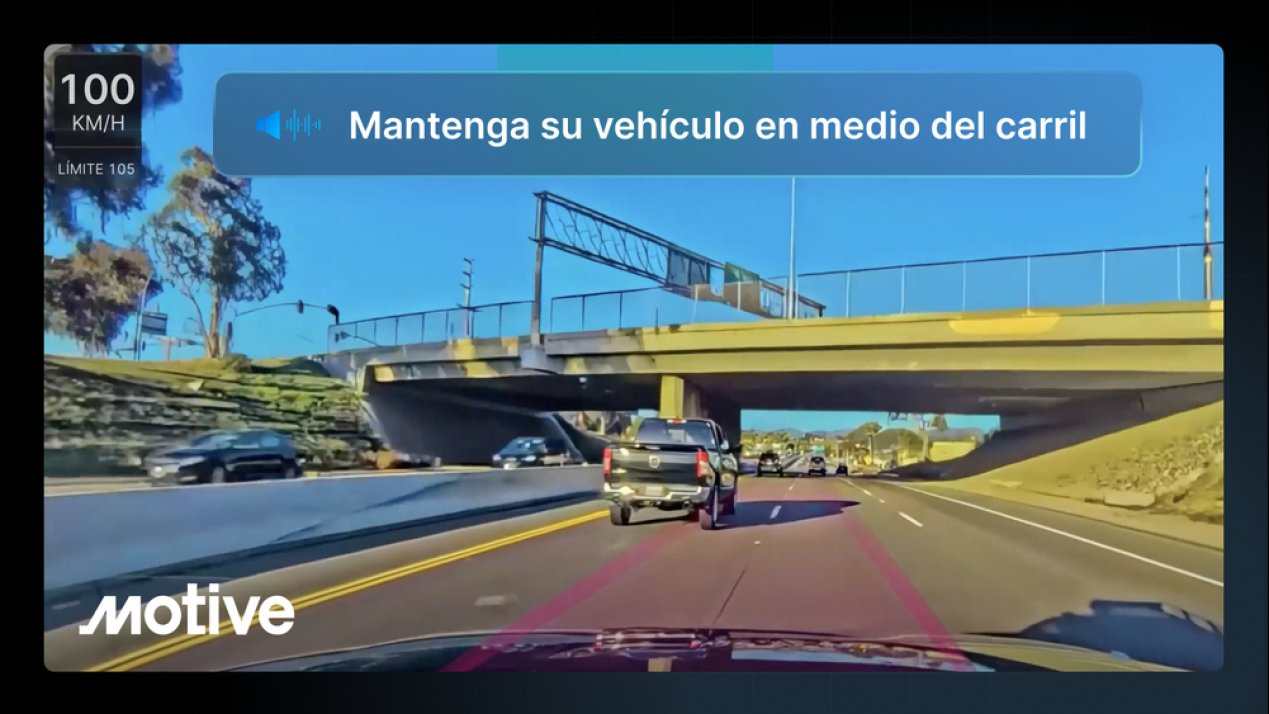
Motive, the AI-powered physical navigation platform, announced a new suite of AI road safety features designed to detect risky driving behaviors early and prevent crashes before they occur.
“Road safety crises have been escalating for years now, requiring technology that evolves at an equally fast pace. These new features reliably reveal warning signs early, so operators can intervene before a crash develops,” said Hemant Banavar, Chief Product Officer at Motive.
Despite recent declines, traffic fatalities around the world remain alarmingly high, with fatigue, distraction and lane departure continuing to cause preventable fatalities. In response, Motive accelerated the deployment of advanced AI models that can detect risky behavior in real time and alert operators to minor errors before they become catastrophic. Motive estimates that since 2023, its AI dashcam technology has prevented more than 170,000 accidents and saved 1,500 lives.
The three new models expand Motive's real-time safety suite.
-
Lane departure detection using AI: Lane departures are associated with 79% of fatigue-related crashes. This new feature flags drifts that repeat more than three times in five minutes at speeds of 80 km/h or more and compiles them into a single timeline for administrators to provide a complete picture of early fatigue patterns. Alerts for operators will be added in a future update.
-
AI-powered smoking detection: Smoking behind the wheel takes your hands off the wheel and eyes off the road for an average of 12 seconds, significantly increasing your risk of a crash. This is especially dangerous when working with hazardous materials, so this feature detects if a cigarette is in the driver's hand or mouth for more than 5 seconds while on the move, and immediately alerts the safety officer and issues an in-vehicle alarm.
-
AI-powered head-in parking detection: Two-way parking causes low-speed collisions, and nearly 9% of pedestrian fatalities in parking lots occur in back-up collisions. Motive's new detection feature sends an alert when a vehicle backs out of a head-in parking space, helping organizations practice safer back-ins.
“Before Motive, we couldn't even see some of these behaviors. Now, we can catch unsafe lane changes and tailgating before they become problems,” said John Riddle, Community Safety Manager at The Dana Companies.
Motive's AI dashcam detects over 15 dangerous behaviors, including drowsiness, unsafe parking, and risk of forward collision. According to a 2023 study by the Virginia Tech Transportation Research Institute, Motive's AI dashcam alerted drivers to unsafe behavior two to four times more often than competing models. Customers using Motive have reduced crashes by an average of 80% and accident-related costs by 63%.
To ensure accuracy, Motive uses data from over 1 million vehicles and assets and reviews tens of millions of events each year. Its system includes a unique human validation process supported by 400 full-time data annotators to reduce false positives and improve understanding of context.
In October, Motive announced advances in AI to help organizations comply with Mexico's new CNE-mandated GPS safety and traceability regulations, which require vehicles transporting flammable products to report real-time GPS data to a federal monitoring platform. Non-compliance can result in fines, fines and even vehicle impoundment, creating urgent pressure to modernize fleets.
“These new regulations create urgent compliance challenges, and Motive's GPS tracking, document management, and local expertise make it easy to meet the requirements while improving everyday safety,” said Omar Camacho, general manager of Motive Mexico.
Motive's compliance tools include:
-
Real-time GPS tracking gives you complete visibility of every route and asset
-
Integrated document management with alerts for expirations, inspections, and instant access to permits and vehicle records
-
Guidance on fleet compliance with support from local experts based in Mexico.
Beyond compliance, Motive’s AI dashcam seamlessly integrates with GPS and document workflows to protect cargo, operators, and the communities they serve.