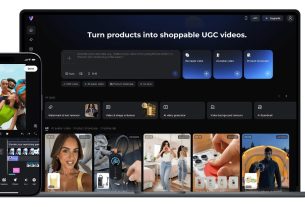
Meta is piloting a standalone version of its AI-generated video product, Vibes, moving the experience from the Meta AI app to its own dedicated home. The company says the early traction justifies the test and positions Vibes as a more direct competitor to emerging AI video platforms, including OpenAI’s Sora social app. The experiment was first reported by Platformer, who confirmed that Meta is gauging demand and fine-tuning features ahead of a wider rollout.
Unlike Reels or TikTok, Vibes is a composite feed of all your clips. Users can generate videos from scratch, remix what they see, overlay music, and apply visual styles before publishing. Not only is the sharing feature native to the new app, but it’s also built into Meta’s distribution rails, allowing for cross-posting to Instagram and Facebook Stories and Reels, as well as easy handoffs via Direct Messages.
What Vibes is trying to solve with its dedicated app
Meta said the alternative app provides creators with a focused canvas and gives consumers a consistent expectation that they want AI-native video rather than a combination of camera footage and editing. Internally, the company notes steadily increasing usage of Meta AI and strong involvement in Vibes, but does not release specific numbers. Single-purpose apps also simplify the prompt-preview-iterate-publish product loop and tend to be faster if they’re not embedded within a common AI assistant.
Strategically, spinning out Vibes makes room for its own algorithmic identity, notifications, and community norms. It also gives Meta a testing ground for a new generation of tools and formats without disrupting Instagram’s creator economy. Vibes also supports cross-posting by design, allowing Meta to feed breakout content into the Reels ecosystem, where there is already significant advertiser demand.
Freemium model cost and limit calculation points
Vibes has been free until now, but Meta plans to experiment with a freemium model that caps monthly video creation and offers subscriptions to increase production capacity. This goes hand in hand with the economics of AI video. Rendering several minutes of high-fidelity footage can be GPU-intensive and expensive at scale. Subscription plans are common in this category, with Runway, Pika, and Midjourney all measuring output. This helps the platform balance creative freedom with infrastructure costs.
The question is how to set limits without inhibiting experimentation. Meta said early Vibes users were focused on remixing and collaboration, suggesting that generous remix allowances and smart batching (e.g. longer render queues) can keep the experience fluid even with caps. Clear usage meters and predictable pricing are key when creators evaluate whether Vibes can become part of their daily workflow.
OpenAI’s Sora app pushed the category into the mainstream conversation, while Google introduced Veo as its next-generation text-to-video model. YouTube is testing Dream Screen for Shorts, which lets creators generate AI backgrounds, and TikTok’s Symphony tool targets brands and creators with automated production. Independent studios like Runway and Pika continue to release upgrades in quick succession, raising the bar for consistency, motion, and style control.
What sets Vibes apart is our ambition at the feed level. In other words, it’s a social stream built entirely from synthetic footage. Therefore, discovery mechanisms and aesthetic diversity are important. If your video starts to feel the same, like neon cityscapes or too many endlessly looping zooms, viewers will turn away. We look forward to seeing Meta invest in prompt templates, style packs, and collaboration chains that encourage diversity and give authors more ways to leverage than a single text box.
The rise of AI video brings with it familiar reliability concerns. Meta is working on labeling AI-generated media across its apps and is considering watermarking synthetic content. Industry initiatives such as the Coalition for Content Provenance and Authenticity and the Content Authenticity Initiative are pushing for standardized metadata that is preserved across edits and re-uploads. Regulators from the United States to the European Union have indicated that clear disclosure of information about synthetic media, particularly advertising and political context, is becoming a key issue.
For Vibes, consistent labeling, friction against deceptive edits, and visible source context (original prompts, remix lineage) are key to preventing abuse. App design can make or break these safeguards. Subtle UI cues that reveal how a video was created are more effective than buried menus or hard-to-find toggles.
Three metrics reveal whether Vibes has legs: creation-to-publish conversion (number of prompts that become shareable videos), cross-posting rate to Reels and Stories (distribution leverage), and session length (is the feed itself engaging?). Also keep an eye out for where Meta tests subscriptions, what monthly generation quotas are, and whether creators are subject to export controls in line with other platforms.
If the standalone test is successful, Vibes could become Meta’s laboratory for AI-native video UX and monetization. The company has a history of adding features to a focused surface and then folding the winners into its flagship app. As AI video competition intensifies, the dedicated Vibes app gives Meta both a faster feedback loop and a clearer story to tell to creators, which could be a real competitive advantage.