U.S. Army Maj. Gen. John P. Cogbill, 11th ABD commander, will participate in a panel discussion to discuss the importance of decision superiority along with the future of artificial intelligence, machine learning, and C2 at the Army Pacific (LANPAC) Symposium and Exhibition in Honolulu, Hawaii, May 12, 2026. Discussions focused on strengthening the U.S. military’s power projection and crisis response capabilities in the vast Indo-Pacific region. (U.S. Army photo by Sgt. Abrianna Goodrich)
View original

U.S. Army Maj. Gen. Jacqueline MacPhail, commander of U.S. Network and Enterprise Technology Command (NETCOM), will participate in a panel discussion at the Army Pacific (LANPAC) Symposium and Exhibition in Honolulu, Hawaii on May 12, 2026, to discuss the importance of artificial intelligence, machine learning, decision superiority, and the future of C2. Discussions focused on strengthening the U.S. military’s power projection and crisis response capabilities in the vast Indo-Pacific region. (U.S. Army photo by Sgt. Abrianna Goodrich)
View original
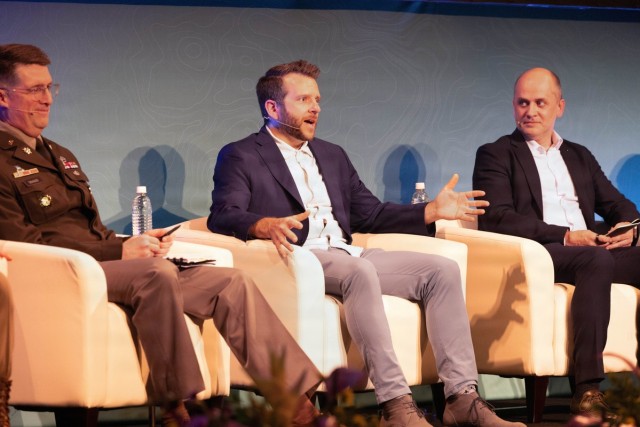
Tim Gauter (center), chief data officer at Govini, participates in a panel discussion discussing decision superiority, artificial intelligence, machine learning, and the future importance of C2 during the Army Pacific (LANPAC) Symposium and Exhibition in Honolulu, Hawaii, May 12, 2026. Discussions focused on strengthening the U.S. military’s power projection and crisis response capabilities in the vast Indo-Pacific region. (U.S. Army photo by Sgt. Abrianna Goodrich)
View original
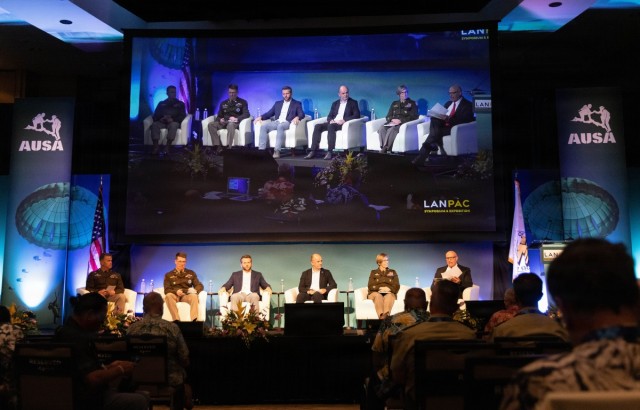
Panelists participate in a discussion on “Decision Advantage (AI, Machine Learning, C2)” during the 2026 Army Pacific (LANPAC) Symposium and Exhibition at the Sheraton Waikiki in Honolulu, Hawaii, May 12, 2026. The discussion focused on strengthening the U.S. military’s military commitment and crisis response capabilities in the vast Indo-Pacific region. (U.S. Army photo by Sgt. Abrianna Goodrich)
View original
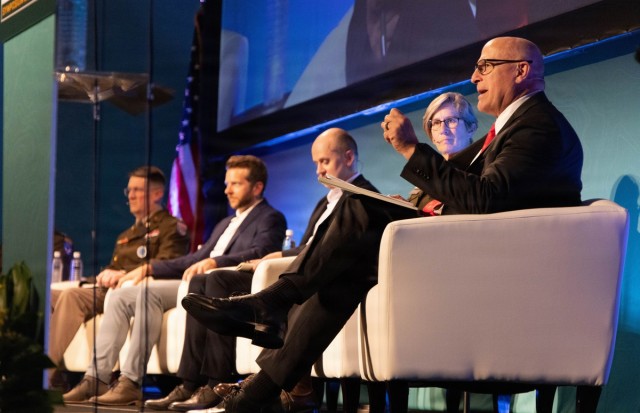
Panelists participate in a discussion on “Decision Advantage (AI, Machine Learning, C2)” during the 2026 Army Pacific (LANPAC) Symposium and Exhibition at the Sheraton Waikiki in Honolulu, Hawaii, May 12, 2026. The discussion focused on strengthening the U.S. military’s military commitment and crisis response capabilities in the vast Indo-Pacific region. (U.S. Army photo by Sgt. Abrianna Goodrich)
View original
HONOLULU – On May 12, military leaders and defense experts at the 2026 Army Pacific Symposium and Expo discussed how artificial intelligence and machine learning are reshaping modern warfare, highlighting the growing importance of achieving decision-making superiority in an increasingly complex operational environment.
“Let’s be clear: Artificial intelligence is not designed to replace commanders. Artificial intelligence is designed to assist commanders and utilize more data and information to make competitive decisions and more timely decisions,” Lett said. Lieutenant General Neil Thurgood, Anduril Senior Vice President.
For decades, military superiority depended on producing better tanks, jet aircraft, and faster, more accurate weapons. Now, that advantage is shifting toward interoperability, the ability for disparate platforms to work together, understand data, and operate faster across all domains.
This change is essential as the modern military environment is saturated with unprecedented amounts of data. The current operational challenge is to synthesize this vast influx of information into useful and actionable outcomes for military leaders.
“AI is a great tool for us, but at the same time it cannot replace a foundation of command responsibility, risk acceptance, and values,” said Maj. Gen. John Cogbill, commander of the 11th Airborne Division.
This evolution in warfare is defined by three major trends. The first is the transition from linear kill chains to highly dynamic “networked kill webs.” Second, future conflicts will largely depend on the speed at which decisions are made over the adversaries. Finally, command and control (C2) systems are moving away from fixed, rigid infrastructures to modular, software-driven architectures. \`
Effective deployment of these AI capabilities requires a modern, secure network. U.S. Army Network Enterprise Technology Command (NETCOM) leaders manage cyber task forces to ensure reliable data flows and actively work to operate, defend, and modernize these networks.
However, on the technical side, broader collaboration is required. Close collaboration with international partners and industry experts ensures that diverse experience is reflected in these rapid capacity developments.
“All we can do is train the AI. What we have is the ability to do critical thinking, not the AI,” said Maj. Gen. Jacqueline MacPhail, commander of the U.S. Army Network Enterprise Technology Command (NETCOM).
The military’s approach to AI and network modernization is multifaceted and includes software agility, collaborative partnerships, and advanced data processing. By prioritizing decision-making superiority, militaries are poised to outperform their adversaries and maintain strategic advantage in future conflicts.
LANPAC 2026 continues this week with discussions focused on strengthening partnerships, driving innovation, and improving joint land operations across the U.S. Indo-Pacific Command area of responsibility.