Chinese author Jia Zhangke collaborated with Seedance 2.0 to create the AI-generated video “Jia Zhangke’s Dance.”
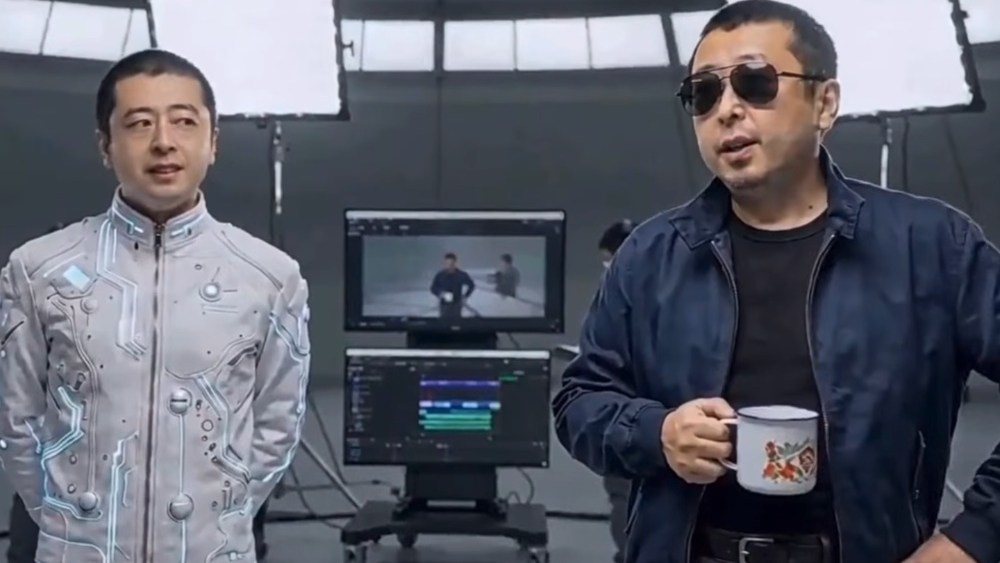
The film, released online at the beginning of the Lunar New Year holiday and widely distributed on social media, features digital recreations of acclaimed Chinese filmmakers and depicts a scripted, metafictional exchange about authorship, technology, and artistic control.
“Hello everyone. For this Lunar New Year, I collaborated with Seedance 2.0, a video generation model developed by Doubao, to create this rather unique short film ‘Jia Zhangke’s Dance,'” Jia posted on social media.
“As a producer, I did not appear in the movie. The two “Jia Zhangke” on the screen were both produced by Seedance 2.0. One side has a unique “AI feel” to it, while the other side looks almost exactly like me in real life. Seeing the two “Jia Zhangke” conversing on screen evokes a strange sense of time travel. From black and white to color, silent to sound, film to digital, movies have changed over the years. With every change came questions. However, AI is developing very quickly, and while it was easy to spot a fake a few years ago, today it can generate a pretty good video from a single sentence. It’s really fast. ”
“I’m not worried about technology ‘replacing’ film. Since its inception, film has always coexisted with new technology. The camera itself was once an unsettling invention, but now it’s part of our daily lives. What really matters is that people It’s about how we use technology. If this short film can make the audience laugh and then make them stop and think about the essence of creation, then its existence is already meaningful. Like AI, I’m still learning the answer.
In this short film, the dialogue begins with Ji-ah expressing surprise at having been replaced by an AI shadow warrior during filming. The synthetic version explains that she has improved her appearance by removing wrinkles and losing weight, and the director joked that she wished she gained back the pounds she lost because the altered version looked awkward.
The two then discuss whether AI should be considered a creative work or just a high-quality imitation. To demonstrate its capabilities, the AI visually moves Jia through a series of changing cinematic landscapes, placing the director in a stylized environment that evokes the visual world associated with his film.
A central conflict arises when the AI inserts an optimistic line about looking toward a new era, but Ji-ah objects, saying the character has never used such language. AI counters that once a work is delivered to an audience, its interpretation is no longer solely the author’s.
The conversation also explores the potential for collaboration between humans and AI, with AI proposing a division of labor where filmmakers contribute the ideas and machines provide the computing power. Jia responds with a joke about how he’s hated “Party A” his whole life, the Chinese industry slang for a customer, leading to the punchline of becoming what he once opposed.
The film eventually reveals that the entire scenario is a staged performance, with the actors discussing the difficulty of playing Jia Zhangke and suggesting that embodying the director is less about physical resemblance and more about capturing a certain mental state. The video ends with both Jia and AI giving Lunar New Year greetings.
Seedance 2.0 is ByteDance’s AI video generation model that can generate cinematic clips from text, image, and audio inputs while maintaining character consistency between scenes. The technology has attracted attention across the global film industry, with criticism from studios and industry groups over alleged copyright infringement and unauthorized use of intellectual property and performers’ likenesses.
Jia previously spoke about the role of artificial intelligence in film production. In a master class at last year’s Venice Film Festival, he said, “AI feels like playing chess at home, but shooting with a camera feels like being outdoors climbing a mountain. Different directors choose different tools, but I’m still drawn to the camera and the real world.”
Best known for socially grounded works such as “Still Life” and “A Touch of Sin,” Jia has long explored the social and technological transformation of modern China.