Generative AI has had a significant impact on the price and availability of computer hardware. Major chipmakers such as Samsung, Hynix and Micron are focused on supporting the rapidly increasing number of AI data centers around the world, resulting in component shortages and soaring prices for consumer hardware.
Memory chips are particularly affected. The current industry standard for random access memory (RAM), Double Data Rate 5 (DDR5), is six to eight times more expensive than it was in September 2025.
“Every hardware manufacturer in the gaming industry is feeling the pressure at the same time, from Nintendo to Valve to Sony,” says Joost van Dornen, founder of analyst firm Aldora and former CEO of SuperData Research.

The problem stems from the fact that leading companies in the field have switched from making dynamic RAM (DRAM) to making high-bandwidth memory (HBM), which is specifically designed for use in data centers. These two implementations are completely different. “It’s not like you can take some of your AI inventory and use it on the desktop to adopt a different form factor,” says Ben Miles, managing director at PC builder Wired2Fire. HBM modules are highly integrated into servers and cannot be reconfigured as consumer DRAM.
Small PC component companies like Corsair and Kingston are in short supply. The raw materials needed to manufacture DRAM products are no longer available in the supply chain in the same quantities as before.
“Everything is in the spot market,” Miles explains. “Everything is trading back and forth. It’s a cyclical situation where the same products go around and around and trade at higher and higher prices.”

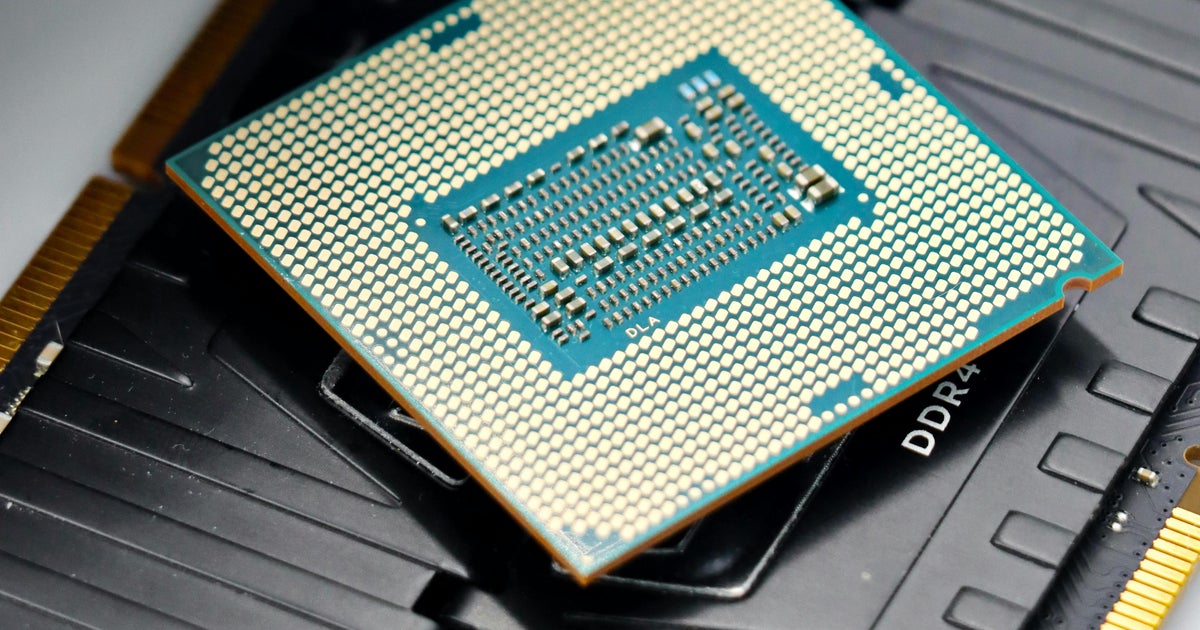
An interesting feature of this situation is that older hardware that supports previous generation DDR4 RAM rather than newer DDR5 is suddenly in demand again. This is because manufacturers want to take advantage of DDR4’s lower cost and relative abundance when compared to DDR5. Miles said older DDR4-compatible central processing units (CPUs) are being “hoarded,” resulting in higher prices for lower-performance chips.
“You can buy a Core Ultra 5 CPU for less than buying an older Core i5,” he says. “Frankly, building midrange or entry-level desktops using the DDR5 platform makes little sense at this point. It’s an absolutely crazy market.”
beyond memory
While the cost of DRAM has been in the headlines due to rising prices, the memory shortage is also impacting other hardware that makes consoles and PCs.
For example, Nvidia GPU prices have become more volatile on the back of the company not providing GDDR7 VRAM (onboard memory that helps GPUs work) to add-in board manufacturers like Asus, Gigabyte, and MSI. These companies typically have to source their own memory in fewer markets.
“SSD price increases not only impact the cost of your computer, but every device you own.”
“We see a huge disparity in prices,” Miles said. “Some traditionally affordable manufacturers are now more affordable than premium brands based on GDDR supply, costing, and inventory holdings.”
He added that it is “virtually impossible” to buy new graphics cards in bulk on the market.
Miles said that after RAM and GPUs, the next component that is starting to rise in cost is solid state drives (SSDs). This is because AI data centers require raw materials to manufacture the high-capacity NAND used to manufacture SSDs.
“SSD price increases not only impact the cost of your computer, but every device you own,” he explains. “Whether it’s a smartwatch or a phone, they all come from the same overall availability.”
consumer cost
We are beginning to see the price pressures facing hardware manufacturers begin to trickle down to consumers. For example, Sony recently increased the suggested retail price of the PlayStation 5 by $100 after repeated price increases over the past few years due to other macroeconomic conditions.
While Nintendo has not yet increased the price of the Switch 2, the company is facing a roughly 40% price increase for the DDR5 used in the console, which van Dronen estimates will add an additional $18 to RAM costs per unit. Pre-orders for the console were delayed following President Trump’s tariff announcement, and it went on sale in the U.S. last year for $449.99.
Rising retail costs of hardware could have a chilling effect on the industry. “The console and AAA PC gaming markets rely on hardware investments to attract new active players and drive market momentum,” said Piers Harding-Rolls, head of gaming research at Ampere Analysis. “Therefore, if this situation weakens, demand for new games could weaken.”

He said the increased parts costs come at a troubling time for Nintendo, and the company is reluctant to raise the price of the Switch 2 at a time when it is trying to establish a new platform. “Similarly, it’s a troubling situation for Sony and Xbox, with Grand Theft Auto 6 coming at the end of 2026, as they hope to make the most of the positive impact of the system seller’s release.”
James McWhirter, senior analyst at research firm Omdia, agrees that platform holders are under tremendous pressure, but says these companies have a number of lines of business that could help offset rising hardware costs.
“Console manufacturers also sell software, services and peripherals, which means there are many levers available to help alleviate this problem,” he says. “For example, Nintendo has plenty of room to adjust the price of Nintendo Switch Online subscriptions upward.”

One of his particular concerns regarding Nintendo is the impact rising hardware prices will have on the original Switch console. The company has already increased the prices of its original 3 Switch models in the US, with price hikes of up to 15% applied since last August due to “market conditions” (presumably depending on the US tariff situation).
“Historically, last-generation systems have been able to provide platform holders with an affordable entry point into their game catalog,” McWhirter says. “Major console markets like the US are showing signs of declining purchasing power for middle-income households, and without an affordable entry point into the console platform ecosystem, this could impact the pipeline of eager early adopters for future generations.”
steam machine
Valve is in the middle of a perfect storm. In November, the company announced its new Steam Machine console/PC hybrid, which is powered by the SteamOS operating system and has the potential to disrupt the console market.
However, in February, Valve announced that it would postpone the release of Steam Machine due to rising parts costs, and the company has remained silent on pricing for now. Van Dreunen originally expected the base model to cost $549, but now believes it could cost as much as $629, and the 2TB version could cost $899.
“Valve’s smart move was to make the storage and memory user-upgradable, allowing them to ship a lower-spec base unit and let enthusiasts upgrade on their own,” he says. “But as component costs continue to rise, it becomes harder to deliver on the core proposition of ‘console convenience at the price of a PC.'”

Wired2Fire’s Miles wouldn’t be surprised if Valve postpones Steam Machine’s launch indefinitely until the market calms down.
“I don’t see how you can expect to release a product at a stable MSRP. [manufacturer’s suggested retail price] “In a market that doesn’t have a stable bottom,” he explained, “because it’s a brand new product, it wouldn’t be surprising to see it postponed indefinitely until we see normality return to the market.”
He believes that even if Valve announces a suggested retail price $100 or even $200 higher than originally planned, the company may have to raise prices further as component costs rise, which would undermine “the secret sauce of an affordable system.”
Impact on game development
Another area to consider when it comes to rising hardware costs is game development. People who create video games often require very powerful setups to run the software used to build their games. Wired2Fire’s Miles believes this is another area of pressure for already struggling game studios.
“If you had an IT budget that was agreed at the beginning of last year, you would probably end up with 25% fewer machines per pound spent than before,” he says.
“The rate of growth is so fast that it’s becoming even more difficult to endure. You might have had a project that needed to hire 10 more developers to get it done on time. Those 10 developers would need £30,000 worth of hardware to get up and running. Well, all of a sudden, to get the same project to fruition at the same profit, that’s £50,000 worth. Your overhead has ballooned considerably.”
“For every pound spent, we’ll probably end up with 25% fewer machines than before.”
Harding-Rawls added: “This increases the risk of content investing and could impact funding for some companies.”
While Miles doesn’t think the rising cost of hardware will have an impact on how games are made – “there’s always going to be areas of the market that aren’t particularly price sensitive,” he says – van Dreunen thinks this could be part of a move away from pushing gaming technology.
“We’re seeing a renaissance in mobile games, browser-based games and even board games,” he argues. “As hardware becomes more expensive and upgrade cycles become slower, developers are even more incentivized to optimize for the existing installed base rather than chasing cutting-edge specs. It also drives further digitization, as import taxes force physical goods to operate on thin or nonsensical margins and push everything toward digital in-store.”
Future prospects
As AI proponents like to say, this technology is here to stay, so we just need to get used to it. But how long will its impact last in the hardware world? The experts we spoke to are not optimistic.
“This situation is not going away anytime soon,” Van Dronen predicts. “Memory cost pressures are structural, not cyclical. As long as building out AI infrastructure continues to consume manufacturing capacity, consumer-grade components will remain expensive. I expect further consolidation of the hardware landscape. Microsoft will continue to retreat from hardware, Sony will rely more on third-party manufacturing, and potential new entrants like Valve will have to rethink their pricing strategies.”

Harding Rolls added: “We expect storage and memory prices to remain high for at least the rest of the year, so unfortunately this is not a trend that hardware companies can afford to sit on without taking some action.”
Omdia’s McWhirter agreed, saying, “Memory manufacturers will continue to lean as much as possible towards serving the enterprise space, and we expect that the priority of supplying consumer products will continue to decline.”
Wired2Fire’s Miles shares other experts’ concerns GamesIndustry.biz He noted that other challenges facing AI deployments could lead to a loss of confidence in the technology’s future.
“There is a general sense in the industry that this cannot go on forever, and that there will be bottlenecks beyond computer hardware and building out AI data centers that will become more prevalent,” he explains. “Power availability, completed data center availability, water availability in construction areas will start to become more of a bottleneck than hardware availability.”
He concludes that “simply by removing commitments from a few large AI projects, all of a sudden you release a lot of demand pressure.”