

Massachusetts Institute of Technology (MIT) Professor Regina Barzilai argues that Israel can set global standards for testing and scaling clinical AI, from regulation and education to implementation within large healthcare providers.
The combination of Israel's deep technological expertise and constant commitment to innovation has the potential to position the country as a world leader in integrating artificial intelligence (AI) into healthcare, according to leading international experts visiting Israel.
Professor Regina Barzilai, a computer scientist at the Massachusetts Institute of Technology (MIT) and one of the world's foremost experts on medical AI, said Israel is uniquely suited to play a central role in AI in the medical revolution. The role spans the entire technology lifecycle, from evaluation and regulation to physician and patient education to real-world implementation, she said.

Professor Regina Barzilay at HealthTech AI Summit 2025 (Courtesy of Rami Zarnegar)
Unlike many countries, the Israeli healthcare system brings healthcare providers and payers under the same organizational roof. Barzilay explained that this structure creates an environment where innovation moves faster, data is used more effectively, and AI tools can be tested and scaled with fewer barriers.
“Israel is in a position to lead the country in this area,” Barzilai told The Media Line.
During a recent visit to Israel centered around the HealthTech AI Summit 2025, chaired by Professor Ran Balicer, Chief Innovation Officer at Clalit Health Services, Barzilay highlighted the important role startups play in advancing artificial intelligence in healthcare. The summit was held at the end of December 2025.
The development of AI for healthcare relies heavily on innovation at the startup level, she said.
“Israel is experiencing really, really exciting developments,” Barzilai said. “Several companies are doing great work in AI and health.”
At the same time, Barzilay acknowledged that there is still reluctance to adopt what she calls fourth-generation AI tools. One major hurdle is the lack of evidence that these technologies significantly change patient outcomes.
“Because it's not just about detection.” [disease] But to show at a population level that it changes outcomes,” she said.
Because it's not just the detection that matters. [disease] earlier, but to show at a population level that it changes outcomes.
For example, in the case of breast cancer, the goal is to prevent women from needing late-stage treatment. Late-stage treatments are more expensive, more complex, and associated with poor prognosis. Israeli companies are particularly well-positioned to demonstrate this kind of impact, she added.
“If you're talking about secure technology, agility is much better,” Barzilay says. “We can deploy this technology and demonstrate it at a population level. This will really make a difference. This will make this technology a much bigger seller and more attractive for adoption in the US and Europe.”
Barzilai was born in Ukraine and immigrated to Israel in his 20s. She currently lives in the United States and is a Distinguished Professor of AI and Health in the Department of Computer Science in the School of Engineering and AI faculty leader at the MIT Jameel Clinic. She was recently named one of the world's most influential people in the field of AI by Time magazine.
Her research focuses on developing machine learning methods for drug discovery and clinical AI. Early in her career, she worked extensively on natural language processing.
Barriser, who also serves as Clalit's deputy secretary-general, invited Barzilai to the summit and is working with her on the implementation of AI in Israel. “Clarit is proactively leveraging cutting-edge scientific tools to provide patients with predictive, proactive, and personalized care. This is a major move away from the existing reactive, one-size-fits-all care that is the mainstream of modern medicine,” he told The Media Line.
At Clalit, more than 100,000 people each month receive improved care powered by AI, according to Balicer.
“We are proud to be collaborating with Professor Regina Barzilai on this ground-breaking breast cancer screening study of great global importance. This will hopefully enable us to translate these insights into the practice of care, as we are already doing in other validated areas,” he said.
Barzilay said doctors are no longer afraid to implement AI into their practices like many doctors were a decade ago. She explained that the main challenge today is not to convince individual doctors, but to drive system-wide change.
“The system needs to make this pathway the standard of care,” she said, explaining that AI tools should not be optional tests chosen on a case-by-case basis. Instead, they must be formally incorporated into care guidelines and reimbursed by insurance.
“That's why I'm spending a lot of time in Israel, because I'm collaborating with Ran Barisar and Dr. Tanir Alwais, director of the Center for Breast Health at Hadassah Medical Center in Jerusalem. We're all thinking together about how to incorporate AI into guidelines to really help patients,” Barzilai said. “There aren't many success stories, so someone has to have this effort and motivation to actually do this translation. You have to be a pioneer in medicine in a sense.”
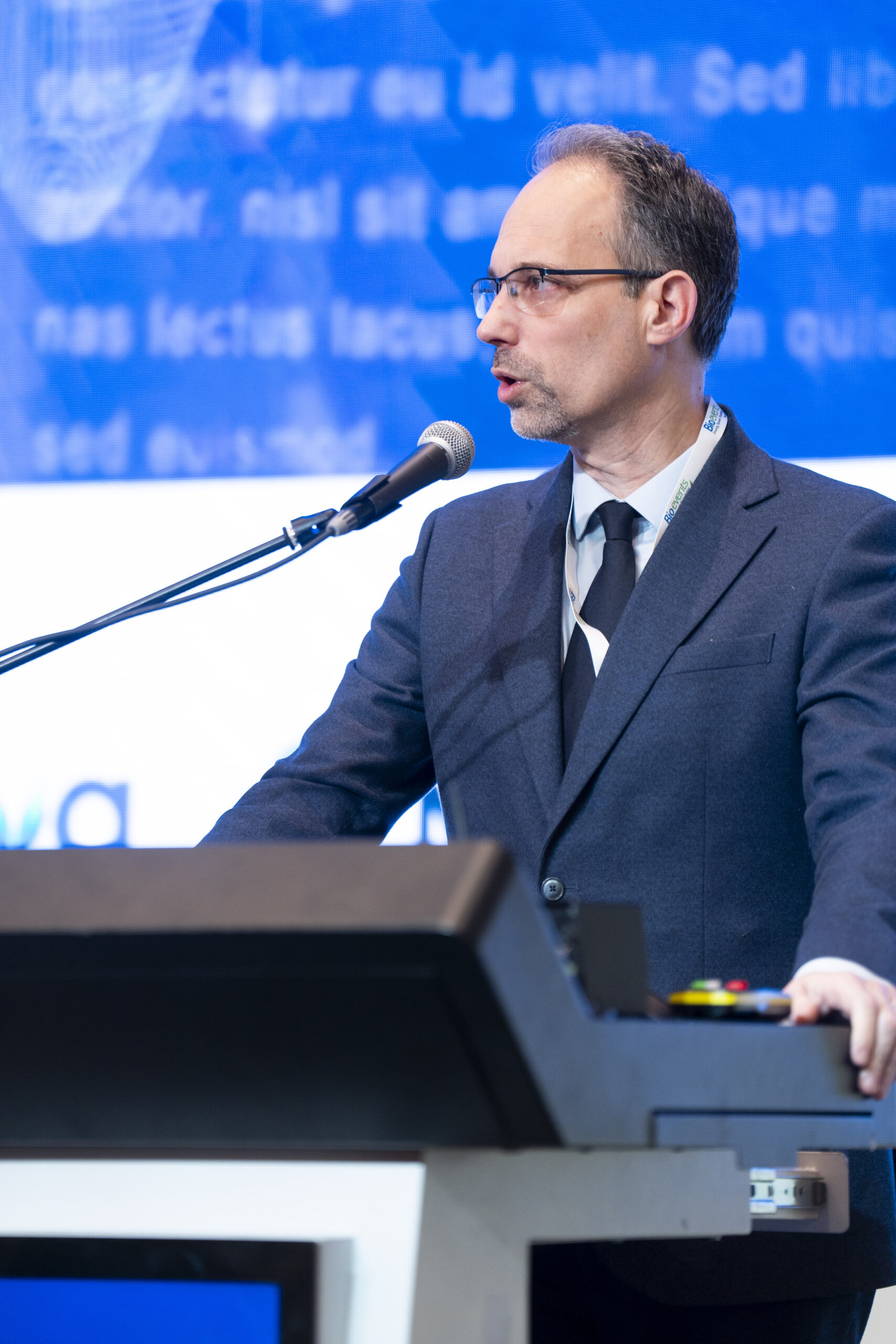
Professor Ran Balicer, Deputy Director of Clalit, speaking at HealthTech AI Summit 2025 (Courtesy of Rami Zarnegar)
Barzilai said he “randomly stumbled into” the world of AI and healthcare. Trained as a computer scientist, she did not initially intend to work in medicine. Things changed when, at age 43, she was diagnosed with breast cancer, the first in her family.
Barzilay said that while undergoing treatment, she realized how far AI has come in areas such as e-commerce and translation, but how little use it has in the medical field. This experience happened in 2014, before what she called the massive AI boom. She decided she wanted to help change that reality.
Barzilay said what interested her was the possibility of predicting which patients are likely to develop breast cancer based on their mammograms, something that doesn't exist today.
Currently, only a small number of patients carry known genetic mutations that can be tested to assess breast cancer risk. Barzilay set out to develop machine learning technology that could analyze medical images to predict a woman's likelihood of developing breast cancer, expanding risk assessment far beyond genetic testing alone.
Doctors agree that breast cancer begins to form long before it can be seen on images, she says. There are subtle early signs, but they are very difficult for humans to detect. Machines could potentially eliminate much of this uncertainty by collecting disparate pieces of information, or “small clues,” and combining them to create a single, consistent prediction, she explained.
“The existing question is: What is your future?” Barzilai said. “Today, we define current as when a patient is diagnosed. Based on the size of the tumor, it's big enough that a human can actually see it or a radiologist can see it. Human vision, even as a radiologist, has limits. So we're just diagnosing patients today. Invisible doesn't mean it's not there, it's just not visible. By us, we mean the medical community.”
Barzilay put this concept into action. She and her team developed a machine learning tool called MIRAI. This tool identifies patterns associated with cancer development long before they become visible to the human eye. The tool has been trained on data from approximately 2 million mammograms and is already showing great potential.
“This actually works very strongly across different populations,” Barzilay says.
She noted that her breast cancer diagnosis was delayed by about two years. Through her research, she found that more than 70% of patients experience delays in diagnosis.
If you look at the women diagnosed with breast cancer today, at least one case would have been detected a year ago but was missed.
“If you look at women who are diagnosed with breast cancer today, at least one case could have been detected a year ago but was missed,” she says. “This machine can detect cancer at a much earlier stage, and at least identify that there is something wrong with this patient that requires a second visit.”
Despite this potential, AI remains largely invisible in everyday doctor visits, Barzilay said. At the same time, medical errors are the third leading cause of death, at least in the United States.
“We're not bringing AI into a perfect world. We're bringing AI into a world of diagnostics and care, and it's pretty broken,” Barzilay said. “The demands on our health care system are increasing and we can't provide enough resources. Doctors are tired, they make mistakes, or sometimes it's very difficult to diagnose accurately. So I think the biggest challenge in this case over the next five years is how do we take all these great medical advances into the system and make it more effective and cheaper?”
Barzilay stressed that AI will not replace doctors, but that doctors will require different training. Computer science can help generate predictions, but doctors must interpret those predictions and decide what to do next. That's where AI ends and the role of doctors begins, she says.
We are not bringing AI to a perfect world. We're bringing AI into the world of diagnostics and care, but it's pretty broken
“They need to decide how to deal with high-risk patients and create a safe and secure pathway. It's not enough just to tell patients they're high risk,” she said. “AI is being used a lot in other industries, but in healthcare, doctors are now responsible for figuring out how to make this imperfect but very powerful technology safe and effective for patients.”
Barzilay has focused primarily on breast cancer, but said the same technology could be applied to diagnose lung, prostate and other cancers. Beyond diagnosis, artificial intelligence could also play an important role in drug design, she added.
Barzilay acknowledged that there are ongoing concerns about bias and inequality related to the use of AI. But these problems already exist across the health care system, she argued.
There is a lot of bias and inequality in medicine.
“There are many biases and inequalities in medicine,” she said, stressing that the existence of these risks should not prevent the introduction of new technologies.
In fact, Barzilai said, AI has the potential to reduce inequality rather than deepen it. Inequalities in health care often stem from differences in access to care, she explained. AI-powered tools can help level the playing field by standardizing diagnostics and decision-making across locations.
“If we had an automated diagnostic method, it wouldn't matter whether we did it in Tel Aviv or Dimona, we would get exactly the same results,” she says. “This way we can actually provide quality care to everyone.”


