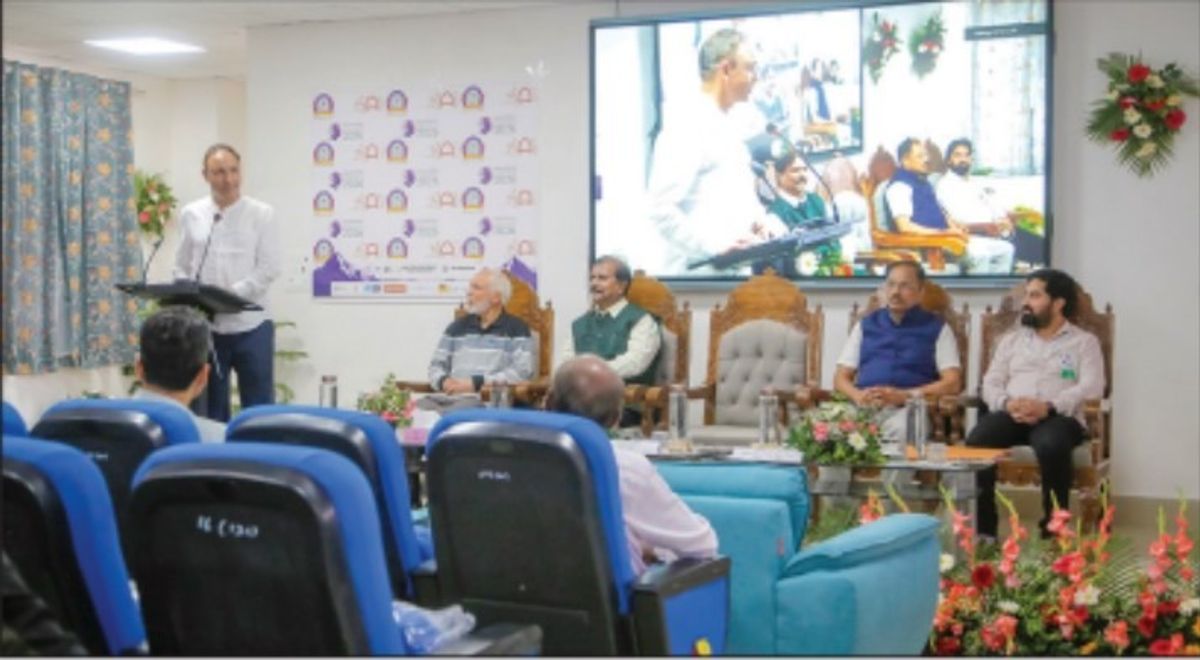
Srinagar, June 19: The two-day International Conference on Applied Artificial Intelligence (2AI-2026), organized by the Department of Information Technology, Central University of Kashmir (CUKashmir), in collaboration with AI Institute, University of South Dakota, USA, and in partnership with Springer and CCIS, concluded on Friday at the Tourmala campus here.
The valedictorian’s session was attended by SKUAST-K Vice Chancellor Prof. A. Ravinder Nath, Dean of Academic Affairs Prof. Nazir Ahmad Ganaie, Prof. Shahid Rathore of the Department of Computer Science, Central University of Karnataka, General Chairman of the Conference Prof. RS Hegadi, Dean of the Faculty of Engineering and Technology, Prof. Farooq Ahmad Mir, Chairman of the Organizing Committee of the Conference, and Dr. Ahmad Mir, General Chairman of the Conference. Yash Paul, Department Head and Coordinator and other officials.
Speaking on the occasion, the chief guest and Vice-Chancellor of SKUAST-K, Professor Nazir Ahmad Ganaie, commended the Ministry of Information Technology for organizing the conference on a theme that is reshaping all areas of human life.
Vice-Chancellor Professor A. Ravinder Nath said the conference was held in conjunction with the launch of the university’s Master’s degree program in Artificial Intelligence and Machine Learning.
He said the event provided a platform to enhance the academic curriculum, expose students to cutting-edge developments, and foster meaningful engagement with emerging technologies. General Chairman of the conference, Professor RS Hegadi, presented a detailed report on the proceedings of the conference and highlighted the academic standards maintained throughout the event. He said more than 500 technical program committee members and reviewers from reputable institutions evaluated the submissions. Professor Farooq Ahmad Mir, Dean of the Faculty of Engineering and Technology, said that artificial intelligence has emerged as one of the key interdisciplinary areas of our time, transcending traditional disciplinary boundaries and creating new opportunities for innovation and collaboration.