insider brief
- According to guidance shared by Fortune magazine’s Emily Fontaine, IBM is prioritizing B2B startups in AI and quantum computing that can be integrated into the enterprise ecosystem.
- The $500 million IBM Ventures fund has 23 investments focused on AI tools, data organization, quantum error correction, and security software, with several companies also supporting IBM’s internal operations.
- IBM’s quantum investment strategy focuses on software and “quantum-safe” security tools, driven in part by demand from financial institutions preparing for future encryption risks.
Could your startup be the next IBM investment?
IBM is looking for businesses in the quantum space as it ramps up its investment strategy around startups that can directly feed into the company’s growing focus on artificial intelligence (AI) and quantum computing, said Emily Fontaine, the company’s global head of venture capital.
Fontaine told Fortune that IBM Ventures, a $500 million corporate venture fund, focuses on B2B startups that can fit into IBM’s existing network of corporate customers. This approach is designed to extend IBM’s long-term technology roadmap while providing portfolio companies with a built-in path to customers.

Fontaine told Fortune that the fund has made 23 investments to date, including in AI tools, data preparation software, quantum error correction companies and security platforms.
Corporate VC built for corporate buyers
This investment strategy focuses on companies that build tools for organizations rather than consumer products.
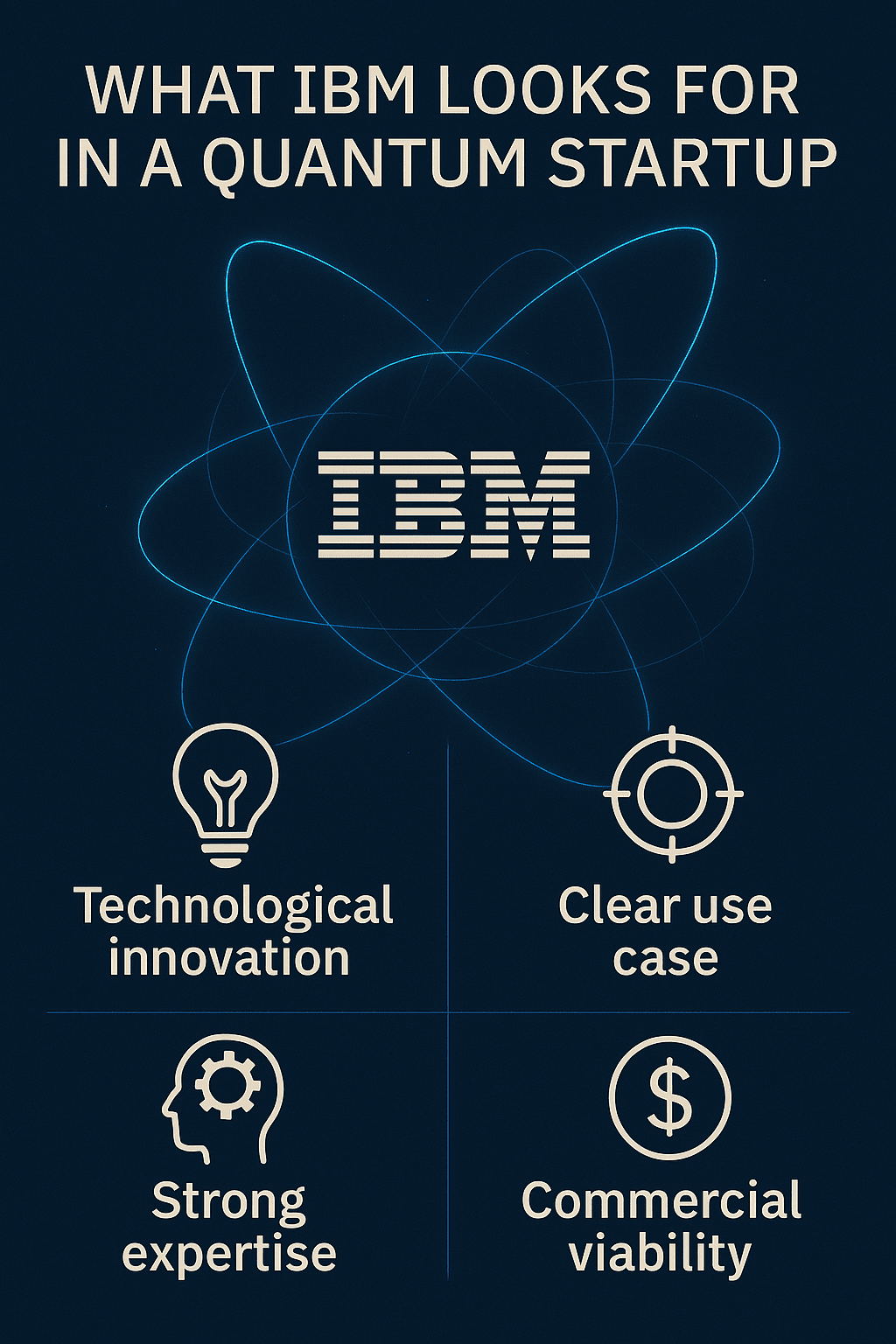
“We look at three key areas for each investment,” Fontaine told Fortune. “The first is the product or the functionality. The second is the ecosystem partner? Generally speaking, these fall into these two categories. The third is: Is it very disruptive to the industry? And for the ones that are completely disruptive to the industry and do something incredibly novel, we work very closely with IBM Research.”
Fontaine said this gives IBM an advantage that traditional venture firms don’t have: it can instantly connect startups with IBM’s existing enterprise customers. For many young companies, acquiring their first customers is often the most difficult task, but IBM’s enterprise footprint provides massive initial traction.
Some investments also support internal IBM efforts.
The company’s AI-enabled HR assistant, AskHR, is an example of how software developed by portfolio companies can become part of IBM’s own operations. Fontaine said IBM plans to save $4.5 billion in operating expenses this year by bringing AI systems internally, demonstrating a feedback loop in which investments support and are supported by IBM’s corporate transformation.
Software, banking focused
IBM is one of the few companies building and deploying quantum processors, but its early investments in quantum are focused on software, algorithms, and tools that make the machines easier to use. Fontaine highlighted QEDMA, an Israeli startup that builds error correction software to clean up the noisy signals produced by today’s quantum chips. Quantum devices operate in fragile states and produce unreliable outputs, so software-based techniques are essential to converting raw results into stable and useful information.
IBM’s quantum efforts are partly shaped by financial institutions. Banks rely on encryption that quantum computers may be able to break in the future. This threat has increased the demand for “quantum safe” defenses, an area in which both IBM and its portfolio companies are positioning themselves.
“Banks are at the forefront of pursuing quantum strategies,” Fontaine said, as reported by Fortune magazine. “The banking industry is pretty much leaning towards, what is our strategy for quantum, we need to be quantum secure, that’s what we need to do.”
Mr. Fontaine did not elaborate on the fund’s financial performance, but said he was satisfied with the returns so far. Four companies have exited, including Gem Security, which was acquired by Wiz for a reported $350 million valuation, and Lightspin, which was acquired by Cisco for an estimated $200 million to $250 million.