Hyatt says its AI-powered sales tools are helping employees save about one day a week and increasing the company’s share of group bookings.
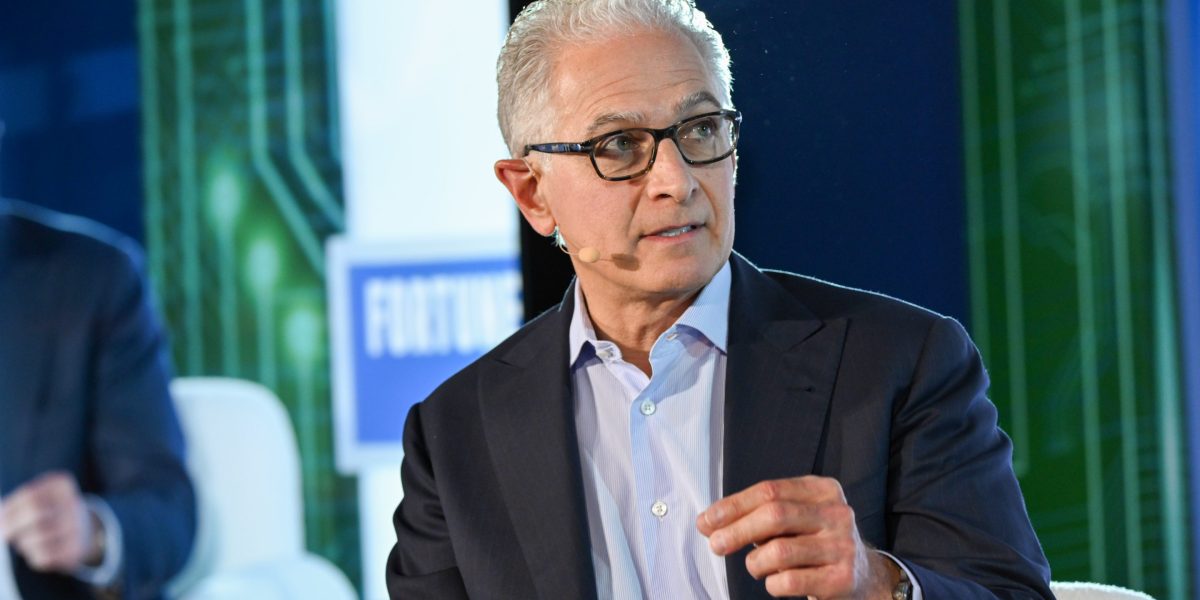
Hyatt CEO Mark Hopramazian said at Tuesday’s Fortune Brainstorm Tech Conference that AI allows the company’s sales team to “more efficiently and effectively respond to the more than 1.5 million RFPs it receives from enterprise customers each year. “We’re going to be able to meet the needs of customers,” he said during a session with Snowflake CEO Sridhar Ramaswamy to discuss how companies are moving from AI pilots to operational deployments with a focus on improving productivity, customer service, and data analytics.
“We’ve grown our market share and group business, and we’ve been able to free up a full day a week for each salesperson who normally does this, and it’s really great to be able to free up our salespeople to optimize the rest of the hotel’s revenue streams,” said Hopramazian.
In addition, Hopramazian said Hyatt is rolling out a conversational search interface that allows travelers to describe their trip in natural language, and AI is helping surface operational insights from a combination of the hotel’s internal data and external customer feedback.
Snowflake’s Ramaswamy argued that AI is helping clients like Hyatt reduce the need for long-term data integration projects, as models can connect information across different systems. Tasks that previously took years can now be completed in months, he said.
According to Ramaswamy, AI has “built-in glue,” meaning it can communicate with two different systems and stitch data together. “Models are very good at understanding such contexts, which makes progress much faster.”
As a result, AI is helping companies move beyond the limitations of traditional business software, he added. While systems like CRM and HR platforms can capture individual transactions, they have been less effective at identifying broader patterns across an organization. By connecting data from multiple systems and combining analysis and action, AI agents can now surface insights and help employees act directly on them.
Hoplamazian explained that through the Snowflake partnership, Hyatt is using AI to analyze a wide range of information, including hotel operational metrics, customer data, TripAdvisor and Yelp reviews, blog feedback, and local market conditions to generate recommendations for hotel teams. The goal, he said, is to identify operational friction points, free up employees to focus on the most impactful tasks, and free up more time to interact with guests.
But while much of the discussion around AI focuses on models, chips, and technology stacks, Hopramazian also pointed out that the bigger challenge is the human issue. He said success should be measured by “absorption” rather than adoption of AI, evaluating whether employees are actually incorporating the technology Hyatt is building with Snowflake into the way they work and achieving better outcomes.
“I’m looking for real results at the end of the day,” he said. “So I’m looking for someone who takes it seriously and understands it.”
More information about Fortune’s 25th Brainstorm Tech:
Boris Cherny of Anthropic, creator of Claude Code, says there are days when he manages tens of thousands of AI agents at once.
The AI industry has spent years chasing bigger models. We are now pursuing efficiency.
‘It’s not an allbirds moment’: Xbox’s new CEO says console is rooted in gaming, not AI