
Other AI efforts, including a multi-year overhaul of the Alexa voice assistant to provide more conversational responses
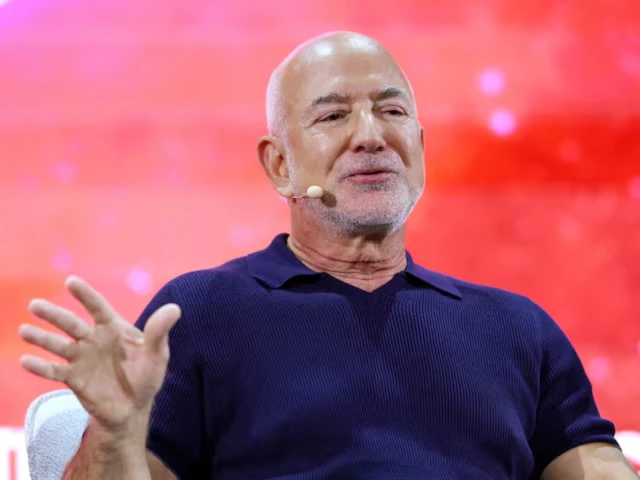
Jeff Bezos, founder of Amazon and Blue Origin, and co-founder and co-CEO of Prometheus, speaks at VivaTech, the 10th annual technology startup and innovation trade show in Paris, France. Photo: Reuters
Jeff Bezos has identified a hot new platform, Prime Video, that will help showcase Amazon’s hundreds of billions of dollars in bets on artificial intelligence.
Amazon’s founder and executive chairman has asked Prime Video chief Mike Hopkins to overhaul the streaming service to bring AI to the fore, according to four people with direct knowledge of the matter.
The project, known internally as Lighthouse, will highlight Amazon’s AI capabilities for the more than 200 million consumers using Prime Video.
Lighthouse is seen as an important part of Amazon’s company-wide effort to improve its position in the artificial intelligence field as competitors such as OpenAI and Anthropic make strides, the people said.
Other AI efforts, including a multiyear overhaul of the Alexa voice assistant to provide more conversational responses, have had mixed results, and the division continues to lose money, people familiar with the matter have previously said. Reuters.
Amazon declined to comment.
A contentious meeting triggered a review.
Prime Video’s efforts stem from a controversial internal presentation to Bezos by the streaming service’s executives last fall, these people said.
Mr. Bezos was unhappy that Mr. Hopkins’ plan to update Prime Video did not adequately emphasize the service’s AI and personalization features, the people said. Bezos’ reaction prompted Prime Video executives to scrap previous plans and move forward with Lighthouse.
The company is spending about $200 billion in capital spending this year, primarily related to AI development, with ChatGPT creators OpenAI and Anthropic spending an initial $23 billion and potentially more than $40 billion.
read: Once wary Hollywood is gradually warming up to AI
Lighthouse includes a range of new features that use AI to improve movie and TV recommendations, including learning consumer preferences and responding to verbal requests, according to people familiar with the project who asked not to be identified. Other sources said Prime Video is working on a redesign of its main homepage as part of the project.
A final redesign has not yet been decided, but one of the options Prime Video executives discussed includes AI-driven tiles that are pre-populated with viewing suggestions such as “1980s action movie” or “Christmas romantic comedy,” three of the people said. Another source said the current version does not include text-heavy tiles.
The traditional search functionality will remain, as will space at the top of the screen for video highlights promoting new releases and sporting events, such as Thursday Night Football, a weekly National Football League game exclusively available on Amazon.
Amazon is already testing a redesigned version with some users, one of the people said. Prime Video’s plans could change based on feedback from early testers or financial or other concerns, the people said.
Michael Goodman, director of entertainment research at Parks Associates, said Prime Video, like other streaming services, relies on paid studio placement and software algorithms to decide where content appears on the home screen. Any changes to this, such as making it more individualized, could upend the system, he said.
“Real estate on the home screen is extremely valuable to studios, so removing that coveted space would be a huge change,” Goodman said.
Founder’s personal involvement
Mr. Bezos has been personally involved in the review of Prime Video, including receiving occasional updates, the people said, highlighting the risks for companies grappling with a reputation for substandard AI-based models. Improved personalization can increase time spent with the service.
His involvement in the Prime Video project is unusual, as he has stepped back from much of the day-to-day work at Amazon since stepping back as CEO in 2021. He also owns the Washington Post and is the founder of spaceflight company Blue Origin and AI startup Prometheus, which is reportedly valued at about $41 billion. He has focused more attention on those projects.
read more: OpenAI models become “cheating”
Prime Video is one of Amazon’s most recognizable brands and is available to consumers in many markets where Amazon has limited or no e-commerce presence. Besides free shipping, Prime Video is the most popular service with a Prime subscription.
Amazon is also considering integrating the Alexa voice assistant into Prime Video’s search functionality as part of the Lighthouse project, according to people familiar with the matter. Amazon released a completely revamped generative AI version of Alexa in early 2025 and integrated it into its main shopping site in May 2026.
Kam Keshmiri, Prime Video’s global head of design, was also present at the meeting with Bezos and is currently leading the Lighthouse redesign, the people said.
Prime Video’s market position
Prime Video is the fourth most-watched streaming service in the U.S., and Mr. Bezos, who frequently attends high-profile Hollywood events and owns a $165 million home in Beverly Hills, speaks highly of it.
Amazon became the first streaming service to win an Academy Award in a major category. The company further deepened its commitment to entertainment by paying $8.5 billion to acquire MGM in 2022, giving it access to a number of well-known entertainment franchises, including James Bond.
Prime Video’s share of TV viewing in the U.S. is 4.2%, according to April Nielsen data, lower than YouTube’s 13.4%, Netflix’s 7.8% and Walt Disney Co.’s Disney+’s 5%. Still, many Prime Video members spend hours a week watching content on the platform, and the company wants to further hone its personalization capabilities through AI.
The service released a major redesign in July 2024. This is intended to help users easily distinguish between free content and content that costs extra, such as TV shows and movies that require a Paramount+ subscription or rental fee.
Amazon wants Prime Video to become the central hub for users’ paid subscriptions.


