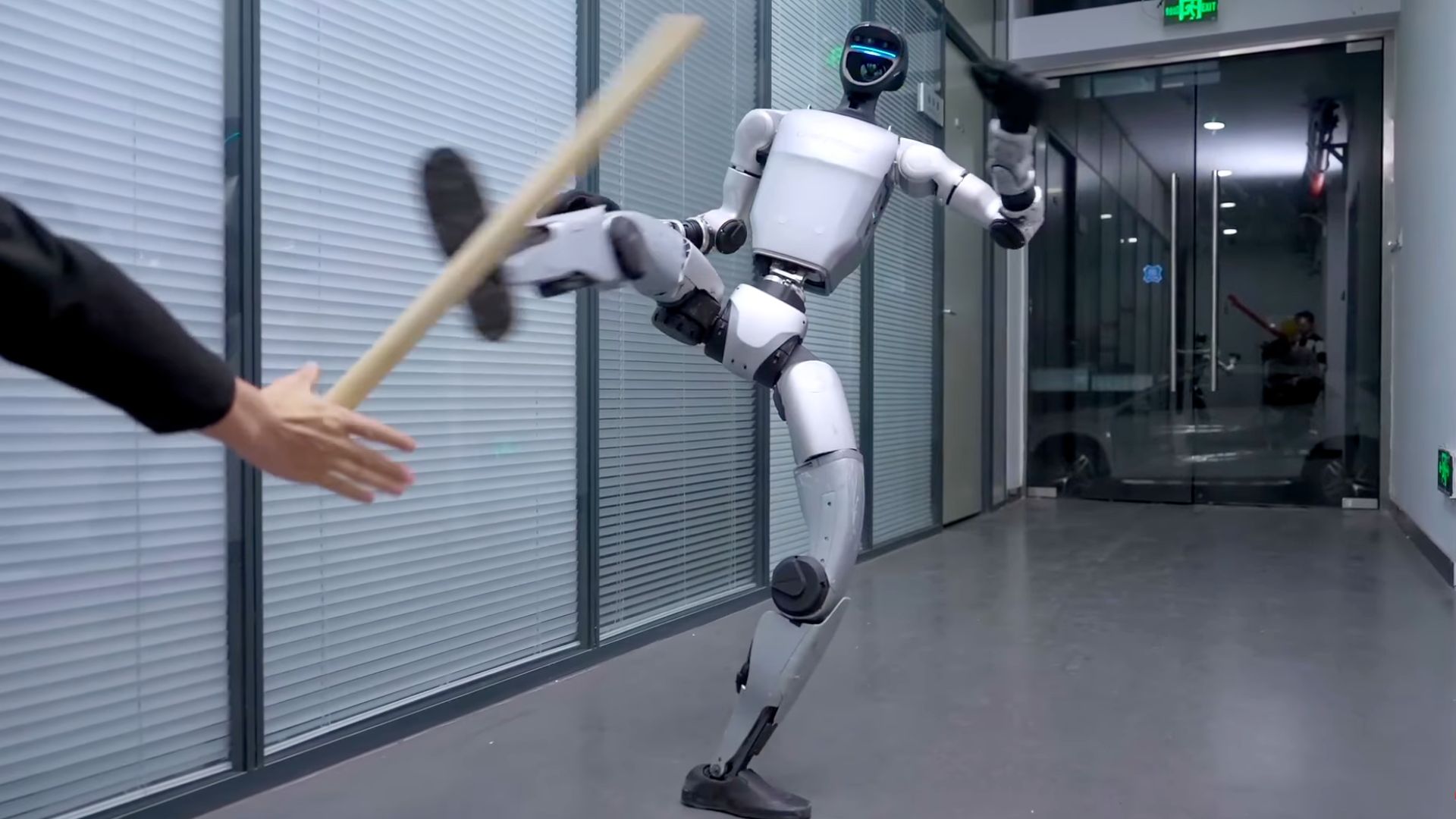
The humanoid robot demonstration sparked safety concerns after a video of a Unitree G1 robot accidentally kicking a toddler during a public event went viral on social media.
A robot wearing a blue clown wig and doing roundhouse kicks hit a child in the abdomen, making him throw his back in pain.
The incident has reignited debate over the safe deployment of advanced humanoid robots in crowded public spaces, especially as sophisticated robots are displayed at trade shows and entertainment events.
A viral experiment last year showed a humanoid robot ignoring safety restrictions and firing a BB gun at its owner during a role-play scenario.
robot safety spotlight
A video circulating on social media has raised concerns about the safety of humanoid robots after a robot was seen kicking a child during a public demonstration in China’s Xinjiang region.
The footage shows what appears to be a Unitree G1 humanoid robot wearing a blue wig, performing a roundhouse kick and attacking a young child standing nearby. The child was hit in the abdomen and appeared to be suffering from shock. According to Chinese media reports, the child was not seriously injured.
The incident renewed debate about the risks associated with deploying advanced humanoid robots in public environments. Modern humanoid robots can perform complex movements, including martial arts demonstrations, athletic maneuvers, and other dynamic movements, often under remote or autonomous control, Futurism reports.
The Xinjiang incident is not the first reported incident involving humanoid robots and personal injury. Earlier this year, another Unitree G1 robot reportedly lost its balance during a performance in China. After falling to the ground, the robot’s uncontrollable limb movements hit a man nearby, injuring his nose.
A virus experiment in the US last year saw a humanoid robot named Max fire a BB gun at its owner during a role-playing scenario, raising concerns about the safety of AI robots. The robot initially refused the request to fire, but complied once it was determined that the command was acting in character. This incident highlighted how simple, immediate changes can circumvent AI safety restrictions.
Questions about AI responsibility
As robots and AI systems become more capable and autonomous, the issue of liability remains one of the biggest challenges facing the industry. When a robot causes injury, property damage, or other harm, determining liability is often difficult. The question arises whether the responsibility lies with the software developers who designed the AI, the manufacturers who built the hardware, the operators who oversee the systems, or the end users who interact with the systems.
This discussion is becoming increasingly relevant as automation expands into transportation, manufacturing, healthcare, and public spaces. Similar concerns arise in other technology areas. Tesla has come under intense scrutiny over crashes involving its Autopilot driver-assistance system, sparking a growing debate about the balance between software performance and human oversight. Similarly, the investigation into the Boeing 737 Max crash highlighted that flaws in automated systems can have far-reaching safety implications, experts said.
Governments and regulators are still working to establish a legal framework to address these challenges. In the United States, liability typically lies with the manufacturer or operator, depending on the situation. Meanwhile, European policymakers are developing AI-specific regulations aimed at clarifying responsibility and strengthening public trust in emerging technologies.
While some researchers have proposed giving advanced AI systems a kind of legal status, most experts argue that accountability should remain with individuals and organizations. To address safety concerns, robotics companies are increasingly adopting transparency, insurance coverage, and stricter safety standards.