The HP Omnibook X 14 is a solid choice for users looking for a basic office laptop Tasks with additional bonuses for integrated AI tools. It offers excellent display quality, reliable battery life, and portability.
However, the starting price is around $1,800, which may not be the best option for students and users looking for a budget-friendly device. It provides a great platform for experimenting with AI features and demonstrates the potential for future features, but users focus on standard office tasks and web browsing can find more affordable alternatives.
3 View the gallery
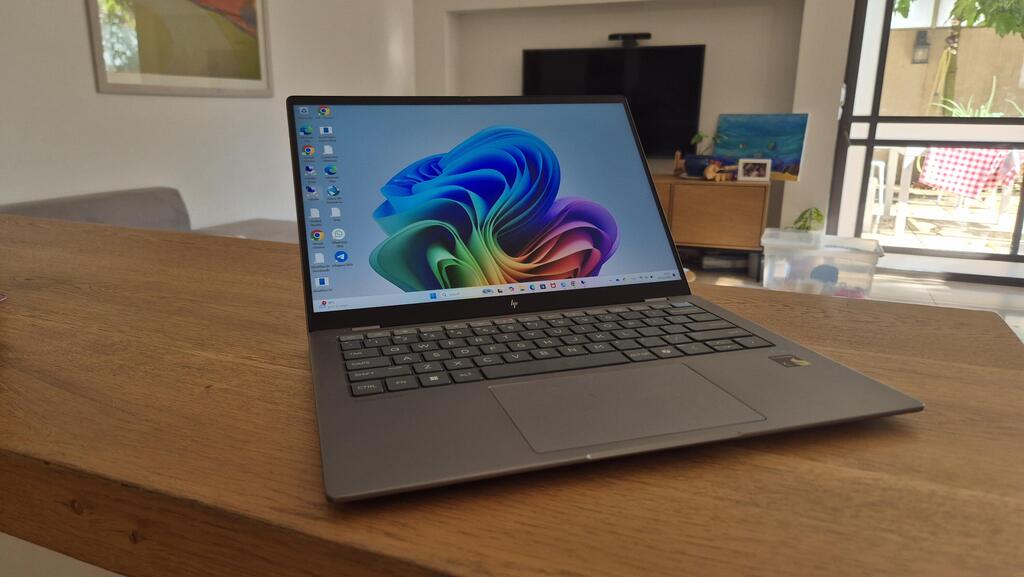
Omnibook x 14
(Photo: itai smuskowitz))
The revolution is complete – or at least the first stage of it. Last May, Microsoft launched the Copilot+ PC category and introduced a Windows computer equipped with a Qualcomm Snapdragon processor that incorporates AI functions. Just six months later, the innovation became mainstream. Large manufacturers have released computers like this, but some of them have already been reviewed. Now, HP will be taking part in the race with Omnibook x14. So, what does it need to offer?
Build and Design: Standard with Suspicious Keyboard Selection
From the outside, the Omnibook X 14 looks unnoticeable. There is a standard grease chassis with the HP logo on the back of the screen. As the name suggests, the laptop has a 14-inch touchscreen display. It's quite compact, but feels a little heavier than expected, weighing around 1.4 kg.
The laptop body houses a spacious keyboard and touchpad, leaving small margins on either side of the key. The keys are generally comfortable to use, but feel slightly shallow when pressed. This is a matter of preference that most users can adjust.
However, there are drawbacks to the keyboard design. The power button is located in the top right corner next to the Delete key. Users who are new to this layout can accidentally press the power button while working. The button requires a longer press to shut down the computer, but I still managed to accidentally turn it off once. Luckily, your computer will back up quickly.
On the left side of the laptop there are two USB-C ports to charge the connection. On the right is a headphone jack and a USB-A port. The latter is hidden behind a small cover that needs to be moved to access. This design choice aimed at preserving the sophisticated look of a laptop feels unnecessary and a bit inconvenient. Especially the absence is the HDMI port. An adapter is required to connect your laptop to an external display or projector.
3 View the gallery
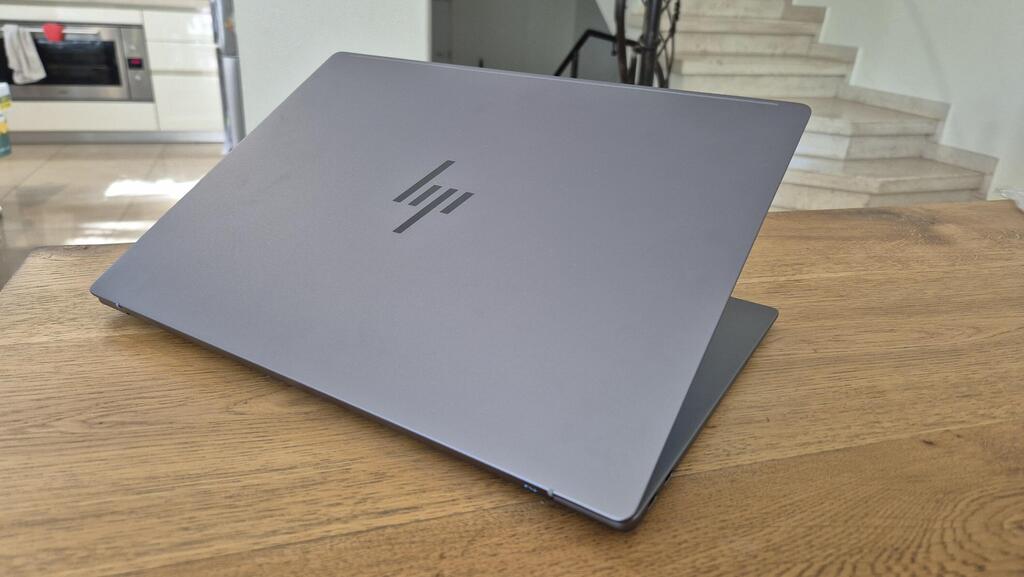
Omnibook x 14
(Itai smuskowitz))
Hardware: Suitable for light tasks
The Omnibook X 14 belongs to the Snapdragon-based Copilot+ PC category with a Snapdragon X Elite processor, 32GB of RAM and 1TB of storage. This configuration provides solid performance for light office tasks, quick responsiveness, and quiet operation without overheating. It also handles light graphics tasks, but is not suitable for tasks or gaming requests.
The 14-inch touchscreen display is bright enough for outdoor use, and the touch function is intuitive. The speakers are noisy, not impressive, and decent but not exceptional sound quality.
The keyboard has a backlight that you need to activate manually. There are two brightness levels, but the user can also disable the lighting completely. However, the laptop does not have a fingerprint reader for secure logins. Instead, it uses facial recognition via the built-in camera.
The battery life is solid and it takes 1 to 1.5 days to 1.5 days to 1. When the battery drops to 30%, the laptop will automatically switch to power mode. However, it is relatively slow to charge and takes about 2 hours to fully charge.
Software: AI integration will be the central stage
Like any Copilot+ PC, the Omnibook X 14 runs Windows 11 home with integrated AI capabilities. These include tools such as automatic audio translation, AI-assisted image editing, and AI-enhanced drawing of paints.
3 View the gallery
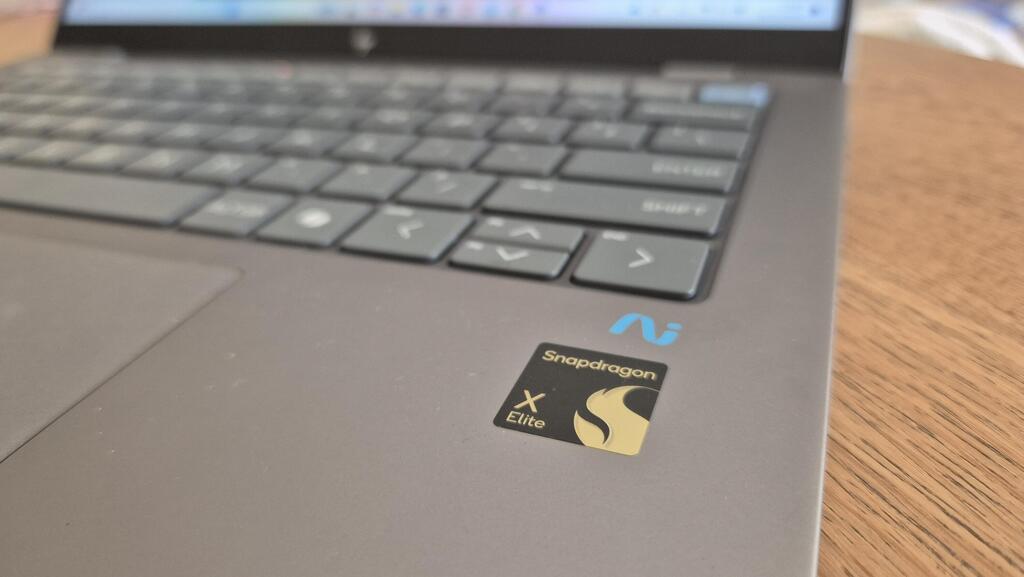
The AI is already inside
(Itai smuskowitz))
HP has also added its own AI tool called AI Companion, which is now in beta. The tool, powered by the GPT-4O, is divided into three categories.
-
Content Creation and Support: Users can ask questions, rewrite text, create content, and analyze images (but cannot identify people).
-
File Analysis: This feature allows users to analyze files stored on their laptops, compare document versions, and extract key information.
-
System Maintenance: This gives you insight into battery status, memory usage and storage. Users can provide commands such as enabling noise cancellation and adjusting brightness. However, the command must be in English and the errors provide guidance rather than automatic execution.
AI features are promising, but compatibility issues persist. Currently, most software runs smoothly on Snapdragon-based systems, but some programs either don't work or showcase glitches. Users are encouraged to download apps from the Microsoft Store to ensure compatibility.