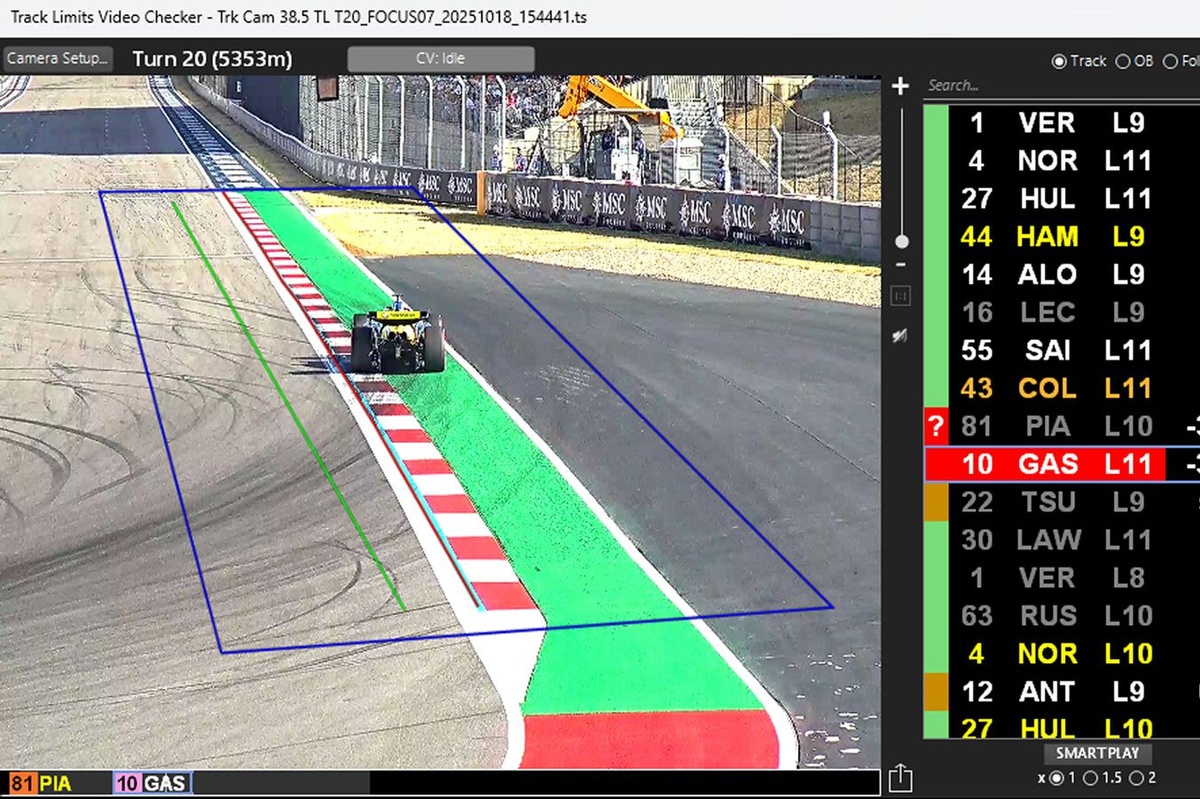
Track limit enforcement has been one of the most persistent and controversial issues in Formula 1 Grand Prix in recent years.
Drivers naturally push the limits of what is allowed in order to achieve lap times. They are also more likely to report rivals they believe have crossed the proverbial line. And of course, for their vociferous denials of doing so.
Teams will inevitably favor their own team, and the resulting discussions can take up a lot of bandwidth and often delay the outcome of the race. For the 2023 Austrian Grand Prix alone, the FIA will have to investigate more than 1,000 suspected track limit violations, a figure that clearly shows how essential more sophisticated tools have become to speed up the process.
This is why, behind the scenes, the FIA and Catapult have created an automated tool to detect when a car crosses the white line and integrated it into RaceWatch, the system used in race control and the remote operations center that monitors everything happening on the track.
With potentially hundreds of incidents to review in a single race, it’s easy to see why we needed a system that could assist stewards, speed up the review process, and notify teams of potential violations within seconds. According to the FIA, this computer vision-based tool has reduced the number of cases where human involvement is required for decision-making by 95%.
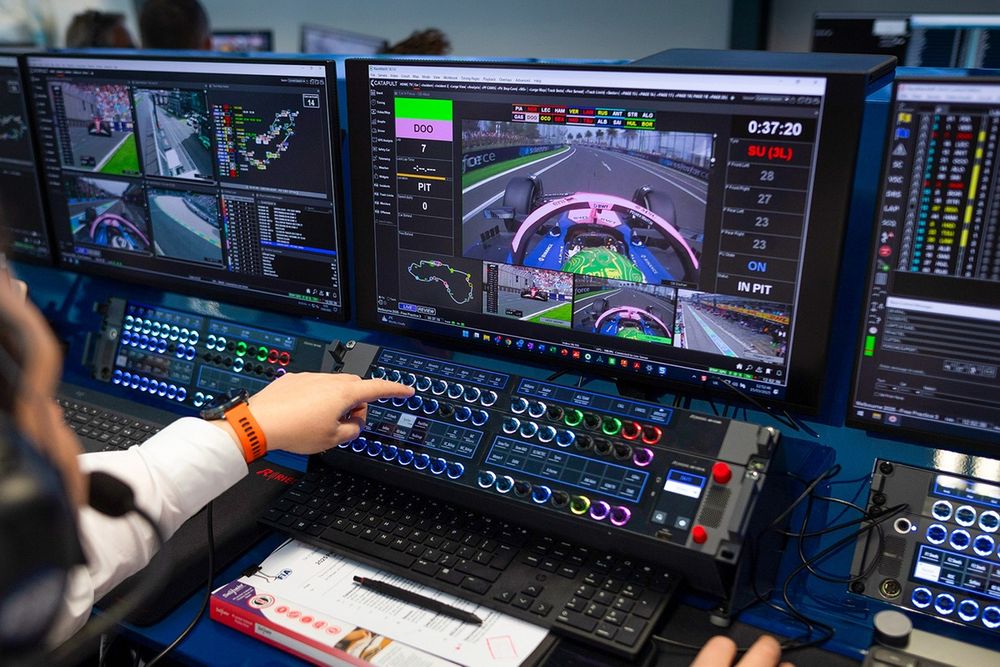
RaceWatch, race management software developed by FIA and Catapult
Photo courtesy: FIA
FIA will be able to send footage directly to teams
The computer vision system integrated into RaceWatch can recognize the silhouette of a car and analyze its behavior against predefined reference points captured by the camera. This allows you to determine whether your car has crossed the reference line.
Several practical and functional updates are planned for 2026. Firstly, the FIA will now be able to send footage of drivers breaching track limits to teams, making the process more transparent and reducing the chance of losses due to nonsense. This also helps streamline and speed up your workflow and provides quick feedback to your team.
Another update, perhaps the most important and interesting, concerns how track limits are detected thanks to a more advanced system that rethinks the entire data analysis workflow. AI-based recognition relies on high-performance GPUs to process all the information needed to verify each lap in real-time, improving both the accuracy and speed of checks.
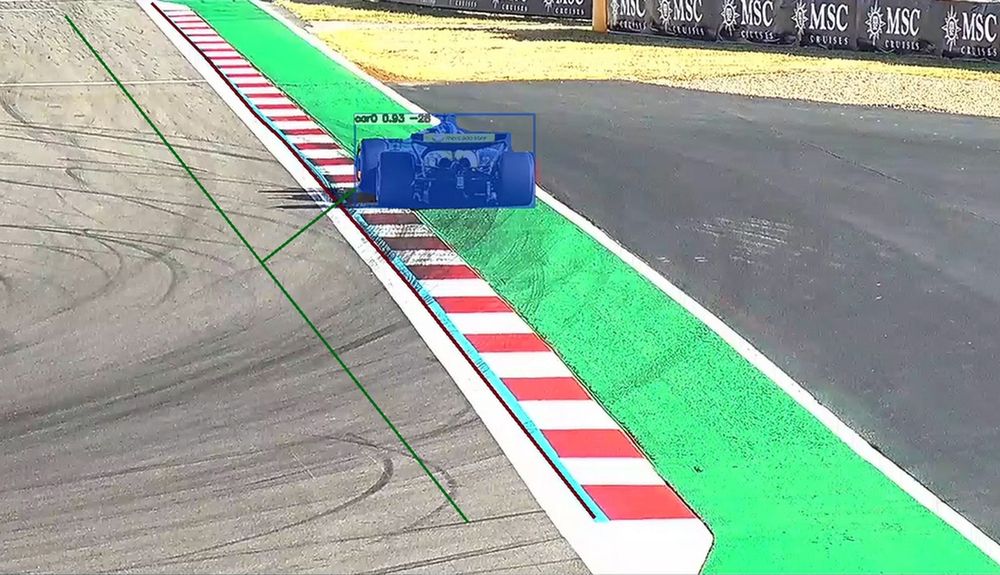
RaceWatch, race management software developed by FIA and Catapult
Photo courtesy: FIA
Distributed processes to process more data
“The new system is based on a central camera controller, which not only allows us to set all distances from a single point, but also decentralizes the necessary processing,” explained Chris Bentley, FIA’s head of single-seater information systems strategy, in an exclusive interview with Motorsport.com.
“You can now run computer vision software on any machine in your network, send a portion of the video to be processed, and receive the results, allowing you to process more data.”
The increased data processing capacity goes hand in hand with another tool the governing body has developed in conjunction with Catapult: an advanced positioning system.
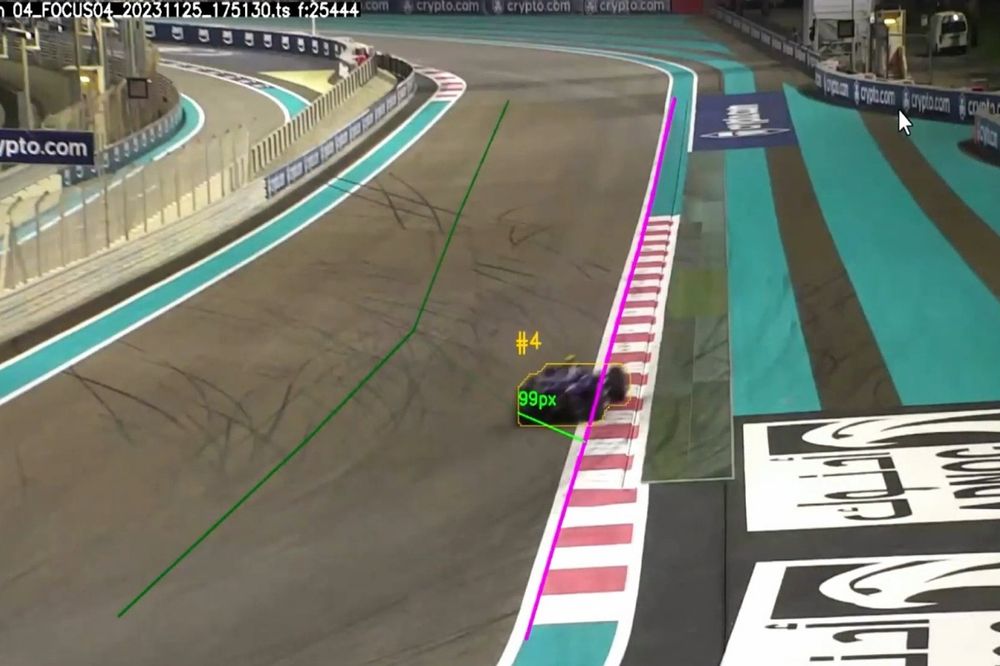
The system was tested at the end of 2024
Photo courtesy: FIA
Thanks to technological innovations introduced in recent years, the FIA is now able to combine multiple data sources to track car locations with increasingly high precision. It’s not just absolute coordinates. The system cross-references position data, sector time information and ideal racing lines, effectively creating a real-time “digital twin” of what’s happening on the track.
“This allows us to use all the data we need to see the white lines around the truck,” says Bentley. “Even if it’s not covered by a particular camera.
“In cases like this, the camera becomes somewhat secondary as we use geofencing for location data. We use the delay before a vehicle reaches a certain location to figure out where it ran out of control and changes in the line it follows, because obviously there is an optimal line that all vehicles follow. Deviations from the racing line are very rare.”
How the new ECAT system works
The central concept is called Every Car All Turns (ECAT), and the idea is that the system interprets vehicle behavior by measuring it against a reference model. By cross-referencing this information with microsector timing data, RaceWatch can understand what happened at specific points on the track and flag episodes for potential review.
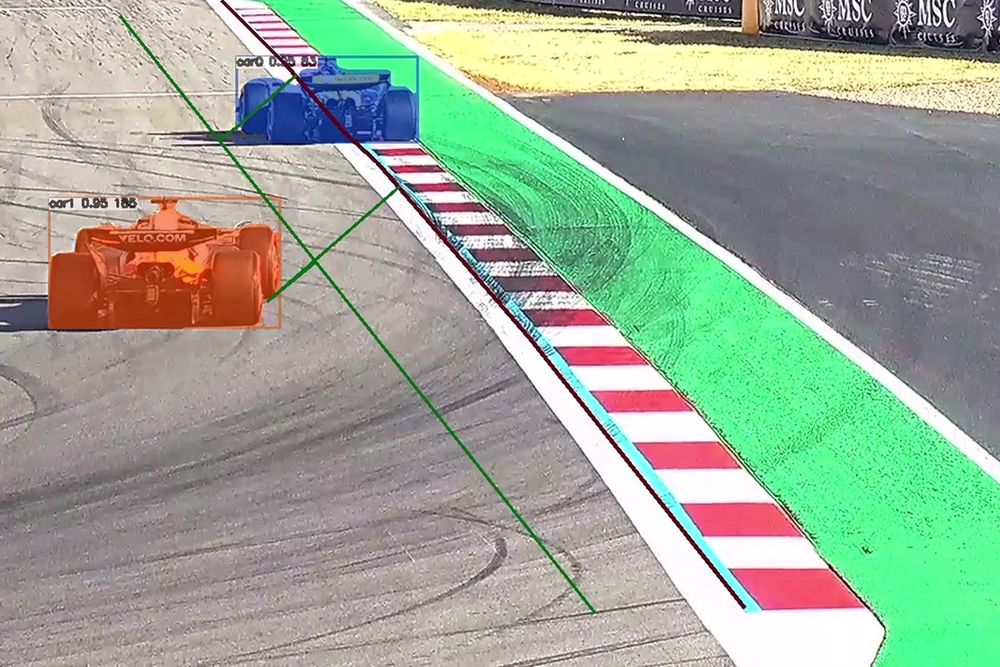
This system can track multiple vehicles simultaneously
Photo courtesy: FIA
“If the car deviates from the ideal line, it could potentially drive more miles,” Bentley says.
“This allows you to look at differences in sector times and go back to understand where you went off course and what happened. The idea is to use all the data, enrich it with the video available, and track these elements. This way, instead of looking for it manually, the system will tell you what’s going on.”
“The goal is to take the system to the next level. The system works all the time across the track, so it automatically understands what’s going on. This is an evolution of what we’re trying to do from a manual process to a semi-automated process. We still have to evaluate strikes and black-and-white flags, so the manual element is still there.”
The FIA is actively working with circuits to improve coverage and identify the best camera placement, but this is not always possible and varies from track to track. However, with this new system, cameras are no longer the sole basis for analysis, although they are still important.
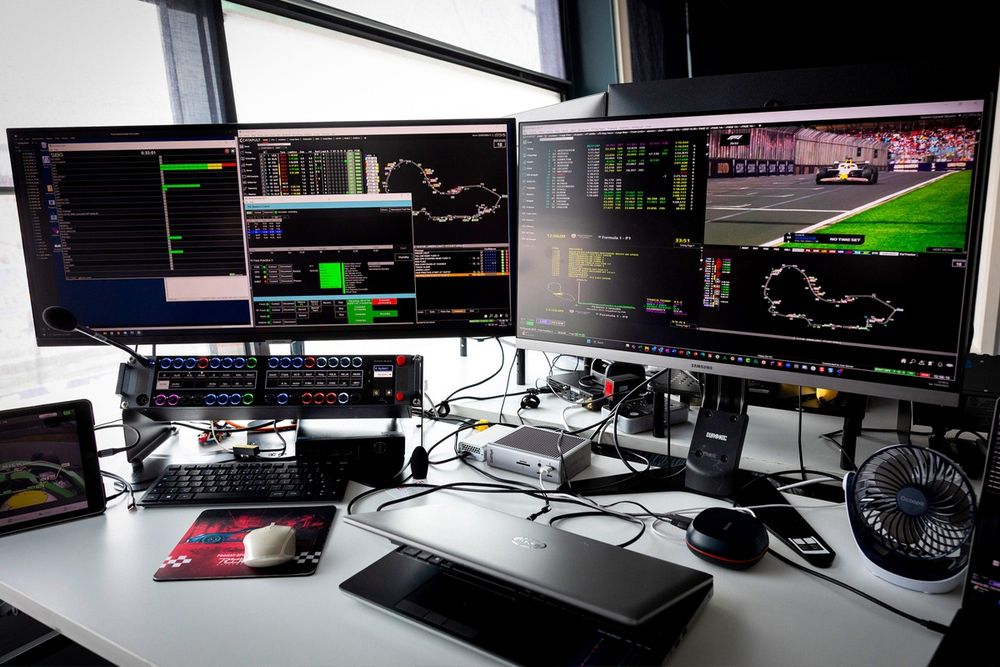
RaceWatch, race management software developed by FIA and Catapult
Photo: FIA
The system can now detect potential track limit violations solely from position data. RaceWatch can generate alerts if abnormal deviations are indicated, if the vehicle enters a virtual zone drawn on the track, or if the vehicle’s trajectory deviates significantly from the ideal racing line.
“This takes us to the next level, allowing us to manage all our cameras in one place, distribute the process with computer vision, and handle other elements that were previously available in one place,” Bentley said.
“Basically, you can automatically flag when a car goes off course because of changing location data. Or you can use geofencing. You can draw chicanes and virtual zones on the course and alert if a car enters. All of this is already scheduled to go live this year, and we’ve been working on it throughout 2025.”
The topic of track limits has long included an element of subjectivity. Making processes more data-driven increases decision fidelity.
Also, will the debate over track limits be significantly reduced? Most fans would hope so.
I want your opinion!
What would you like to see on Motorsport.com?
Please take our 5 minute survey.
– Motorsport.com Team