
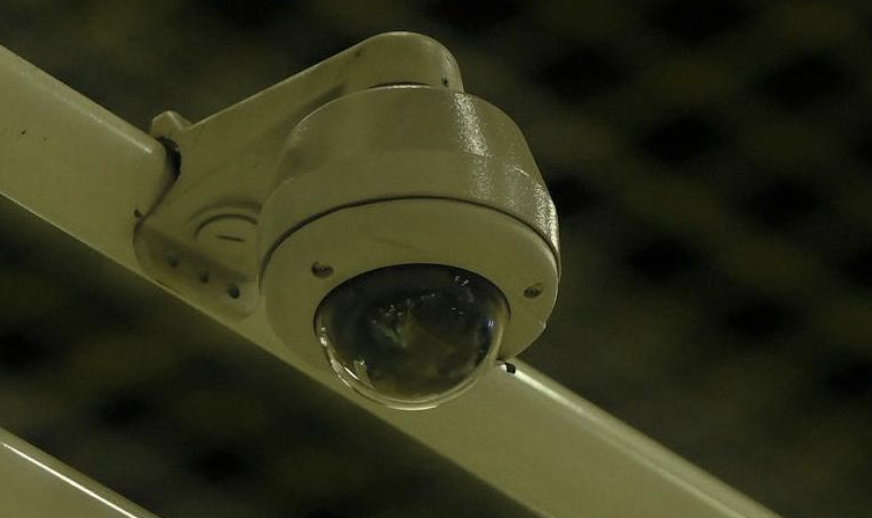
AI is transforming video surveillance from a passive recording system to a real-time intelligence platform, with implications far beyond security for companies managing complex physical environments.
Walk into the security operations center of almost any large company and you’ll likely find some version of the same setup. Wall-to-wall monitors display live footage from dozens (sometimes hundreds) of cameras. A small team of analysts reviews the footage repeatedly, waiting for something to happen. And somewhere in a server rack, there are terabytes of video accumulating around the clock, almost certainly never reviewed, unless an incident forces someone to go looking for it.
This has been the reality for much of the history of video surveillance. A camera monitors, and then a human monitors the camera. When something goes wrong, whether it’s theft, a security incident, or unauthorized access, the investigation begins by pulling the recording and working backwards. So the footage is always there, but often you can’t meaningfully communicate it to someone until after the fact.
2009 review An investigation into London’s camera network captured this clearly. Across a system of thousands of cameras, approximately one crime was solved for every 1,000 active cameras. It’s not because the camera didn’t work. That’s because the models they were built on weren’t designed to do much more than record. This event was already 17 years ago, which may seem like a long time ago, but it is still a very common reality in video surveillance today. For example, in December 2025, CNN reported Brown University has more than 1,200 cameras on campus, but because the incident occurred in one part of the building, the coverage was thin and the suspect was still unable to be identified. Cameras were present, but there was no insight.
That is the limitation that AI is currently being asked to correct, and it turns out that the answer requires rethinking not just the technology, but the actual purpose of surveillance.
Why the old model is no longer good enough
Traditional video surveillance architectures were built around one priority: storage. The goal was to ensure that footage was captured and stored long enough to be useful after an incident. Analytics came later, layered on top of a system that was never designed for it. It ran on fixed rules that could not adapt to changes in the environment and generated enough false alarms to slowly erode the trust placed in security teams.
the study Gloria Mark, a professor of information studies at the University of California, Irvine, has tracked screen attention for nearly 20 years and found that by 2021, people would spend an average of just 47 seconds focused on a screen before moving on. This number has been steadily decreasing since 2004. For operators whose entire jobs involve watching video feeds for hours on end, the impact is hard to ignore.
Real-time intelligence requires a different foundation. Rumana approaches this through an AI-first hybrid cloud architecture that brings computing power as close to the camera as possible through GPU-accelerated edge processing and cloud management, enabling remote flexibility and deeper analytics.
The core of the system is Rumana VIA-1the company’s proprietary video intelligence model. It continuously learns from each specific environment, rather than applying a uniform set of rules to all deployments. Rather than waiting for updates, each camera builds its own understanding of a particular space and adapts based on the environmental context. The practical result is a platform that can interpret context, surface relevant events, and simultaneously trigger responses in real-time across security, safety, and operational use cases.
Lumana is designed for environments where its capabilities are most critical, including retail, healthcare, manufacturing, warehousing, logistics, hospitality, education, and public sector deployments. In these environments, the amount of activity is high, the impact of missing signals is real, and the value of video data goes far beyond capturing it after an incident occurs.
A broader shift in how enterprises think about video data
What makes this transition important, beyond helping detect threats, is what’s possible when video is no longer treated as a dedicated security resource. Systems that can reason about what they see in real-time can also reveal patterns related to staffing decisions, logistics flows, space utilization, and safety compliance. Camera networks become more of an operational data source than a surveillance archive.
Getting companies to realize that is where much of the real work is done. “The biggest friction isn’t technical; it’s a change in mindset and mindset,” says John Vossoughi, vice president of sales at Lumana. “The challenge is less about technology adoption and more about rethinking how video data can be used as a strategic intelligence source across the organization.”
“For decades, video surveillance has been sold and understood as a passive insurance policy: something that is installed, largely forgotten about, and only consulted when a problem arises,” Vossoy adds. “Changing that perception and ensuring that camera infrastructure is viewed as continuously producing useful intelligence rather than retrospective evidence requires a different kind of conversation than the industry has traditionally had with buyers.”
what is changing
Market numbers suggest the conversation is heating up. According to IHS Markitby the end of 2021, more than 1 billion surveillance cameras were deployed around the world, generating data that has historically been little analyzed. around report According to MarketsandMarkets, the AI in video surveillance market is expected to grow from $4.74 billion in 2025 to $12.46 billion by 2030, at a compound annual growth rate of 21.3%, driven by enterprise demand for systems that can do more than record.
It’s not the hardware that’s changed. Cameras have steadily improved over the years. What is changing is what happens to the data as it is generated. Either the data will be analyzed in time to be useful, or it will simply be stored until someone needs to explain what went wrong. And that could be a big differentiator in the coming years.


