Provided by: Renesas
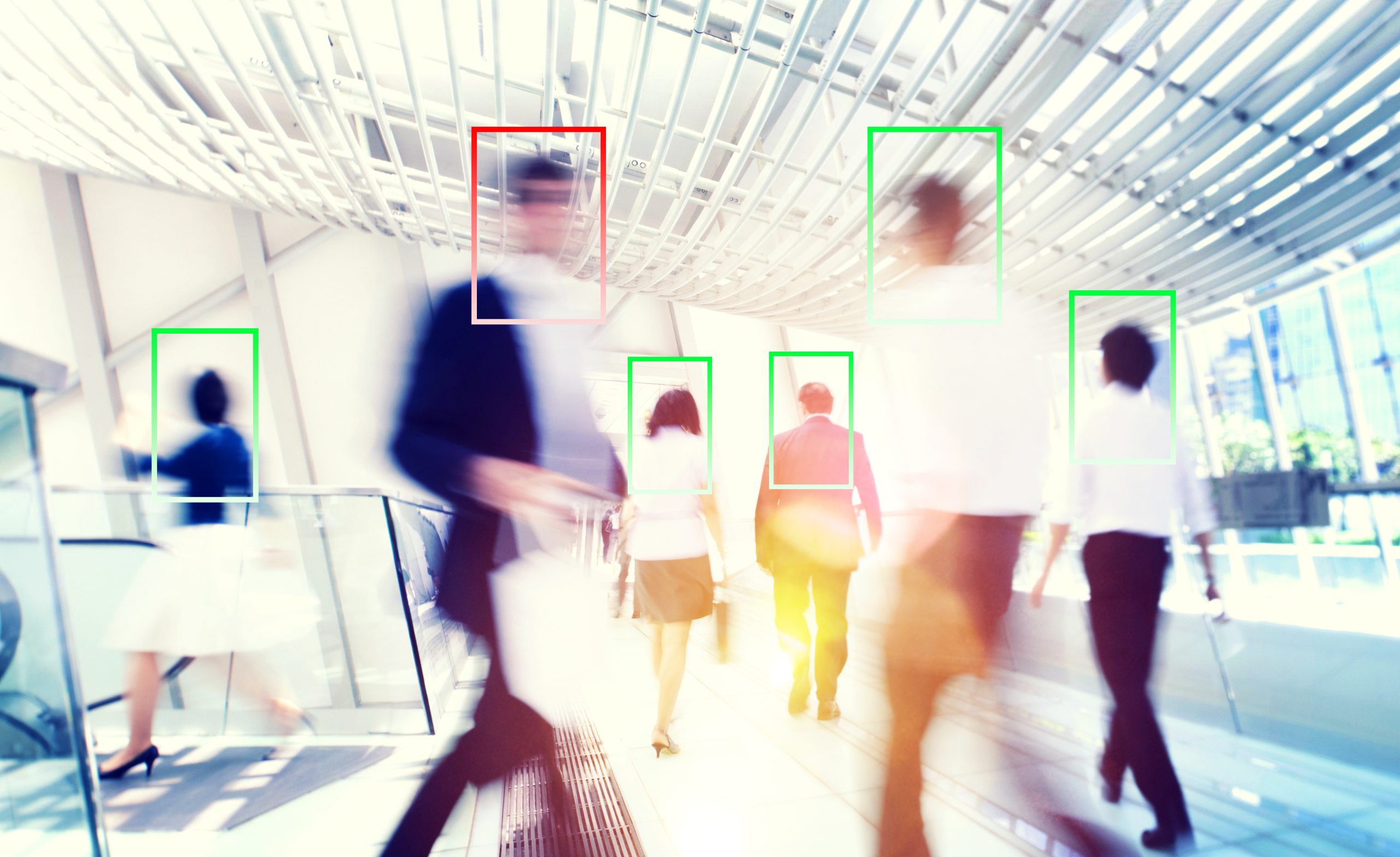
Detecting human cries for help is important in disaster relief, security, and medical applications. Imagine being stuck in an elevator with no normal means of communication. Emergency scream detection systems can recognize distress signals and immediately activate emergency protocols, such as alerting security personnel or activating alarms, to efficiently call for help and save lives.
Renesas Reality AI Emergency Scream Detection is a machine learning (ML) model designed to identify human screams. This model does more than just recognize loud noises. Finely tuned to distinguish distress signals (such as screams) from background sounds. This system enables immediate dispatch for help, which is especially important in enclosed or isolated environments where safety is critical.
How does emergency scream detection work?
Emergency scream detection systems are trained to distinguish between different sounds based on the data collected. The steps required to develop this machine learning model are:
- Data collection and training: Model training begins with comprehensive data collection. A public dataset containing various audio samples is used. The “Scream” class, which features intense nonverbal and verbal screams, is used to train emergency scream detection systems. To ensure that the model can distinguish between things that are not screams, various sounds such as wind, ambient noise, normal conversation, singing, music, and hand clapping are also used from the same dataset.
- Feature extraction: The next step is to extract meaningful features from the audio file that will help the model recognize the distinctive patterns of screams among different noises.
- Training the model: After selecting the best features, a machine learning classifier is trained to distinguish between “scream” and “non-scream” sounds. The training process involves tuning model parameters to minimize errors and improve performance.
By using these methods, emergency scream detection systems can be built to expedite emergency response and provide important safety measures in a variety of environments.
Application example
Audio signals are collected from real-world environments to create the Renesas VOICE-RA6E1 Voice User Demonstration Kit. These audio signals are processed by a classifier model trained on Renesas Reality AI to help distinguish between “screams” and “non-screams” sounds.
Live testing of Renesas’ emergency scream detection model has been benchmarked with over 90% accuracy for screams at distances up to 2 meters from the test board. Test conditions also include background noises such as wind, elevator music, human conversation, a baby crying, and a phone ringing to determine distress signals while maintaining accuracy.

Build example applications easily
Users can collect audio signals with Renesas’ e² Studio IDE and integrate AI models generated from Renesas’ Reality AI software. After collecting data from public datasets*, you deploy Reality AI software tools to perform feature extraction, model training, and deploying the model to C code.
Deployed models can be integrated for live testing using the e² Studio IDE. After integration, the model can be extensively tested in a live setting using the VOICE-RA6E1 board, and live results can be visualized using the AI Live Monitor.
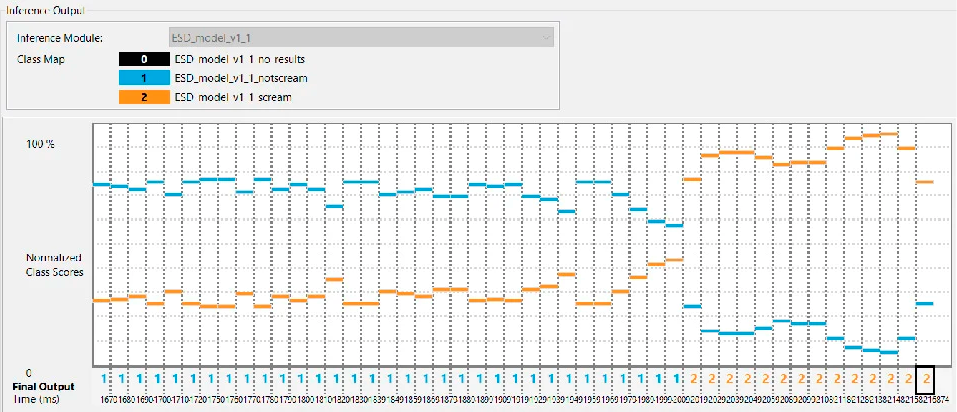
Experience seamless and fast integration between Renesas Reality AI software and e² Studio IDE for model training, deployment, and application testing.
conclusion
The Reality AI Emergency Scream Detection application demonstrates the potential of machine learning to enhance safety measures in a variety of settings and shows how users can leverage Renesas technology to integrate advanced feature extraction, model training, and deployment with real-time response capabilities. Scalable Reality AI Tools can generate ML models for a wide range of Renesas MCU and MPU devices.