
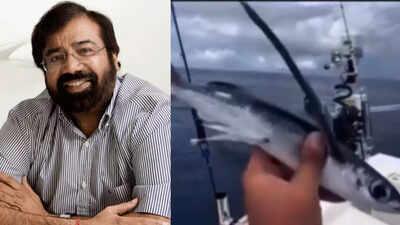
In today’s social media environment where impressive and sometimes unbelievable content goes viral, businessman Harsh Goenka recently garnered widespread attention with a viral post. He shared a short video with X showing a fish-like object sprouting wings and flying out of a person’s hand, creating a surreal and eye-catching visual. The clip immediately captivated viewers and sparked curiosity and discussion online. However, Indian Forest Service official Parveen Kaswan clarified that the video was completely generated by AI, highlighting how artificial intelligence can create realistic yet impossible scenarios. This incident highlights the growing influence of AI in digital content production and the need for viewers to approach viral videos with critical awareness, distinguishing between fantasy creations and real-world phenomena.
Harsh Goenka’s viral ‘flying fish’ causes surprises and unraveling of AI
Harsh Goenka, who is known for sharing engaging and thought-provoking content, posted a short video showing a person holding a fish with fins that resemble wings. In an instant, the fish appear to take to the sky, creating the illusion of flying creatures that defy nature. Goenka captioned the post, “This is the first time I’ve seen a flying fish,” piqued the curiosity and interest of viewers.
The clip’s appeal lies not only in its visual uniqueness, but also in its element of surprise. Social media users were divided between awe and skepticism, with some marveling at the fantastical visuals and others questioning the authenticity of what they were seeing.After the video gained attention, Parveen Kaswan, an Indian Forest Service official, intervened and clarified the situation. Regarding Goenka’s post, Kaswan simply said, “It’s because it’s AI.” This short comment was significant, reminding viewers that artificial intelligence can now generate visuals that mimic reality with amazing accuracy.AI-generated content, especially video, has evolved to the point where it can convincingly simulate impossible phenomena. In this example, the technique created a fish that not only looks like it has wings, but can also flap its wings. This is something that real fish cannot do. The incident reflects a broader trend in which AI is increasingly used to create content that is creative but scientifically inaccurate and can easily spread.
Public reaction highlights curiosity, humor, and awareness of AI content
Harsh Goenka’s post quickly garnered over 50,000 views and triggered mixed reactions. Some users immediately noticed the AI’s operation. One viewer pointed out the flying fish’s natural behavior and wrote: “This is an AI-generated video. The flying fish breaks through the waves and glides over the water for some distance. There is no flapping. ” This comment highlighted the scientific understanding of actual flying fish that glide rather than flap their fins.Other responses reflected humor and a fascination with the limitless possibilities of AI. Comments ranged from playful warnings like “AI se bach ke chalo sir ji” to imaginative predictions like “You’ll soon see a Tyrannosaurus in the air.” Several users praised the creative aspects of the video, commenting, “This is great, but this is AI,” while acknowledging its artificial origins.These responses are indicative of a broader conversation around AI content. Viewers are increasingly aware that viral videos may be digitally manipulated, but many still enjoy the novelty and creativity they contain.
The importance of accuracy in AI-driven content
Parveen Kaswan’s intervention highlights the importance of expert opinion in maintaining factual accuracy in the digital age. Social media is a hotbed of misinformation, and visually compelling AI content can easily mislead your audience. Authorities and experts have an important role to play in ensuring that science and reality are not obscured by digitally generated illusions.In the case of the “Flying Fish” video, Kasuwan’s explanation provided immediate context, educating viewers about the limitations of real-world flying fish and preventing misconceptions from spreading. It also shows how AI-generated content challenges the public’s perception of reality, making expert commentary increasingly valuable. This viral incident highlights a larger trend: artificial intelligence is revolutionizing content creation on social media. From generating realistic images and videos to creating entirely new digital phenomena, AI is reshaping the way audiences interact with online media. While this opens up avenues for creativity and entertainment, it also creates challenges related to authenticity and misinformation.