
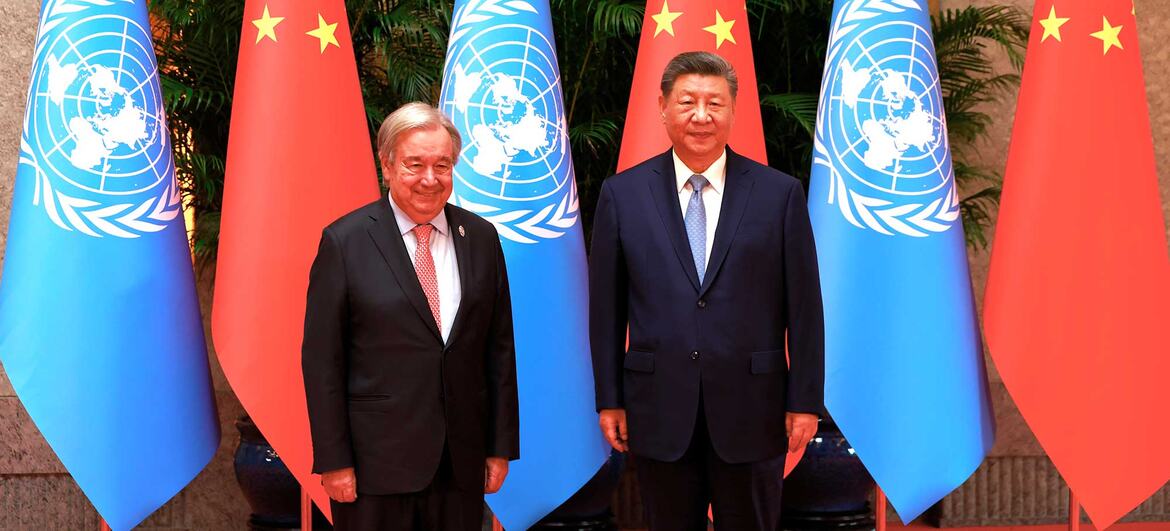
Beijing, July 17 (SANA) UN Secretary-General António Guterres on Friday called on governments and technology companies to step up international cooperation to ensure all countries can benefit from artificial intelligence, warning that without global cooperation, artificial intelligence could deepen inequality rather than advance sustainable development.
Speaking at the opening session of the World Artificial Intelligence Conference (WAIC) in Shanghai, Guterres described AI as “the greatest opportunity of the 21st century,” but warned that it could also become one of humanity’s greatest risks without responsible and inclusive governance, UN News reported.
He stressed that the technologies that shape humanity’s future must be developed through broad international participation, and said AI governance should not be dominated by a few countries or companies, and that all countries have the right to help shape the future.
bridging the digital divide
Guterres said AI has the potential to accelerate medical advances, improve education, strengthen food systems and create new jobs, helping advance the United Nations’ Sustainable Development Goals. But he warned that many developing countries risk being left behind.
He noted that one-third of the world’s population still lacks access to the internet, and that computing power, technical expertise and investment in AI are concentrated in a limited number of countries and companies, widening the global digital divide.
He added that more than 20 countries, including China, have nominated centers to join the UN-backed global network for AI knowledge sharing and capacity building aimed at narrowing these disparities.
Global AI Fund Proposal
Mr. Guterres announced that he would soon present recommendations for the creation of a global AI fund, outlining three priorities to ensure the technology benefits everyone: strengthening AI capacity in developing countries, establishing international safety standards, and making AI more environmentally sustainable.
He said developing countries should be equipped with the necessary tools to build AI systems based on their own data, languages and local expertise, while calling on governments to adopt a common approach to testing AI systems and managing associated risks in line with international law.
Seeking sustainable AI
The UN Secretary-General also called on major AI companies to clarify the environmental impact of their systems and transition their operations to renewable energy by 2030. He called on governments to incorporate clean energy requirements into national strategies.
Guterres concluded by saying that the central question is whether AI-driven transformation will reduce or increase inequality, expand opportunities for all, or concentrate power in the hands of a few.
The United Nations has stepped up its efforts on AI governance over the past year, following the adoption of the Global Digital Compact and the establishment of the Independent International Scientific Panel on Artificial Intelligence with support from the General Assembly. Earlier this month, governments and other stakeholders met in Geneva for the first global dialogue on AI governance.
MHD


