
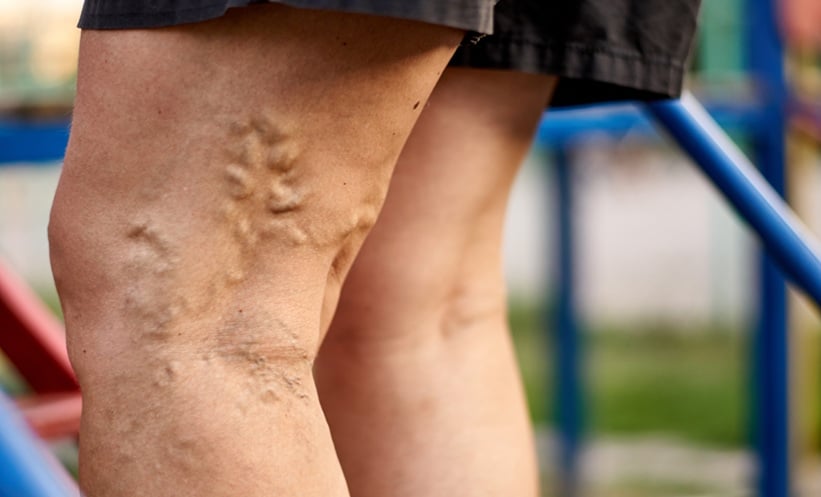
Deep vein thrombosis (DVT) may be more accurately identified by combining gut microbiome profiles with clinical data. Machine learning models show significant improvement in detection compared to clinical assessment alone.
Differences in microorganisms associated with deep vein thrombosis
Researchers analyzed stool samples from 58 patients with DVT, 56 patients with coronary artery disease (CAD), and 500 healthy controls (controls) to investigate whether microbial signatures could help distinguish DVT cases from non-DVT cases.
In this study, we used RNA gene sequencing to characterize the gut microbial community at species-level resolution. DVT patients had significantly lower microbial abundance compared to healthy controls and CAD patients.
At the species level, Escherichia coli, Klebsiella pneumoniaeand Fusobacterium valium These were among the most proliferated microorganisms in DVT patients compared to healthy controls. in contrast, Bacteroides coprochola, Bifidobacterium pseudocatenulatumand collinsella aerofaciens It was higher in healthy participants.
Following screening and feature selection, the researchers reduced the 95 microbial candidate features to 10 key variables for AI classification modeling.
Machine learning models outperform clinical evaluations
Researchers have found that machine learning models that integrate microbial and clinical data can achieve better performance than “clinical-only” models.
The receiver operating characteristic (ROC) area under the curve (AUC) for the integrated model was 0.947 (95% CI: 0.870 to 0.991) compared to 0.874 (95% CI: 0.794 to 0.941) for the clinical model. The precision-recall AUC was also higher at 0.793 (95% CI: 0.602 to 0.931), as opposed to 0.497 (95% CI: 0.274 to 0.724) for the clinical model.
The integrated approach also achieved a more balanced accuracy (sensitivity and specificity), reaching 91.6% (95% CI: 84.7% to 96.2%) compared to 79.3% (95% CI: 69.2% to 87.5%). Microbial signatures represented 8 of the 10 most influential predictors identified by the model, highlighting their potential value as biological markers.
Metabolic pathways provide biological insights
This analysis suggested that microbial signatures associated with DVT were enriched for enzymatic and energy metabolic pathways, such as vitamin K2 biosynthesis. On the other hand, metabolic coenzyme pathways related to metabolism and cellular homeostasis were enriched in healthy controls.
These findings support the potential of gut microbiome profiling to serve as a disease biomarker, but further validation is required before this approach can be adopted into routine clinical practice.
reference
Lu CR et al. Gut microbiome signature identifies deep vein thrombosis through machine learning and metabolic analysis. Scientific Representative 2026; DOI: 10.1038/s41598-026-55650-2.
Featured image: troyanphoto by Adobe Stock


