
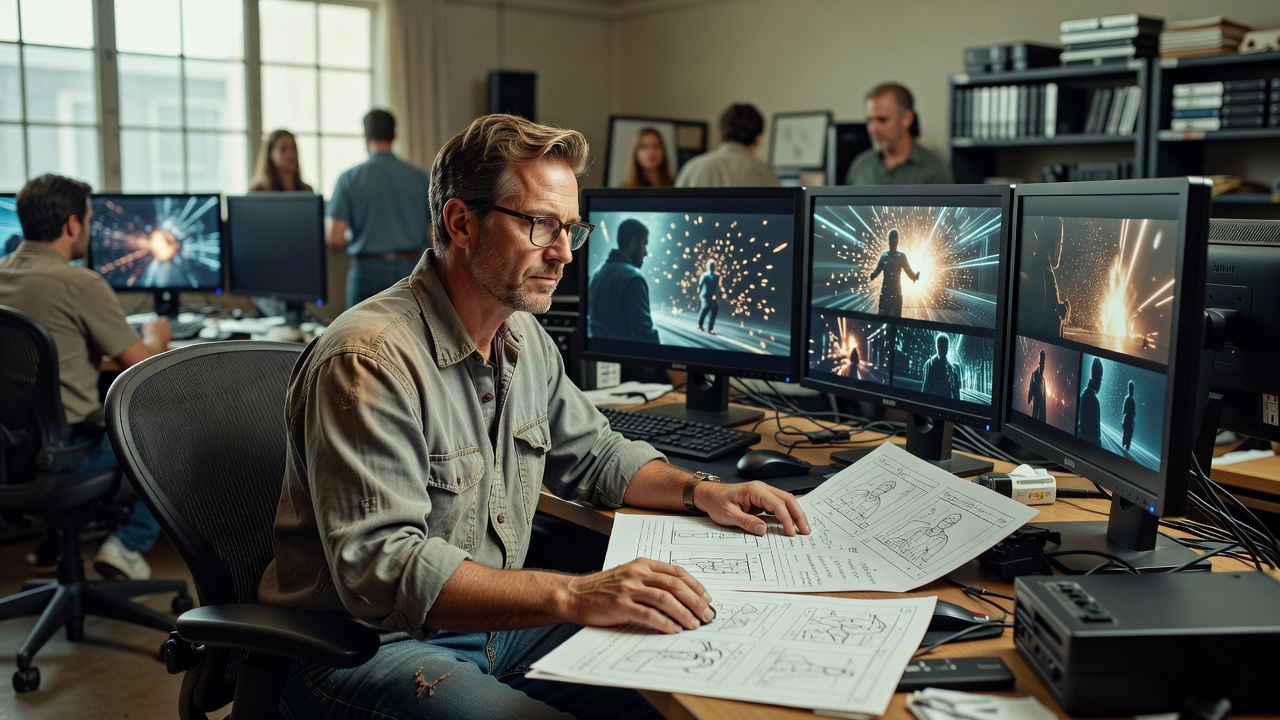
Google’s latest AI video generation models, particularly Veo 3 and its updates, combined with the Flow editing suite, deliver cinematic output from simple text prompts at speeds and costs that challenge decades-old production pipelines. VFX artists, editors, and cinematographers report growing unease as these tools replicate professional footage, synchronized sound, and complex scenes without traditional crews or post-production teams.
This shift prompts urgent discussions on employment in an industry already facing consolidation. Projections from labor analyses suggest significant disruption ahead, while studios explore hybrid approaches that blend human oversight with algorithmic speed. The debate extends beyond Hollywood to independent creators and global markets where access to these tools varies by region and subscription tier.
Understanding Google’s Veo and Flow Ecosystem
Veo 3 emerged from Google DeepMind as a core model capable of producing high-fidelity video clips complete with native audio generation. Users input text descriptions to create scenes featuring realistic physics, lighting, character movement, and dialogue that aligns with lip movements. The system handles multi-shot sequences when paired with companion tools.
Flow functions as the primary interface for professionals, offering a timeline-based environment similar to traditional non-linear editors but augmented with generative capabilities. It supports scene building where creators define consistent characters, environments, and narrative arcs across multiple clips. Reference images or existing footage can guide outputs, allowing refinement through conversational prompts rather than manual keyframing.
Integration occurs across Google platforms including Gemini apps, AI Studio, and Vertex AI for enterprise users. Pricing structures tier access: lower plans provide limited generations while premium subscriptions unlock extended durations, higher resolutions up to 4K, and fuller audio features. Availability began primarily in the United States following its 2025 unveiling, with gradual expansion to select other markets.
Official updates in late 2025 introduced Veo 3.1 enhancements focused on richer audio integration, improved narrative coherence, and finer control over visual elements. These changes addressed early feedback from test users in creative fields who sought better consistency across shots and more precise editing controls within the Flow environment.
The ecosystem positions itself for both rapid ideation and polished deliverables. Marketers generate campaign videos quickly, while filmmakers use it for previsualization to test concepts before committing resources to physical production. This dual utility fuels both excitement and apprehension among those whose livelihoods depend on manual execution of similar tasks.
Key Features of Veo 3 and Its Successors
Native audio stands out as a distinguishing capability, allowing the model to generate synchronized sound effects, music, and spoken dialogue directly from prompts without separate recording sessions. This eliminates steps that traditionally involve voice actors, foley artists, and sound designers working in dedicated facilities.
Cinematography controls enable specification of camera movements such as pans, zooms, dollies, and tracking shots within the generation process. Users describe desired angles and motions in natural language, producing results that mimic professional rig work. Object insertion and removal tools further streamline cleanup, letting editors excise unwanted elements while preserving shadows and interactions.
Scene Builder in Flow facilitates multi-shot projects by maintaining character consistency through reference uploads or generated anchors. Environments persist across sequences, and narrative logic guides transitions. Video-to-video transformation allows restyling of uploaded clips or extension of existing footage using textual instructions.
Resolution and duration options scale with plan level, supporting 1080p and 4K outputs in segments typically ranging from several seconds to longer compilations when assembled in the editor. Physics simulation handles realistic interactions like fabric movement or environmental effects with increasing accuracy in successive model iterations.
These features reduce iteration time dramatically compared to conventional pipelines. A concept that once required weeks of modeling, animation, compositing, and sound design can now reach a reviewable state in hours. However, the same efficiency raises questions about the volume of work available for human specialists.
How Traditional VFX Workflows Operate
Visual effects pipelines typically begin with pre-production planning involving storyboards, concept art, and previs created by dedicated teams. Live-action plates are captured on set with practical elements, followed by extensive post-production where artists layer digital assets, match lighting, and integrate simulations.
Specialists handle distinct roles: modelers build 3D assets, animators bring characters to life through keyframe or motion capture techniques, compositors blend layers with color grading and effects, and rotoscopers isolate elements frame by frame. Sound integration occurs in parallel or sequential stages involving multiple departments.
Budgets for major productions allocate substantial portions to VFX vendors, with timelines stretching months due to iterative reviews and revisions requested by directors. Quality control demands human judgment to ensure emotional resonance and narrative fit that purely generative methods have yet to replicate consistently.
Software suites like Adobe After Effects, Nuke, and Maya form the backbone, requiring years of training to master. Collaboration across remote teams relies on version control systems and daily dailies reviews. This structured process supports the scale of blockbuster films but also creates bottlenecks that AI tools now target for acceleration.
Entry-level positions often focus on repetitive tasks such as cleanup or basic tracking, roles that generative systems can automate more readily. Senior artists provide creative direction and final polish, areas where human insight remains essential according to current tool limitations.
AI Integration Points in Video Production
Previsualization benefits most immediately from AI video tools. Directors and producers generate rough scene versions to evaluate pacing, composition, and story flow before greenlighting expensive shoots. This reduces risk in early decision-making stages.
Concept art and asset generation accelerate with image-to-video extensions, allowing quick visualization of environments or character actions. Teams iterate on designs faster, freeing time for refinement rather than initial creation from scratch.
Post-production sees targeted assistance in object removal, background extension, and simple effect simulations. Flow’s editing features permit text-driven adjustments to timing or style without reopening full project files in legacy software.
Marketing and short-form content production adopts these tools for rapid turnaround on commercials, social clips, and trailers. Cost savings appear in reduced need for location shoots or stock footage licensing when synthetic alternatives suffice for non-critical elements.
Full replacement of live-action or complex VFX remains limited by consistency issues across long-form narratives and the absence of nuanced performance capture that actors provide. Hybrid workflows currently dominate practical adoption, where AI handles volume tasks and humans oversee quality and intent.
Quantifying the Threat to VFX Jobs
Industry forecasts point to substantial employment impacts from generative AI adoption across entertainment sectors. Analyses commissioned by labor organizations estimate that more than 100,000 U.S. film, television, and animation positions could face disruption by 2026, representing a notable share of the roughly 550,000 total jobs in these fields labor group projections.
Broader studies suggest figures approaching 200,000 affected roles when including related categories such as sound editing and concept development. VFX artists, 3D modelers, and compositors rank among the highest-risk groups, with executive surveys indicating expectations that AI will eliminate or consolidate positions in these areas within short timeframes.
Recent workforce reductions at several VFX facilities coincide with publicized investments in AI tooling. Entry-level and mid-tier roles handling repetitive compositing or tracking see the earliest pressures, while demand shifts toward AI supervision and prompt engineering skills.
Market data on AI applications in VFX shows rapid growth, with sector valuations expanding significantly as studios integrate these capabilities to control costs amid tightening production budgets. This economic incentive accelerates tool deployment even as union negotiations address usage boundaries.
Regional variations matter, with Los Angeles County experiencing notable entertainment job losses in recent years that compound AI-related concerns. Independent markets outside major studio systems may experience different dynamics based on access and regulatory environments.
Real Reactions from Industry Professionals

Online forums dedicated to VFX practitioners host candid discussions about Veo 3 outputs. Artists describe generated clips as technically impressive yet lacking the subtle imperfections and emotional layering that distinguish human-crafted work. Concerns center on whether clients will continue valuing traditional expertise when faster alternatives exist.
Video editors and cinematographers interviewed in trade coverage express anxiety over skill obsolescence. Years spent mastering camera operation or timing cuts appear less essential when prompts can approximate similar results. Some view the technology as an opportunity for new roles in oversight, while others anticipate contraction in available assignments.
Public statements from unions highlight ongoing contract negotiations aimed at limiting non-consensual AI use and protecting residual payments tied to performances. Protests outside studio facilities underscore fears that cost-cutting measures will prioritize algorithmic generation over human contributions.
Independent creators report mixed experiences. Some leverage the tools for low-budget projects that previously proved unfeasible, expanding access to cinematic quality. Established professionals worry about market saturation from AI-generated content flooding platforms.
Feedback loops with Google include direct input from filmmakers on features like team collaboration in Flow. Developers incorporated suggestions for multi-user workflows and enhanced consistency controls based on these sessions, illustrating an iterative development path influenced by end-user realities.
Debates on Creative Ownership and IP
Questions of authorship arise when AI generates core visual elements from user prompts. Traditional copyright frameworks emphasize human creativity, yet the extent of prompt engineering versus model training data creates gray areas for ownership claims on final outputs.
Studios and individual artists debate whether AI-assisted works qualify for the same protections as fully manual productions. Licensing of training data and potential infringement risks add layers of legal uncertainty for commercial applications.
Creative ownership extends to performer likenesses and style replication. Tools capable of mimicking specific actors or directorial signatures raise consent issues similar to those addressed in recent labor agreements covering digital replicas.
Watermarking initiatives like Google’s SynthID aim to embed detectable markers in generated content, supporting transparency efforts. However, enforcement across platforms and the potential for removal or circumvention remain practical challenges.
Industry-wide calls for clearer guidelines continue, with some advocating standardized attribution requirements for AI contributions in credits and metadata. These discussions intersect with broader conversations on intellectual property in an era of accessible generative systems.
Google’s Collaborative Approach with Hollywood
Google maintains active partnerships with filmmakers to refine tools like Veo and Flow. Feedback sessions inform development priorities, such as expanding multi-user capabilities and improving prompt adherence for narrative coherence. This engagement positions the company as a participant rather than solely an external disruptor.
Pre-production and prototyping use cases receive emphasis in official communications. Studios test AI for rapid visualization of complex sequences, reducing exploratory costs before physical production begins. Such applications demonstrate value in supporting rather than supplanting human teams.
Enterprise access through Vertex AI targets larger productions and agencies seeking scalable solutions integrated with existing cloud infrastructure. Custom fine-tuning options allow adaptation to specific project styles or brand guidelines.
Despite collaborations, underlying tensions persist around job impacts and control. tensions between Hollywood and Big Tech reflect competing priorities between innovation speed and workforce stability. Negotiations continue to shape acceptable boundaries for tool deployment.
Public demos and developer access encourage experimentation while usage policies address misuse concerns such as deepfake creation. Regional restrictions in certain markets stem from regulatory differences on synthetic media.
Opportunities for Independent Filmmakers
Lower barriers enable solo creators or small teams to produce content previously requiring substantial capital. Short films, music videos, and promotional material reach professional polish levels without hiring full crews or renting facilities.
Pre-production acceleration allows more time for story development and iteration. Writers and directors visualize ideas quickly, refining concepts through multiple generated versions before committing to principal photography.
Cost efficiencies appear particularly relevant for emerging markets and educational content where budgets constrain traditional approaches. Marketers adopt the tools for A/B testing ad variations at scale.
Hybrid models combine AI generation with human direction for character performances or location-specific elements. This preserves unique creative voices while leveraging efficiency gains.
Platform distribution favors high-volume output, and AI tools support consistent posting schedules for creators building audiences on video-sharing sites. Success depends on distinctive prompting skills and post-generation curation.
Regulatory and Ethical Challenges
Deepfake risks prompt calls for mandatory disclosure and detection standards. Misinformation potential grows with realistic synthetic video that includes audio, complicating verification processes for news and public discourse.
Environmental considerations include the computational demands of training and running large models. Energy consumption associated with widespread adoption draws scrutiny from sustainability advocates within creative communities.
Access disparities arise from subscription costs and geographic limitations. Premium tiers remain out of reach for many freelancers, potentially widening gaps between well-resourced studios and independent practitioners.
International regulations vary, with some regions imposing stricter controls on generative AI for media. Compliance requirements influence tool availability and feature sets across borders.
Industry self-regulation through union contracts and voluntary watermarking coexists with legislative efforts to establish liability frameworks for synthetic content misuse. Ongoing evolution of these rules will shape practical adoption rates.
Strategies for VFX Artists to Adapt
Skill diversification toward AI supervision, prompt crafting, and integration of generative outputs with traditional pipelines offers a path forward. Artists who master both manual techniques and new tools position themselves as hybrid specialists.
Portfolio development should highlight adaptability, showcasing projects where AI accelerated specific phases while human oversight ensured quality. Specialization in complex simulations or performance-driven work maintains demand in areas slower to automate fully.
Networking within communities focused on emerging technologies helps identify opportunities in tool development, training, or consulting roles. Freelance platforms increasingly list positions requiring AI fluency alongside core VFX expertise.
Continuous learning through official documentation, community tutorials, and experimentation with available tiers builds practical familiarity. Understanding limitations prevents over-reliance and supports informed client recommendations.
Advocacy for fair usage policies and transparent crediting practices contributes to sustainable industry norms. Collective input from practitioners influences how tools evolve and deploy in professional settings.
Looking Ahead: The Hybrid Future of Visual Effects

Current trajectories point toward integrated workflows where AI handles initial generations and repetitive tasks while human artists provide direction, refinement, and final artistic judgment. This model mirrors earlier transitions with digital tools that augmented rather than eliminated roles.
Demand for authentic human performances and culturally nuanced storytelling likely sustains traditional production for premium content. Audiences continue to value elements that convey lived experience beyond technical perfection.
Market expansion in short-form and interactive media creates new outlets for AI-assisted creation, potentially offsetting some losses in conventional feature pipelines. Emerging genres built around generative capabilities may arise.
Investment in detection, attribution, and ethical frameworks will determine long-term acceptance. Transparent practices build trust essential for widespread commercial and cultural integration.
The coming years will test whether the industry achieves balance between efficiency gains and preservation of skilled employment. Proactive adaptation by professionals and thoughtful development by toolmakers offer the clearest route to mutual benefit.
Overall, Google’s advancements accelerate change already underway across creative sectors. VFX professionals who engage directly with these capabilities while advocating for their interests stand best positioned to navigate the evolving landscape.


