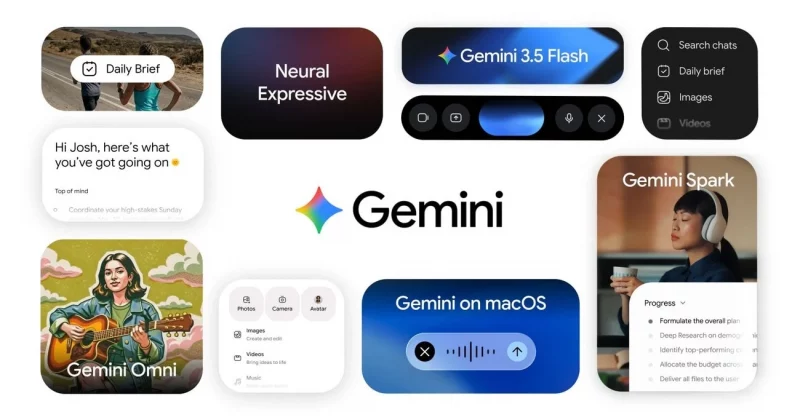
Google is rolling out a series of upgrades that reposition the Gemini app as a centralized AI hub. This hub lets you reach for Gmail, calendar, and video generation instead of passively sitting in a browser tab waiting for prompts.
The upgrade includes new Daily Brief functionality, deeper integration with Google’s existing product ecosystem, and access to multimodal video capabilities leveraging the company’s Veo model. Google also introduced new model options Gemini 3.1 Pro and 3.2 Flash, as well as an enhanced agent framework designed to handle multi-step tasks across services.
What Google actually ships
Daily Brief, as the name suggests, is a personalized summary pulled from Google services. Think of it like your morning newspaper. The difference, however, is that it’s written by an AI that has already read your email and checked your calendar.
The new Gemini 3.1 Pro model appears to be aimed at more complex inference tasks, while the 3.2 Flash is aimed at speed and efficiency for lighter workloads.
The agent framework is designed for a future where Gemini doesn’t just answer questions, but actually executes multi-step workflows. Read emails, draft replies, check calendar conflicts, and book meetings, all in one series of actions.
Veo-powered video capabilities add a multimodal layer that puts Google in direct competition with OpenAI’s Sora and other generative video tools.
What this means for cryptocurrencies and decentralized AI
These Gemini updates do not include token integration or blockchain technology. However, the impact of cryptocurrencies on the AI sector is significant.
The theory of decentralized AI has always been based on a few core arguments: censorship resistance, data sovereignty, open source transparency, and the ability to create economic incentives through tokens that cannot be replicated by centralized companies.
Let’s consider what Gemini’s agent framework actually means. Google is building AI that can read financial emails, parse transaction data, and take actions across our services. For Web3 projects working on AI agents that interact with DeFi protocols or manage on-chain portfolios, Google’s version provides a central benchmark against which they are measured.
Projects focused on privacy-preserving AI, distributed computing, or trustless inference have defensible niche markets that Google doesn’t pursue because it conflicts with its data-driven business model. But projects looking to build general-purpose AI assistants on-chain face the unpleasant reality that Google’s version is free, fast, and already installed on every Android smartphone.