The Google I/O 2024 event introduced a number of new AI features to Google's suite of apps. Among the additions is an upgrade to the company's existing AI watermarking system, SynthID. In addition to AI-generated image and audio detection, Google is expanding the use of his SynthID to more media formats.
SynthID can now embed watermarks into AI-generated videos and text. Google says the watermark is undetectable to the human eye and does not degrade video quality. This technique involves adding a watermark to the pixels of each frame of the video.

The company says the watermark will remain even after you modify the video. This means that even if someone crops the video, adds a filter, changes the frame rate, or adjusts the color tone, the watermark will still be detectable. As AI video generation gradually accelerates, the purpose of such systems is to help people understand whether the video they are watching is his AI generation.

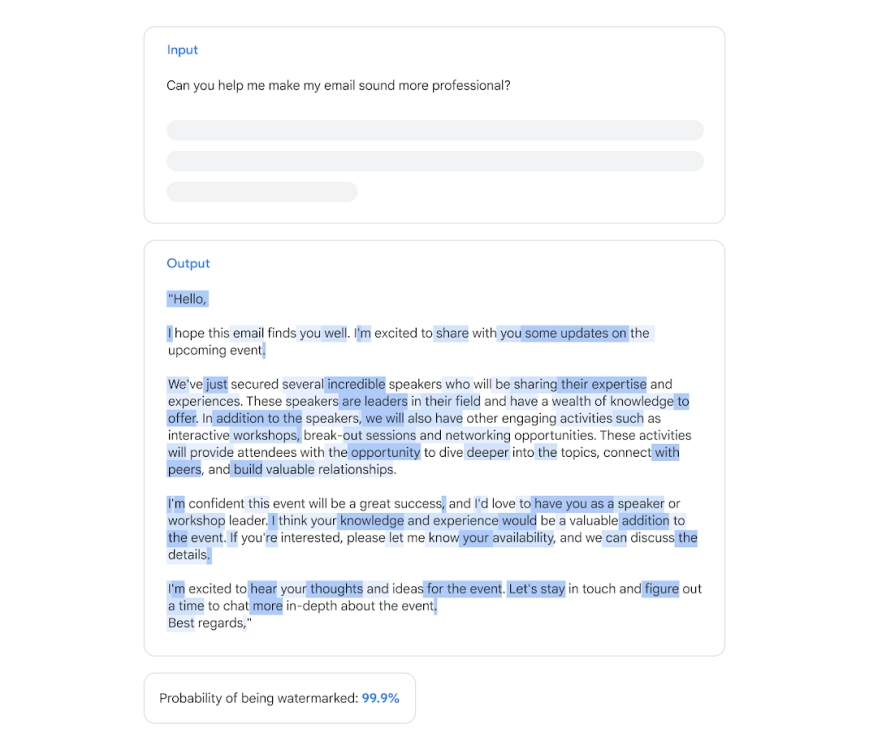
For text-based content, SynthID adds watermarks while generating text in real-time. The system starts by predicting the next most likely set of texts to produce for a sequence, and then assigns probability scores to some of the possible characters, words, or phrases. This action is repeated throughout text generation, and its combined probability score is considered a watermark.
Google SynthID availability
Google has confirmed that SynthID will begin watermarking text generated in Gemini mobile and web apps. Additionally, videos generated by Google's new Veo AI Video Generator are now embedded with digital watermarks. The company shares that SynthID can be combined with other AI detection technologies for wider coverage. To prevent misuse of its AI tools, Google plans to open source his SynthID so it can be used across the broader AI ecosystem.
What do you think about Google's upgraded SynthID system? I think this tool will stop the spread of misinformation and help people make informed decisions about AI-generated content Or? Let us know in the comments section below.