

Image source: golibo, via Getty Images
RPN’s Research Offices of the Future survey also reveals concerns about impact on research integrity
A large-scale international survey conducted by Research Professional News found that opinions about artificial intelligence are mixed, with a third of research office staff using AI for core fundraising tasks, but 60 per cent believe it is the biggest threat to research integrity.
RPN surveyed more than 1,100 research office staff around the world and found that concerns about the use of AI and its impact on research are widespread.
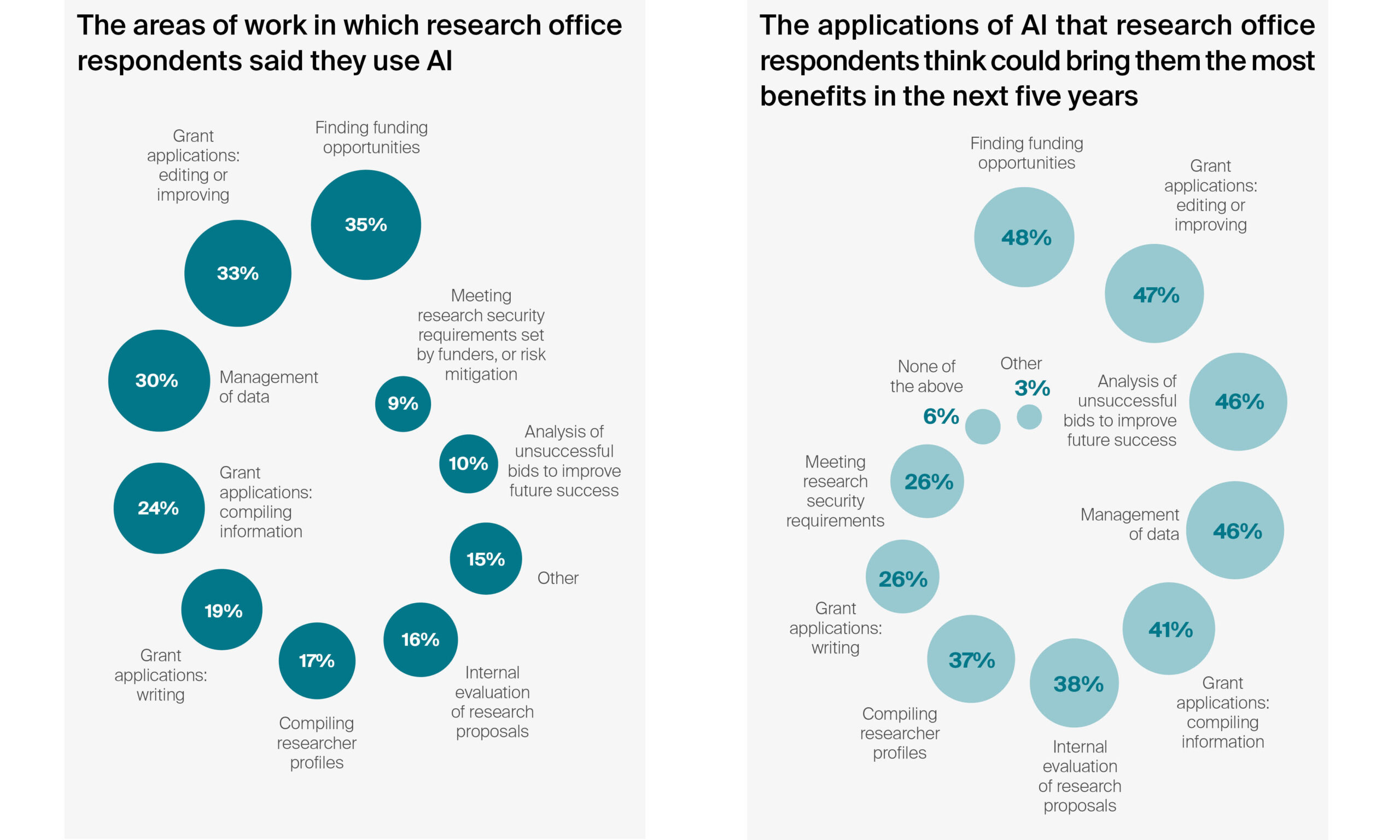
More than a third (35%) of respondents said they use AI to access funding opportunities. 33% said they use AI to edit and improve grant applications, and 30% use it for data management. Almost a quarter (24%) of respondents employ AI to compile information for grant applications.
RPN conducted a separate survey of more than 1,400 researchers and published the results of both studies side-by-side in the 2025 Research Offices of the Future report.
Almost half (48 percent) of researcher respondents said they were already using AI tools for literature searches, and about one-third said they were using AI for literature review (35 percent), manuscript writing (33 percent), and data analysis (30 percent). More than one in ten (13%) use AI for peer review.
When asked how AI will benefit research institutions over the next five years, nearly half of respondents thought it would benefit identifying funding opportunities (48 percent), editing or improving grant applications (47 percent), managing data (46 percent), and analyzing failed grant bids to improve future success (46 percent).
anxiety about honesty
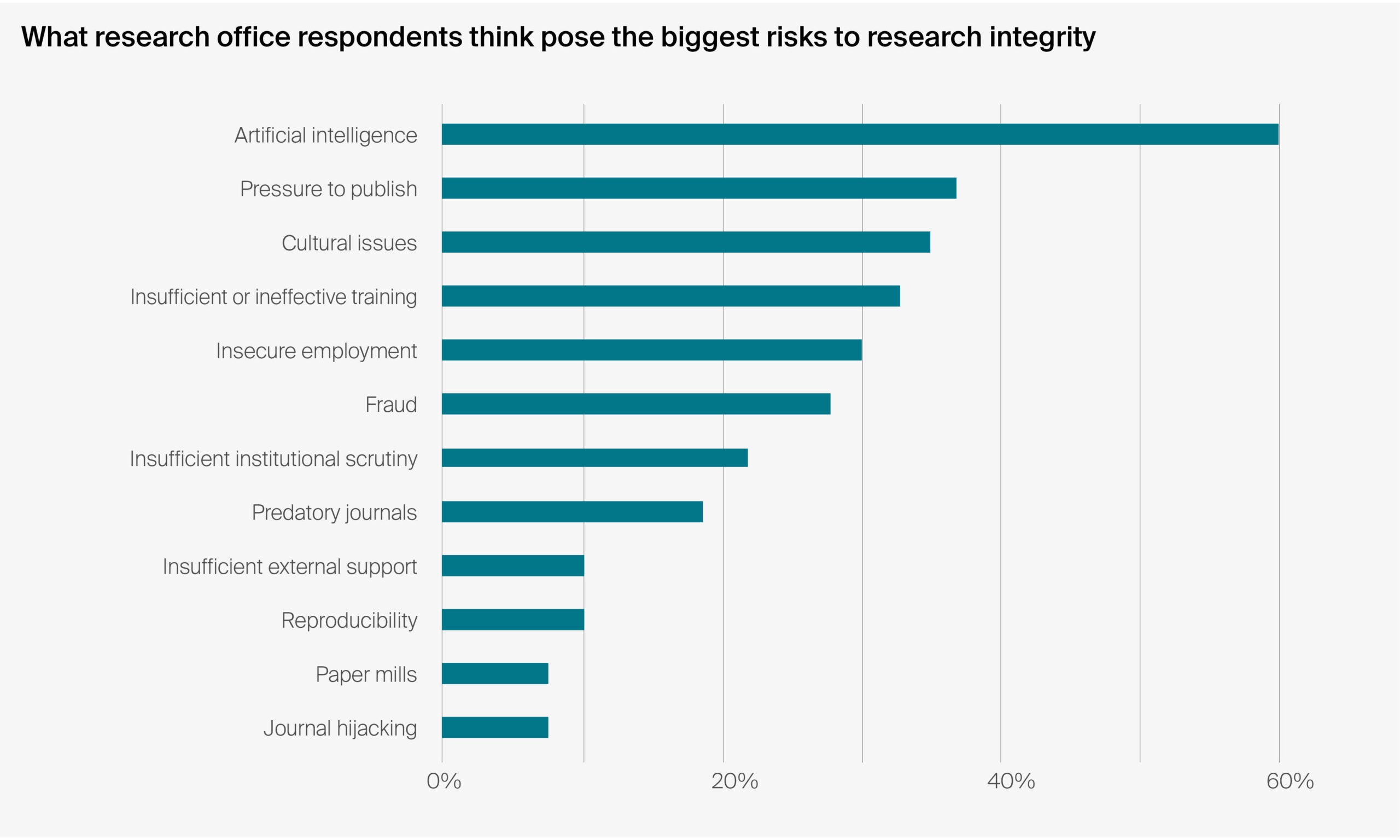
But lab staff also recognized AI as the biggest threat to research integrity. Among staff surveyed, 60% cited AI as the biggest risk, far outweighing factors such as pressure to publish, cultural issues, inadequate training, and job insecurity.
“AI doesn’t have to be a negative, but too many people are using it as a substitute for critical thinking skills,” said one survey firm respondent. “As long as humans evaluate current achievements with a critical and professional eye, we should be fine.”
Another said the responsible use of AI was encouraging for researchers, but added that “training in this area is urgently needed.”
Trump’s influence
The 2025 Research Offices of the Future survey asked respondents how their workplaces have been affected by Donald Trump’s return as U.S. president and the subsequent disruption to U.S. federally funded research.
Among respondents based outside of North America, nearly one-third (29%) said their institution had lost funding due to U.S. government actions, and about a quarter (26%) reported that their institutional collaboration with a U.S. partner had ended. More than one in ten (15%) said they are dealing with increased compliance demands due to US policy.
Looking only at responses from participants based in North America, a much higher percentage (83 percent) said their institutions had lost funding, and an even larger number (50 percent) reported an increase in compliance requests.
When asked for other examples of the impact of U.S. government intervention, one respondent cited “loss of funding opportunities related to equity, diversity, and inclusion,” and another cited new “challenges” regarding access to research data.


