Gap Inc. is expanding its use of AI, data, and automation across its marketing operations to cover campaign planning, personalization, and execution across its brands.
The company announced the initiative at the Cannes Lions International Festival of Creativity. The company is working with Google Cloud, Zeta Global, and Publicis Sapient on this initiative, covering a portfolio of brands including Gap, Old Navy, Banana Republic, and Athleta.
The initiative targets a shared marketing organization across Gap’s portfolio of brands. This includes customer data, content, owned channels, and e-commerce.
Gap said the initiative aims to reduce silos across marketing organizations and make data more accessible to teams. Damon Berger, senior vice president of marketing shared services at Gap Inc., said AI is being used to support strategy, storytelling and customer interactions.
Building the data layer
Google Cloud provides the data and AI layer for the project. Gap announced a multi-year Google Cloud agreement in October 2025 to leverage the company’s technology to integrate customer and product intelligence.
The effort builds on the agreement, which is designed to support the use of AI across Old Navy, Gap, Banana Republic and Athleta, including in e-commerce, product creation and customer experience.
The retailer plans to use its foundation to support personalization, decision-making and continuous learning across content, activation and e-commerce. The broader partnership will give Gap access to Vertex AI, BigQuery, and Gemini.
Gap also uses Agent Studio, Agent Engine, Gemini, Nano Banana, and Veo for AI workflows and image and video content generation. The company did not disclose detailed output targets or cost figures for the content production work.
Start with owned channels
The rollout will begin with Gap-owned marketing channels, and Zeta Global will support the development of an AI-powered marketing stack. These channels include Gap’s e-commerce site, apps, email, loyalty communications, and other direct customer messaging.
Zeta Global supports retailer-owned marketing channels through Athena by Zeta. The platform is designed to connect customer data, decision making, and campaign execution, including audience strategy, creative development, activation, and optimization.
Gap said Athena’s agent capabilities support decision-making across audience strategy, creative development, campaign activation and optimization.
Gap says the initiative will support more personalized experiences and faster campaign delivery across key marketing channels.
Publicis Sapient supports a wide range of implementations across people, processes, technology, data, and partner systems. His work includes connecting content, commerce, activation and customer signals as part of Gap’s marketing operating model.
Gap CTO Sven Gerjets said the company is leveraging data, AI and agent capabilities to better understand customer intent and improve the way teams work across its portfolio of brands.
Connecting marketing and commerce
Gap’s AI office introduced new shopping technologies in March, including personalized fit guidance and support for Google’s Universal Commerce Protocol. The company also introduced more personalized shopping features during the 2025 holiday season, including recommendations based on curated trends and a digital assistant across its e-commerce sites and apps.
Gap announced in March that customers would be able to use Google’s Universal Commerce Protocol to discover and purchase products through Google Search and AI mode in the Gemini app. The protocol is designed to allow AI systems to connect to a merchant’s checkout flow and complete transactions within a conversational interface.
Gap is also working with Bold Metrics on personalized fit guidance with size recommendations within an AI-enabled shopping interface.
The same Google Cloud partnership also covers product development, customer experience, and employee decision-making. Gap said AI tools are used in each part of the product-to-market process, including design, planning and pricing.
The project comes as Gap continues to prioritize technology investments. In the first quarter of 2026, the company reported its ninth consecutive quarter of positive comparable sales.
In the first quarter of 2026, Gap reported net sales of USD 3.5 billion, an increase of 1.0% year over year. In-store sales increased 3%, but online sales fell 2%.
Online sales accounted for 38% of total net sales for the quarter. Like-for-like sales from Gap brands helped offset smaller increases at Old Navy and Banana Republic, while Athleta reported an 11% decline.
Gap President and CEO Richard Dixon said on the earnings call that technology remains one of the company’s investment priorities. Dixon described Gap as a “brand-driven, intelligence-driven” fashion company.
He said data and AI are being leveraged to help teams make decisions more consistently and efficiently. He also said Gap is leveraging product intelligence to improve the way it designs, purchases, allocates and replenishes inventory.
Gap also relaunched its loyalty program, Encore, during the quarter. The program covers Old Navy, Gap, Banana Republic and Athleta and includes access, content, experiences and benefits across the company’s brands.
Loyalty communications is one of the owned channels included in your marketing deployment. Encore provides Gap with another direct customer channel tied to its broader efforts across marketing, e-commerce and customer engagement.
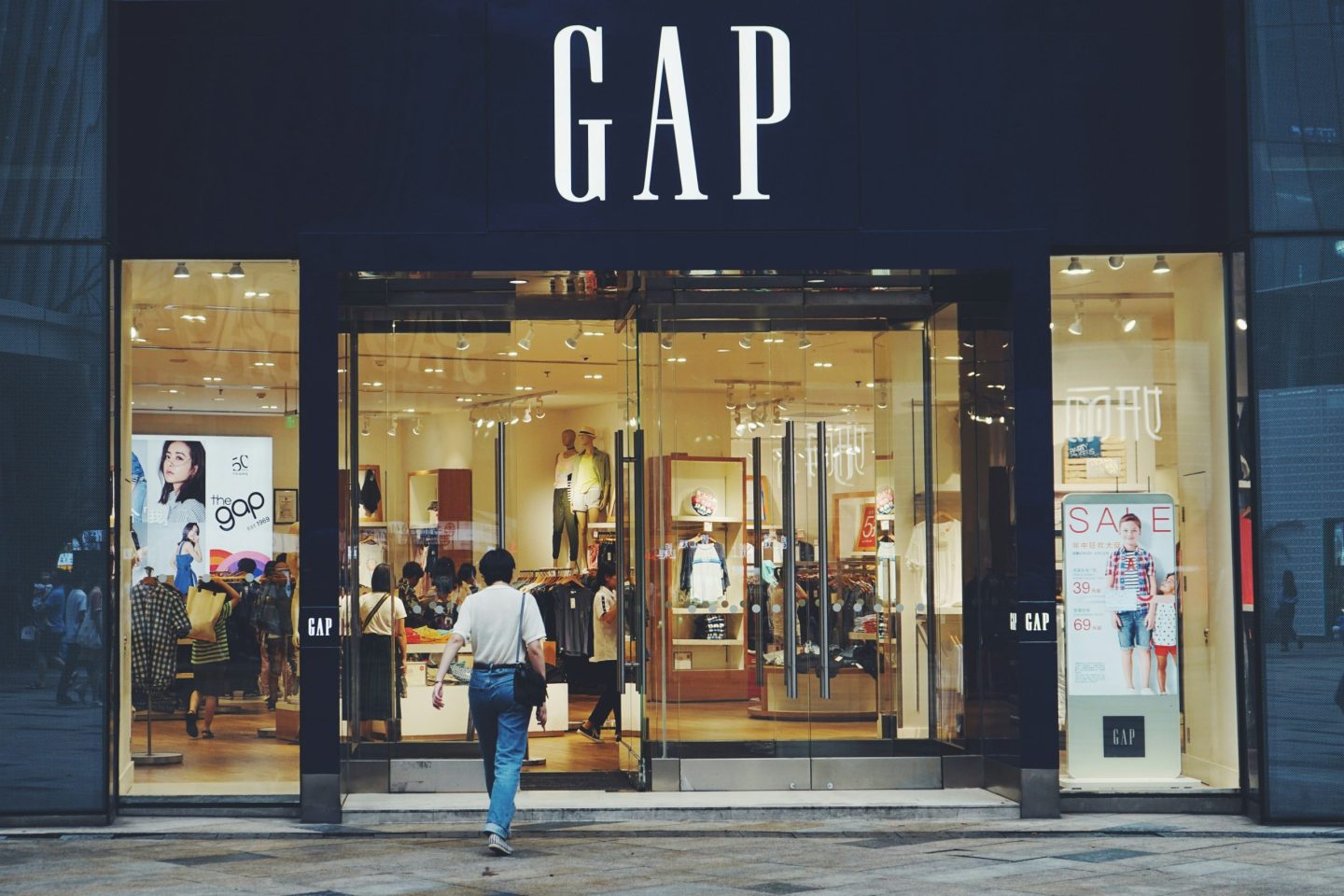
(Photo provided by Lan Deng)
SEE ALSO: Warner Bros. Discovery expands use of agent AI in ad buying

Want to learn more about AI and big data from industry leaders? Check out the AI & Big Data Expos in Amsterdam, California, and London. This comprehensive event is part of TechEx and co-located with other major technology events. Click here for more information.
Marketing Tech News is brought to you by TechForge Media. Learn about other upcoming enterprise technology events and webinars.