Concept-based learning (CBL) in machine learning focuses on using high-level concepts from raw features for prediction, making the model more interpretable and efficient. A representative type, the concept-based bottleneck model (CBM), compresses input features into a low-dimensional space to capture essential data and discard non-essential information. This process improves explainability for tasks such as image and speech recognition. However, CBM often requires deep neural networks and extensive labeled data. A simpler approach is multi-instance learning (MIL), which labels groups (bags) of data with unknown individual labels. For example, by clustering image patches and assigning probabilities based on the overall image label, individual patch labels can be inferred.
Researchers at Greater St. Petersburg Polytechnic University pioneered an approach to CBL known as frequentist inference CBL (FI-CBL). In this method, concept-labeled images are split into patches and encoded into embeddings using an autoencoder. These embeddings are then clustered to identify groups that correspond to specific concepts. FI-CBL determines concept probabilities for new images by analyzing the frequency of patches associated with each concept value. Furthermore, FI-CBL integrates expert knowledge through logical rules and adjusts concept probabilities accordingly. This approach stands out for its transparency, interpretability, and effectiveness, especially in scenarios with limited training data.
CBL models, including CBM, use high-level concepts for interpretable predictions. These models are used for a variety of applications from image recognition to tabular data analysis and play a pivotal role in healthcare. CBM features a two-module structure that separates the learning of concepts and their influence on target variables. Innovations such as concept embedding models and probabilistic CBM have improved interpretability and accuracy. Furthermore, integrating expert knowledge into machine learning, especially through logical rules, has attracted significant interest in a variety of methods, from constraining loss functions to mapping rules to neural network components.
CBL involves a classifier that predicts both a target variable and a concept from a set of training data pairs. Each data pair contains an input feature vector, a target class, and a binary concept value indicating the presence or absence of the concept. A CBL model aims to predict and explain how these concepts relate to the predictions. This is typically done using a two-stage function that maps inputs to concepts and then maps concepts to predictions. For example, in medical images, each image can be divided into patches and their embeddings clustered to determine concept probabilities, so that the model can explain and highlight relevant regions in the image based on these concepts.
Incorporating expert rules into FI-CBL adjusts the prior and conditional probabilities of concepts, which has a significant impact on the probability model. <粒状> If so, the diagnosis is <悪性>By integrating expert-provided logical expressions such as “,” the model refines its predictions based on these constraints. This enhancement allows the model to refine its predictions based on the degree to which the rules are satisfied. <悪性> It facilitates a more nuanced understanding of medical imaging data where prior probabilities of diagnoses such as increase or decrease, improving diagnostic accuracy and interpretability. By integrating expert rules, FI-CBL can effectively blend domain expertise and statistical modeling, improving the reliability and insight of medical diagnoses.

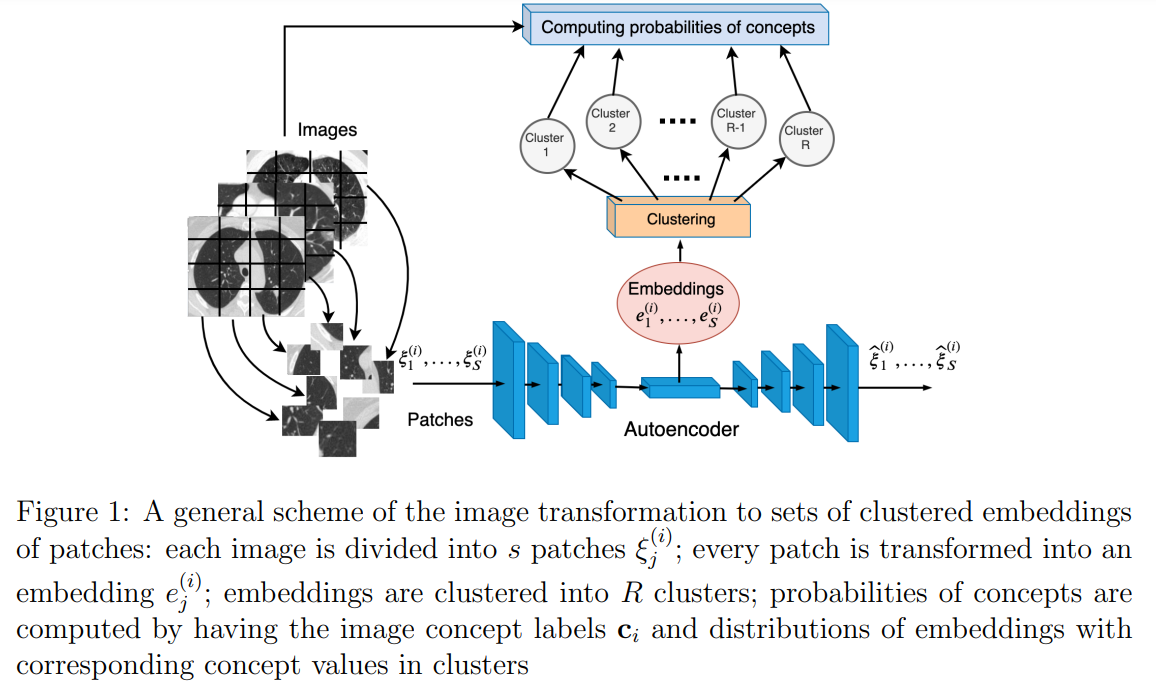
FI-CBL offers significant advantages over neural network-based CBMs in certain scenarios. FI-CBL is characterized by transparency and interpretability, providing a clear sequence of computations and explicit probabilistic interpretations of all model outputs. It performs well on small training datasets and leverages robust statistical methods to improve classification accuracy. However, the effectiveness of FI-CBL is highly dependent on accurate clustering and optimal patch size selection, which poses challenges in scenarios where the size of concepts varies. Despite these challenges, FI-CBL's flexibility in architecture tuning and its ability to effectively integrate expert rules make it a promising approach to improve the interpretability and performance of machine learning tasks.
Please check paperAll credit for this research goes to the researchers of this project. Also, don't forget to follow us. twitter.
participate Telegram Channel and LinkedIn GroupsUp.
If you like our work, you will love our Newsletter..
Please join us 45,000+ ML subreddits


Sana Hassan, a Consulting Intern at Marktechpost and a dual degree student at Indian Institute of Technology Madras, is passionate about applying technology and AI to address real-world challenges. With a keen interest in solving practical problems, she brings a fresh perspective to the intersection of AI and real-world solutions.