
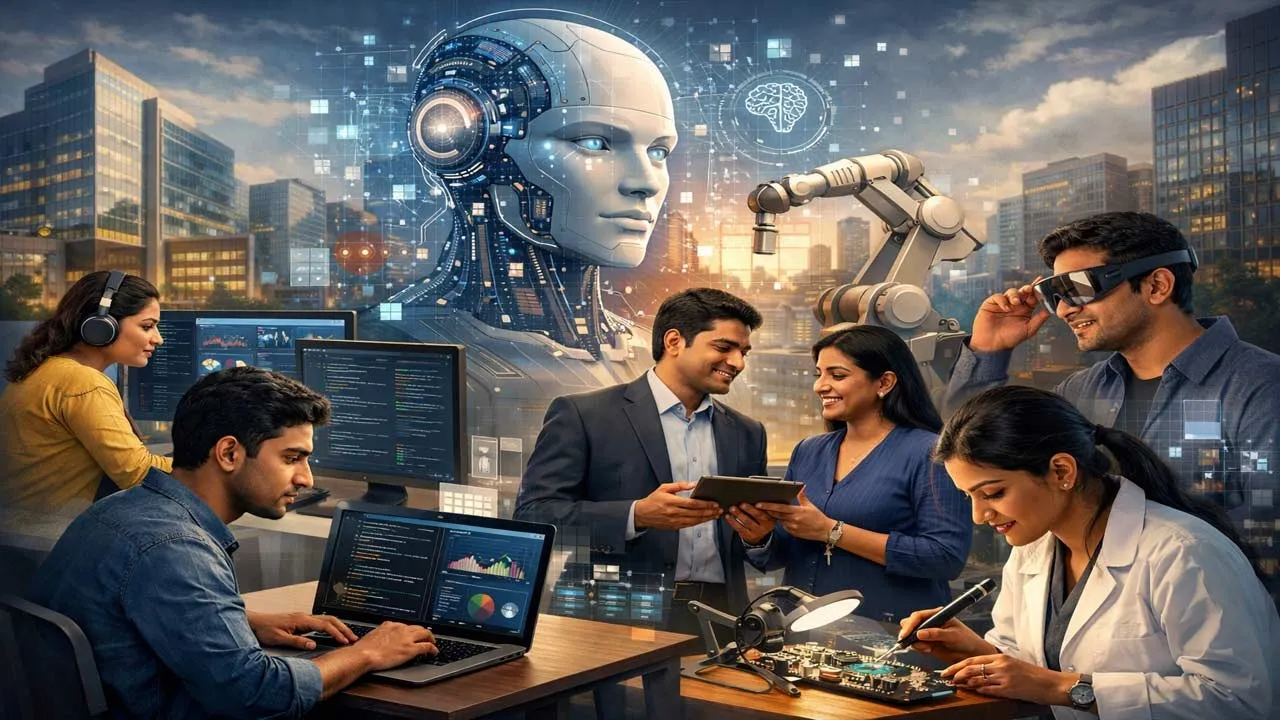
The report found that the introduction of AI has slowed down entry-level talent recruitment in India, while increasing the demand for specialized skills.
The rise of artificial intelligence (AI) is impacting workforce relations in India, leading to a decline in entry-level employment. A recent report released by the Indian Council for International Economic Relations Research (ICRIER) with support from OpenAI highlights these changes in hiring practices and skill demands in the technology sector. According to the report, 63% of companies surveyed are increasingly seeking candidates with specialized knowledge and skills in AI or data analytics, indicating a growing trend toward hybrid skill sets as organizations integrate AI into their operations.
The study, titled “AI and Work: This Time is No Different,” is one of the most thorough analyzes to date of the adoption of generative AI in India. The study was conducted from November 2025 to January 2026, incorporating feedback from 650 IT companies across 10 major Indian cities.
The findings show that while entry-level job opportunities are slowly declining, intermediate and senior-level jobs remain stable. The report argues that this moderation is consistent with broader trends in the IT sector following the COVID-19 pandemic, and that the slowdown is not solely due to the influx of AI technologies.
Interestingly, there has been a significant increase in demand for occupations considered to be highly susceptible to disruption by AI, such as software developers and database administrators. This suggests that AI is acting as a productivity enhancer rather than a direct replacement for these jobs.
According to the report, the sectors most impacted by AI have shown significant productivity gains. Specifically, companies report that the number of departments achieving high output while maintaining or reducing team size far exceeds the number of departments facing productivity declines, by a ratio of approximately 3.5 to 1. Furthermore, approximately one-third of these sectors have seen both increased productivity and reduced operating costs, indicating that AI is helping companies effectively scale production without the need for layoffs.
Despite these changes, training efforts to support AI integration within enterprises are limited. Just over half of the companies surveyed reported actively pursuing AI training and awareness programs, and an additional 38% have plans to implement such initiatives in the near future. Still, the actual scope of training is modest, with only a few companies saying more than half of their employees have received AI-related training in the past year. Key challenges identified include a lack of qualified trainers, high training costs, concerns about ethical implications, and overall organizational readiness to adapt to the rapid changes brought about by advances in AI.
As companies respond to the evolving landscape shaped by AI, the implications for employee recruitment and skills development are becoming increasingly clear, highlighting the need for both companies and employees to adapt to changing labor market demands.


