A new and unique ASCII video streaming solution has been released under the MIT license. The ASCILINE Engine by YusufB5 is touted as a “high-performance, real-time ASCII video rendering engine” that can be used to broadcast “unblockable video streams.” Examples of its functionality are provided in the linked GitHub repository and in social media posts by the developer, such as the one embedded below. It’s also sparked a bit of controversy over concerns that it might show ads that can’t be blocked.
We’ve built a video stream that can’t be blocked. Render 360p at 30 FPS using pure text instead of tags. From r/SideProject
Perusing the examples, ASCILINE does seem to have higher fidelity than previous videos for ASCII streamers, some of which have a surprisingly long history dating back to the 90s. This software does a pretty decent job of creating color text-based videos from sources. The developer says this technique uses Mode 3, uses a 32K color palette, and can output at 30 FPS. However, classic mono ASCII is also a rendering option.
The most impressive is the so-called real-time pixel streaming. GitHub explains that the technology uses Mode 5, which “replaces text with colored blocks to approximate 360p video quality.” In fact, the small video embedded in the page looks indistinguishable from the source MP4. However, I think the true blockiness becomes immediately apparent when rendering in a larger window.

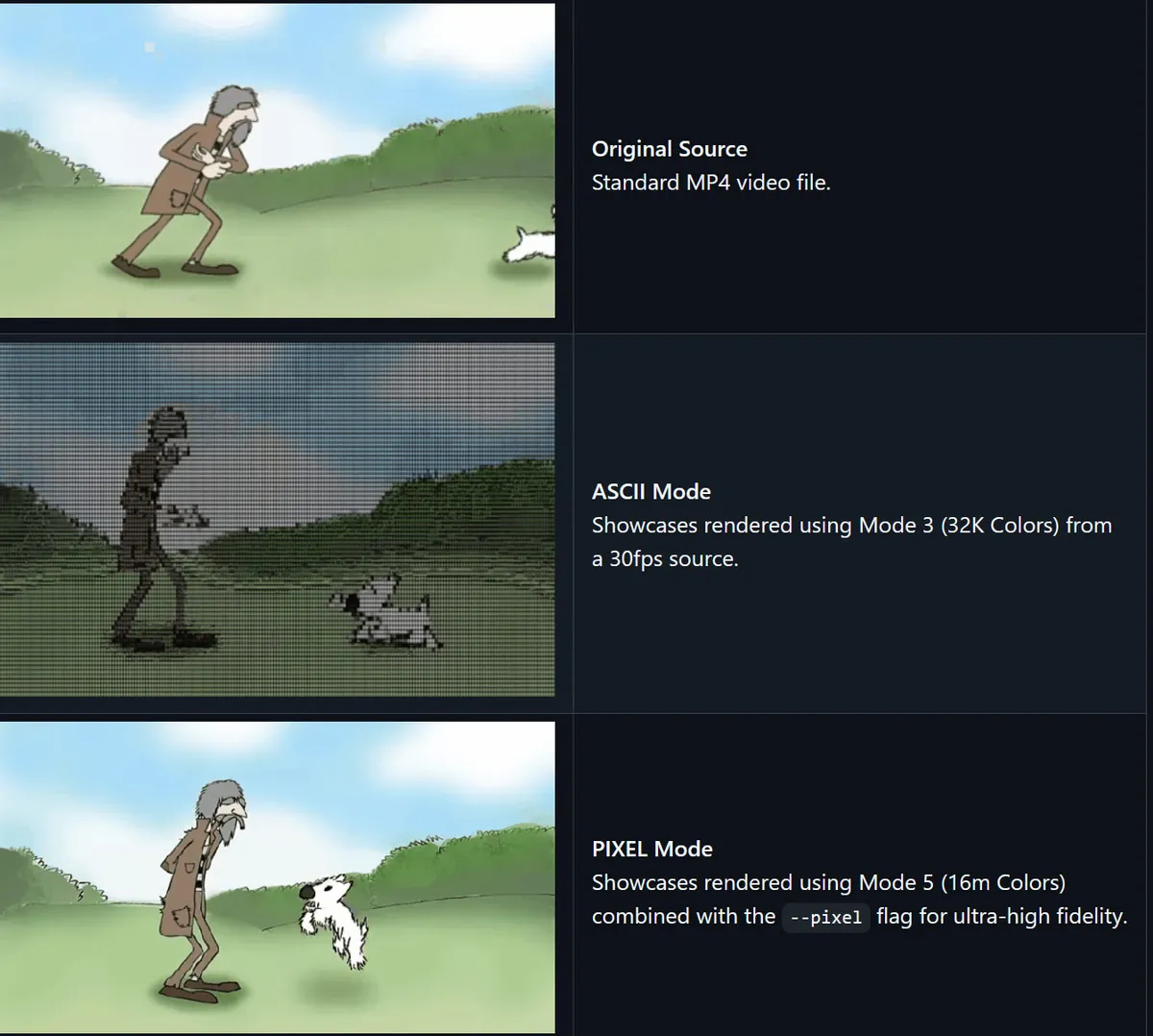
In a mission statement of sorts, YusufB5 says ASCILINE’s core purpose is to “turn the web into a highly dynamic and interactive typographic canvas. By mapping pixels to text-based representations, we unlock new possibilities for web media distribution.” Developers are simplifying this lofty vision by touting ASCILINE Engine on social media as a tool that allows you to build “unblockable video streams, rendering 360p at 30 FPS using pure text.”
The “unblockable” claim has received a lot of backlash through various social media channels. For example, an ad blocker set to element zapper mode can immediately remove the HTML5 canvas on which ASCII video is rendered. This is just one option.
But most commenters fear those who want to use this “unblockable” technology to serve even more ads to the public. YusufB5 points out the “strict no-ads clause to the MIT License to ensure it cannot be abused to force people to see unskippable ads.” This may work for registered companies, but malicious users don’t care about such rules.
Beyond the controversy over unblockability and ad abuse, ASCILINE has some more interesting additions and features that set it apart from the old guard of ASCII video. The ability to apply real-time CSS filters to video streams may seem appealing in some cases. The generated ASCII video is also believed to “serve as the perfect bridge to AI.” Therefore, a lightweight LLM can be used to process semantic video summaries. The engine’s “ultra-low bandwidth and IoT compatibility” may also appeal to some, as it can stream at just a few kilobytes per frame. Sending only the characters that change (delta frames) and applying GZIP compression can be helpful in this regard.

to follow Tom’s Hardware on Google Newsor Add us as a preferred sourceget the latest news, analysis, and reviews in your feed.