Apple’s ninth RAW processing engine, included in OS 27 software, integrates machine learning denoising during the demosaicing stage to deliver sharper results across Apple hardware and hundreds of supported cameras.
As is often the case at WWDC events, some of Apple’s technically interesting announcements about upcoming software will take place away from the main stage. After all, there are over 250 software changes across various platforms, and there’s only enough time to outline the major changes.
But a video published from an Apple developer account titled “Enhanced RAW Image Processing with Core Image” is particularly interesting, as it describes RAW 9, the ninth iteration of Apple’s Core Image RAW processing pipeline. And when the company calls this its “biggest update yet,” it doesn’t seem to be underestimating it.
Machine learning denoising
as surfaced by DP reviewThe core is machine learning-powered denoising that is integrated directly into the demosaic step, rather than being applied later as a separate pass. Apple says this provides sharper overall results and is a dramatic improvement when dealing with very noisy files.
This is a big step forward considering the iPhone will now have a relatively small sensor. But RAW 9 isn’t limited to Apple hardware. The company says it currently supports RAW files from 784 cameras from all major pro vendors (the demo included a Sony Alpha 7 II, Canon 5D Mark III, and Fujifilm X-T5). More will be added in the future.
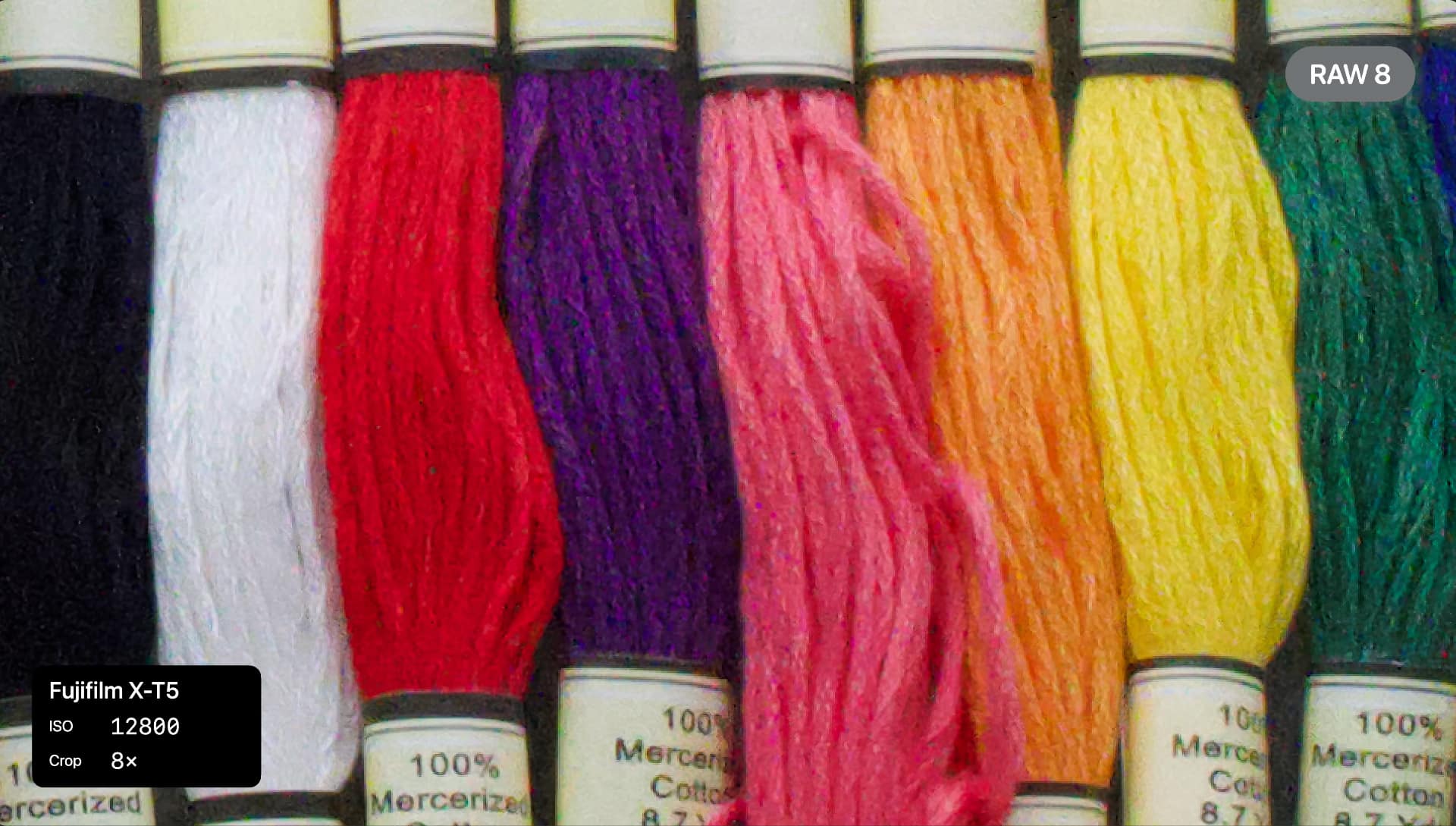
There is a clear quality difference between this RAW 8 image and the RAW 9 image at the top of the article.
AI-assisted noise reduction is becoming increasingly popular. Professional tools like Photoshop, DxO, and Topaz Labs all rely heavily on it. So it’s a logical step for Apple to build this into the core pipeline, but it offers limited controls for users, especially in its current iteration. Apps can expose a luminance noise reduction slider, but little else. Additionally, the Color Noise Reduction slider has been deprecated, as CoreML models automatically handle chroma noise.
Scheduled to be introduced this fall
RAW 9 will ship with iOS 27, iPadOS 27, visionOS 27, and macOS 27 “Golden Gate” this fall, and Apple’s own apps will automatically use RAW 9. The new engine can also be retroactively applied to existing archives, so those with large libraries may be happy to continue participating long after the software is released.
Third-party developers can opt in, but this is not the default. This likely reflects higher processing demands compared to RAW 8. It is unlikely that Adobe or other vendors who have already developed custom RAW engines will adopt this. However, the growing number of indie image editing apps on the Apple platform can achieve vastly improved output with minimal additional development effort.