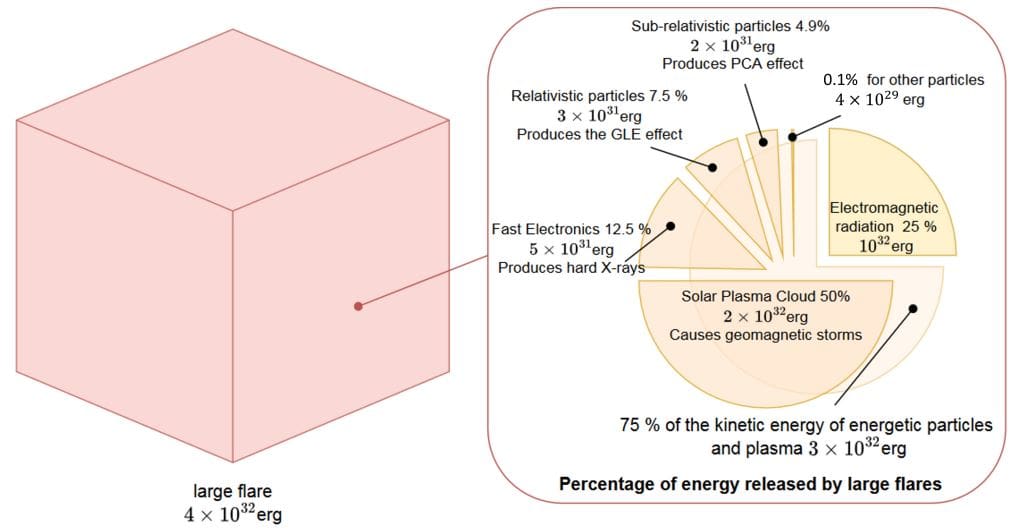
Solar flares are a significant challenge for space weather forecasting and can disrupt satellites, communications, and power grids on Earth. Mingfu Shao, Suo Liu, and Haiqing Xu, along with colleagues, provide a comprehensive review of the latest advances in predicting these powerful eruptions from the Sun. Their research tracks the evolution of predictive techniques from early statistical methods to cutting-edge machine learning and deep learning approaches, including the recent emergence of multimodal large-scale models. By evaluating the performance of currently operational flare prediction platforms, the team will identify critical limitations and provide valuable insights to guide future improvements in system design and optimization, ultimately enhancing our ability to protect critical technologies in space and on the ground.
Solar flare prediction, from patterns to models
Researchers are moving away from traditional methods to advanced machine learning techniques, especially basic models, to improve solar flare predictions. Early approaches relied on classifying active regions based on sunspot morphology and magnetic field properties, but these methods often suffered from accuracy challenges and required significant expertise. Currently, deep learning models such as long short-term memory networks, convolutional neural networks, and transformers are being employed to analyze data from missions such as the Solar Dynamics Observatory and the Advanced Space Solar Observatory. Combining multiple deep learning models to create interpretable models is also being considered.
Inspired by large-scale language models, scientists are developing fundamental models of solar physics, pre-training them on vast amounts of solar data, and fine-tuning them for tasks such as flare prediction. Key examples include Surya, a model specifically designed for solar physics, and models trained on data from the Solar Dynamics Observatory. Researchers are also investigating reinforcement learning and developing multimodal models that can process images and time series data. The growing movement toward open source foundational models promises to foster collaboration, accelerate research, improve space weather predictions, and reduce impacts on Earth and space technology.
Long-term flare prediction using magnetic fields and X-rays
This research pioneers a comprehensive approach to solar flare prediction that leverages data from ground-based telescopes and space satellites. The researchers analyzed nearly four solar cycles of vector magnetic field observations collected by telescopes in China and established an important historical dataset. To complement these observations, the team incorporated data from the GOES satellite and looked at X-ray flux measured at one-minute intervals. They carefully examined data from the GOES-18 and GOES-19 X-ray sensors and classified flare levels based on peak luminous flux. The researchers also used data from the Solar and Heliospheric Observatory, the Solar Dynamics Observatory, and the Advanced Space Solar Observatory, which provided extensive data on the Sun’s magnetic field and active regions. The Michelson Doppler Imager and the HelioSeismic Magnetic Imager provided comprehensive, high-resolution magnetograms. While acknowledging the limitations of GOES data, the research team emphasizes that it remains essential when integrated with other observational datasets.
Surya model accurately predicts solar flares
Recent research shows that advances in data processing and advanced machine learning techniques have led to significant advances in solar flare prediction. Researchers have successfully employed multimodal large-scale models, achieving significant improvements in prediction accuracy and paving the way for a “one model, multiple tasks” framework in solar physics. Pretrained on high-resolution solar images, the Surya model reached a True Skill Statistic of 0.436, outperforming established baselines such as AlexNet and ResNet50. A comprehensive evaluation of operational flare prediction systems such as DeepSun, DeepFlareNet, SolarFlareNet, MViT, and NOAA/CMCC systems reveals varying levels of performance.
SolarFlareNet, a Transformer-based model, achieved a True Skill Statistic of greater than 0.83 for 24-hour prediction of C-class flares and above, outperforming traditional models. Further progress was made with the MViT model, achieving a true skill statistic of 0.74 for M-class flare prediction and above. This study highlights the increasing sophistication of data analysis applied to solar flare predictions due to advances in space observations and data processing capabilities. This study details the historical evolution of data sources used for flare prediction, starting with ground-based telescope observations and moving to more comprehensive data provided by space satellites such as the GOES series. Although ground data provides important initial statistical information, its use is limited by factors such as equipment age and atmospheric conditions. Further improvements in data quality and model development are required to increase the accuracy and reliability of operational flare prediction systems.