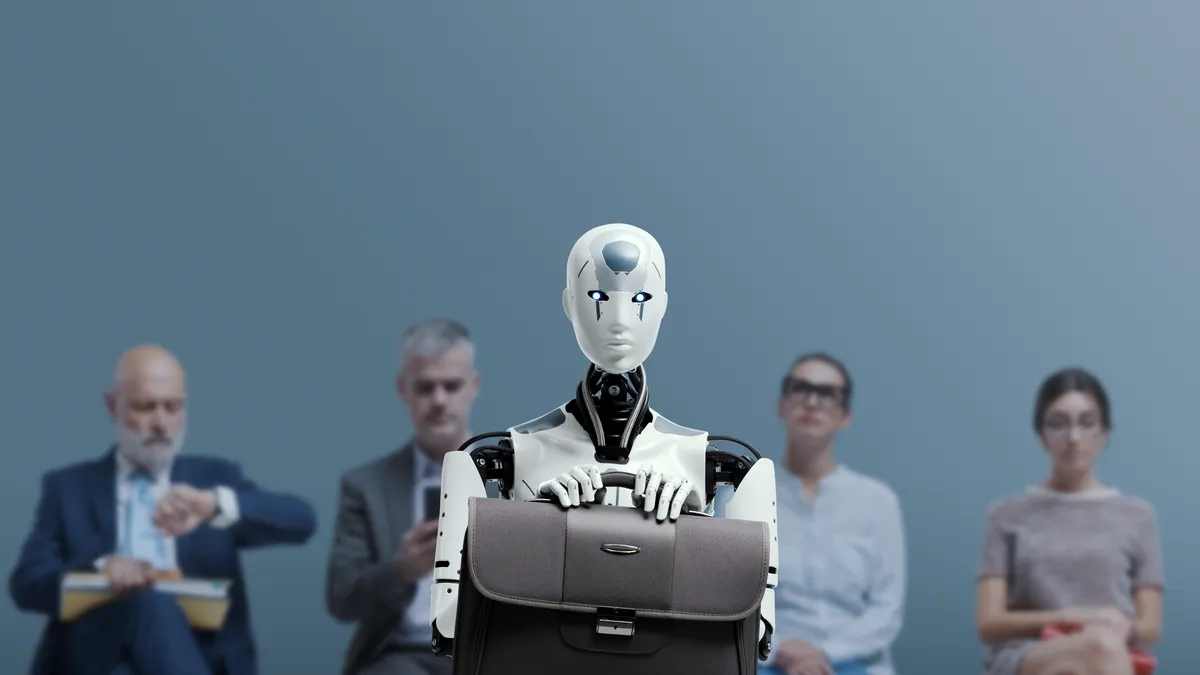
The human factor is not ignored. It’s being promoted. The only question is whether we are ready for the challenge.
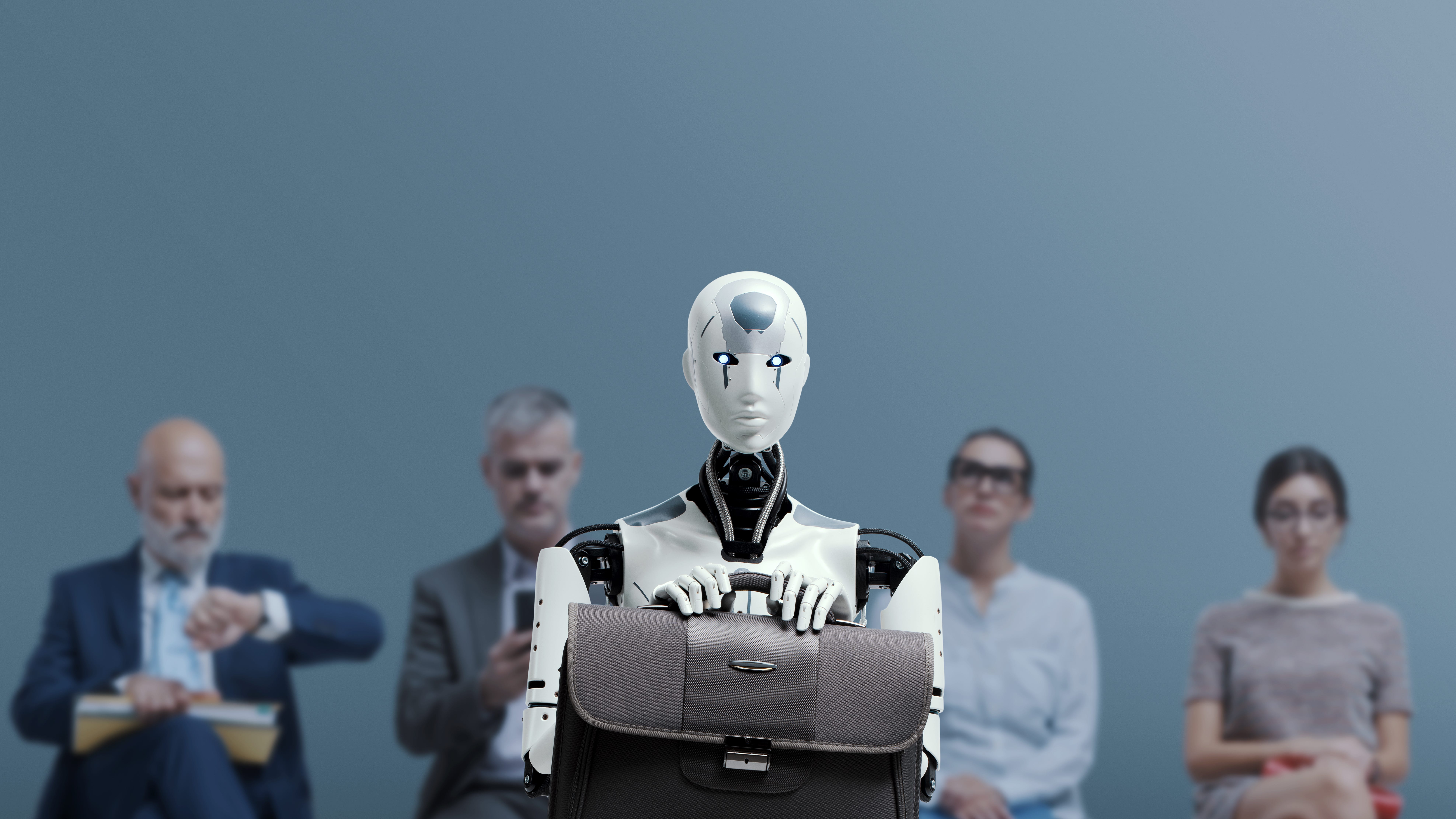

AI is already disrupting the job market
Recruiters value soft skills as a way for employees to prove their worth to the company.
If you’ve been staring at the horizon for the past year wondering if a chrome-plated Terminator was coming to your stateroom, you can probably hold your breath. The rise of the machine is less like a robot of death and more like an administrative assistant diligently polishing your email.
The Winter 2026 Tennessee Business Leader Survey, released by the Boyd Center for Business and Economic Research at the University of Tennessee, finds that people creating apocalyptic panic are misplaced. Nearly 63% of Tennessee employers reported using AI to supplement rather than replace employees. Only about 10% said they had fewer employees because of early technology.
AI is not the executioner. A new exoskeleton.
The real threat to your career is not a line of code. It’s about humans using that code to ease their daily chores and double or triple their work output. We are entering an era of AI-enhanced work, and the Centaur model, which is half human thoughtfulness and half machine speed, is the only way to succeed.
The role of humans in the AI era
For decades, we’ve measured hard work by the amount of work done. How many spreadsheets did you fill out? How many emails did you draft? How many customer touchpoints did you have? How many routine reports have you created?
This version of the work is dying out, and honestly, we should be happy to see it go. Those tasks will be solely the domain of AI. Instead of panicking when your job disappears, imagine what you can do with AI to fill the gaps in your professional skill set.
Data from Coursera’s 2026 Job Skills Report shows a 185% year-over-year increase in demand for critical thinking skills. why? Because AI can generate a 40-page marketing plan in 3 seconds. However, you don’t know if that plan aligns with the company’s mission or if it’s hallucinating a customer base that doesn’t exist.
The machine requires a screwdriver. Quality assurance is required. The most important thing is that we humans need perception, the actual thinking part that determines what we need and what we want to achieve. As the cost of knowing and acting plummets, the value of thinking and relating soars.
Business leaders are already feeling this shift. Despite the adoption of AI, nearly half of those surveyed still report an insufficient supply of properly trained workers. They’re not just looking for people who can code. They are looking for initiative and technical skills that will enable workers to drive these AI-based tools to meaningful outcomes.
This is where the human factor becomes a competitive advantage. AI cannot take a potential partner to lunch at a butcher shop in Nashville and find out if the company is trustworthy. They are unable to navigate the delicate internal politics of a merger or identify mutually beneficial opportunities that require empathy, trust, and a shared history.
Relationships are now the new currency of business.
In a world where anyone can create a professional-looking email, those who answer the phone or actually show up will rule the market. Once that person learns how to run an AI agent that handles administrative tasks like expense and scheduling, they will spend more time actually driving economic activity.
The dangers of ignoring AI
Of course, there is a cynical side to this optimism. If you refuse to learn the tools, you are choosing to be less efficient. It’s like insisting on using a hand saw when everyone has power tools. You may still be a purist, but you’ll be out of a job before your first board is out.
This economic revolution is likely to be particularly difficult for professionals such as doctors and lawyers who do not realize that the substantial knowledge premium of years of education has disappeared. Adapting to the new reality of AI will prove far less painful than denying its existence or trying to legislate or regulate it to eliminate it.
Boyd Center data suggests that Tennessee outperforms the national economy by being a state of tangible innovation. We don’t just make things. We find ways to build them better.
The future belongs to the expanded. Those who embrace AI as a necessary partner will have more bandwidth to build and foster relationships and solve as-yet-unidentified problems. The human factor is not ignored. It’s being promoted.
The only question is whether we are ready for the challenge.
USA TODAY Network Tennessee columnist Cameron Smith is a recovering political lawyer born in Memphis and raised in Brentwood who is raising four boys with his particularly patient wife Justine in Nolensville, Tennessee. direct anger or agreement smith.david.cameron@gmail.com or @DCameronSmith On Twitter. Agree or disagree? Submit a letter to the editor Letters@tennessean.com