
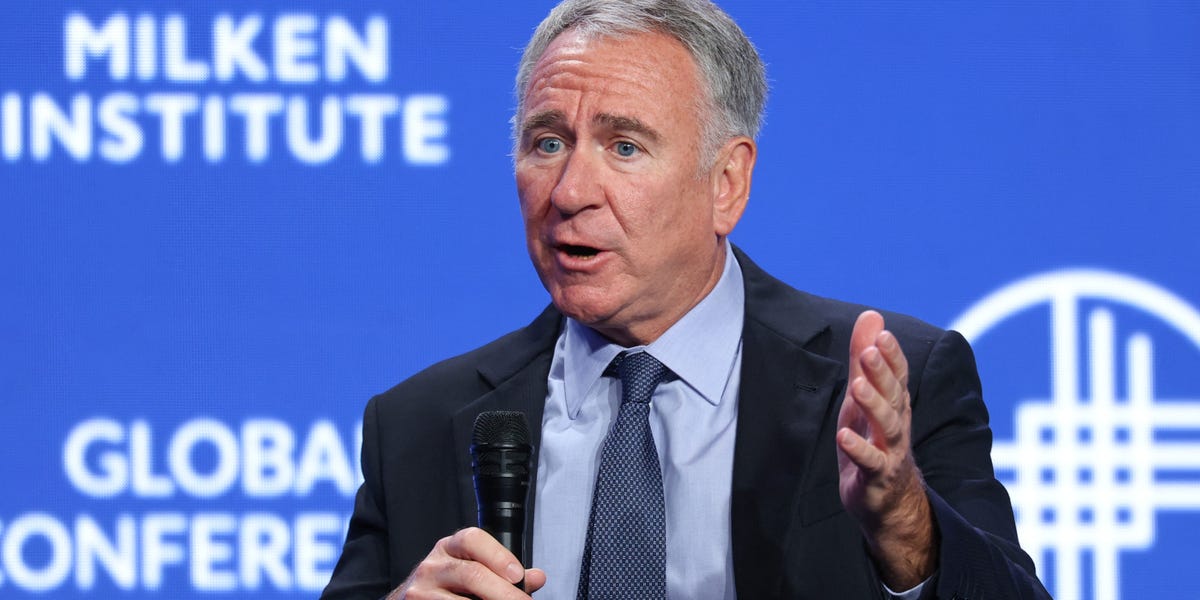
Citadel CEO Ken Griffin has finally joined the AI hype.
While many CEOs have been claiming for years that AI can replace the jobs of many white-collar professionals and are reshaping their companies accordingly, Griffin didn’t stand out.
Earlier this year, during a panel discussion at the World Economic Forum in Davos, the hedge fund billionaire said that AI is great on the surface, but as soon as you dig deeper, “it’s all rubbish.”
Griffin has long been considered one of AI’s most prominent skeptics.
But earlier this month, in a conversation with Stanford Business School professors, Griffin offered a very different take.
“I have to say, I went home one Friday feeling pretty depressed,” Griffin said. “You can see how this is going to have a dramatic impact on society.”
Griffin said AI is “significantly more powerful” than it was nine months ago, allowing hedge funds to “unlock” a broader range of use cases for the technology.
“For the first time, AI is a reality,” he said.
AI is impacting all types of jobs, but its impact is most visible in the technology industry. There, bots like OpenAI’s Codex and Anthropic’s Claude Code do the work of software engineers on vastly compressed timelines. Technology companies like Cloudflare have laid off thousands of employees due to the ability of AI to do the work for them.
The technology is now at a stage where it can perform tasks that were previously limited to highly trained financial professionals, Griffin said.
“Frankly, work that would normally take weeks or months to do with people with master’s degrees or PhDs in finance is now being done by AI agents in hours to days,” Griffin said.
He emphasized that this goes beyond what he called “mid-career white-collar jobs” that are currently being automated by agent AI.
While AI-assisted software engineering has brought productivity gains, “you’re getting 15-20% or 25% gains,” he said, the impact on research is even more shocking.
“It’s really eye-opening to see so much sophisticated research being done by AI engines,” Griffin said. He added that tasks that once took humans years can now be completed in days or weeks.
He said the broader implication is that both businesses and workers need to be more adaptable.
“Career success depends on whether you become a lifelong learner, and AI will make that increasingly important,” Griffin said.