
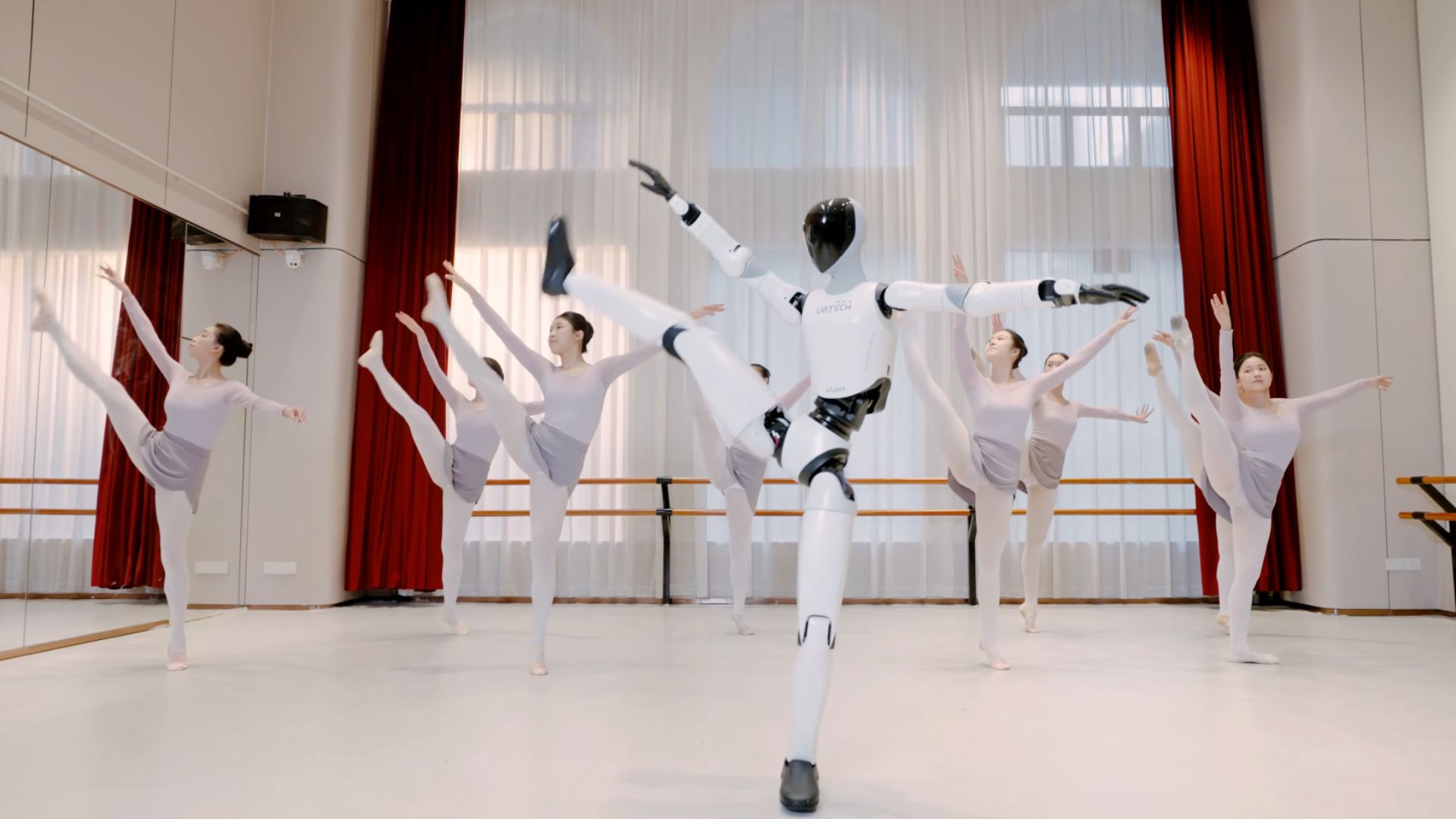
Chinese robotics company UBTECH has unveiled the Walker C1, which performs Swan Lake ballet moves alongside human dancers.
The full-sized humanoid demonstrated advanced balance, precise motion control, and coordinated body movements during live presentations.
Designed for service applications in public environments such as hotels, airports and exhibition halls, Walker C1 highlights UBTECH’s latest developments in humanoid robotics, artificial intelligence and human-like mobility.
Last year, China’s LimX Dynamics unveiled LimX Oli, a life-sized humanoid robot that performs ballet-style dance moves during a live performance art debut.
The future of waltz robots
Due to this achievement, UBTECH has been named the official and exclusive humanoid robot partner of Chain Expo 2026 (China International Supply Chain Expo).
Walker C1, the company’s new generation full-size commercial service humanoid robot, performed a waltz and ballet routine alongside a human dancer during a live demonstration highlighting its precise movement, balance, and coordination.
“This is more than just a dance. It’s a glimpse into the future of intelligent service robotics, where life-sized humanoids work, interact, and move alongside us in perfect harmony. The future of service robotics has never looked more elegant,” the company says in the YouTube video description.
UBTECH has not announced detailed specifications for its new humanoid robot C1. However, it is expected to be similar to the company’s Walker C model, a full-scale electrically powered embodied intelligent humanoid robot designed for commercial environments.
Leveraging UBTECH’s in-house developed large-format interactive model, Walker C supports multilingual interactions in applications such as exhibition halls, office buildings, shopping malls, transportation hubs, and public service areas. It acts as a guide, receptionist, and smart assistant, providing Q&A support, audio broadcasts, and interactive engagement.
The robot features U-SLAM navigation for autonomous route planning, whole-body motion control, and obstacle detection for dynamic environments. It can walk at speeds of up to 6 km (3.7 mph) and perform human-like gestures and dance moves. Additional features include AI-powered multilingual narration, adaptive service response, and human-robot interaction with multiple degrees of freedom. It will be deployed in real-world environments such as the 2025 Osaka Expo, where it will act as an intelligent tour guide in the China pavilion.
Expansion of humanoid robots
Last year, UBTECH announced the rollout of its 1,000th Walker S2 humanoid robot from its Liuzhou manufacturing facility, a significant milestone in its production scale-up. The company said more than 500 Walker S2 units have already been deployed and are operating in multiple real-world applications.
This milestone reflects the transition from prototype development of humanoid robots to large-scale commercial deployment. UBTECH also outlined plans to significantly expand production capacity, with a goal of up to 10,000 robots per year by 2026, as demand for humanoid robots for industrial and service applications continues to grow.
UBTECH reported that it has secured orders worth approximately 800 million yuan (approximately $113 million) in 2025, ranging from customized robotic systems to large-scale implementations. One of September’s major contracts was for a well-known Chinese company to award 250 million yuan ($35 million) for cutting-edge robotic solutions. Additional commitments include 159 million yuan ($22.5 million) from customers in Sichuan province, 126 million yuan ($17.9 million) from projects in Guangxi, as well as more than 100 million yuan ($14.2 million) from Midea Motors in Hubei province.
According to the company, demand is largely driven by the automotive sector, with companies such as BYD, Geely Automobile, FAW Volkswagen, Dongfeng Liuzhou Motor and Foxconn employing humanoid robots for manufacturing and logistics tasks. These deployments are focused on enabling continuous, less-supervised operations in factories and warehouses, and early trials have shown stable performance in real-world industrial environments.
Recently, UBTECH signed a strategic cooperation agreement with Siemens Digital Industries Software to accelerate the manufacturing of large-scale humanoid robots and achieve the goal of annual production capacity of 10,000 units by 2026. The partnership, signed in Shenzhen on March 16, combines UBTECH’s humanoid robot technology with Siemens’ industrial digitization and smart manufacturing expertise as the demand for industrial humanoid robots continues to increase.


