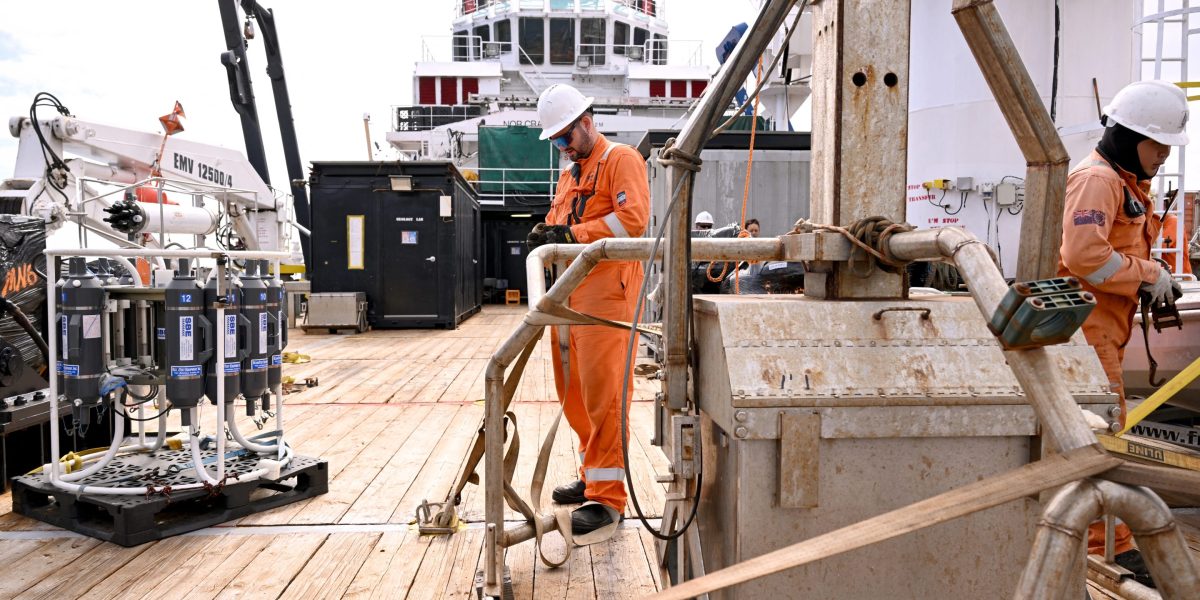
The next frontier in the AI arms race may lie miles beneath the surface of the Pacific Ocean.
Minerals like copper and cobalt are in high demand thanks to a $700 billion AI infrastructure. For example, Microsoft’s 80-megawatt Chicago site required 2,100 tons of copper alone. Batteries that power data centers require nickel, cobalt, and lithium. Rare earths are essential for powering the server fans and hard drive magnets that keep AI systems running.
The problem is that most of these minerals are mined or processed by China, the United States’ main geopolitical competitor. According to the International Energy Agency, the country is the leading refiner of 19 of the 20 most important strategic minerals, with an average market share of 70%.
Without new mineral resources, the United States faces a precarious dependence on China for the raw materials that support its technological and economic future. If left unaddressed, this vulnerability could give the Chinese government enormous influence over American industry for decades to come.
The Trump administration has taken note of this resource dilemma. In 2025, President Donald Trump signed an executive order directing the Department of Commerce and other agencies to promote the exploration and development of deep-sea resources.
Several U.S. companies are currently planning to extract polymetallic nodules (PMNs), mineral-rich rock formations that exist free of accretion in deep-sea plains on the ocean floor.
Among them is American Ocean Minerals, which is in the midst of a $1 billion merger with Odyssey Marine Exploration and named former Rio Tinto CEO Tom Albanese its successor.
American Ocean Minerals has investment interests in two companies, Ocean Minerals and CIC Ocean Research, both of which have licenses to conduct research in the exclusive economic zone around the Cook Islands in the South Pacific.
“This could be a property that’s been around for hundreds of years,” Albanese said. luck PMN size in one of the Cook Islands zones.
Big bet on potato-sized mineral balls
PMNs are potato-sized balls that form over millions of years as a layer of metal oxide slowly builds up around objects on the ocean floor, such as shark teeth or shell fragments.
It is primarily composed of manganese and iron, and also contains economically valuable metals such as nickel, cobalt, copper, and rare earth elements.
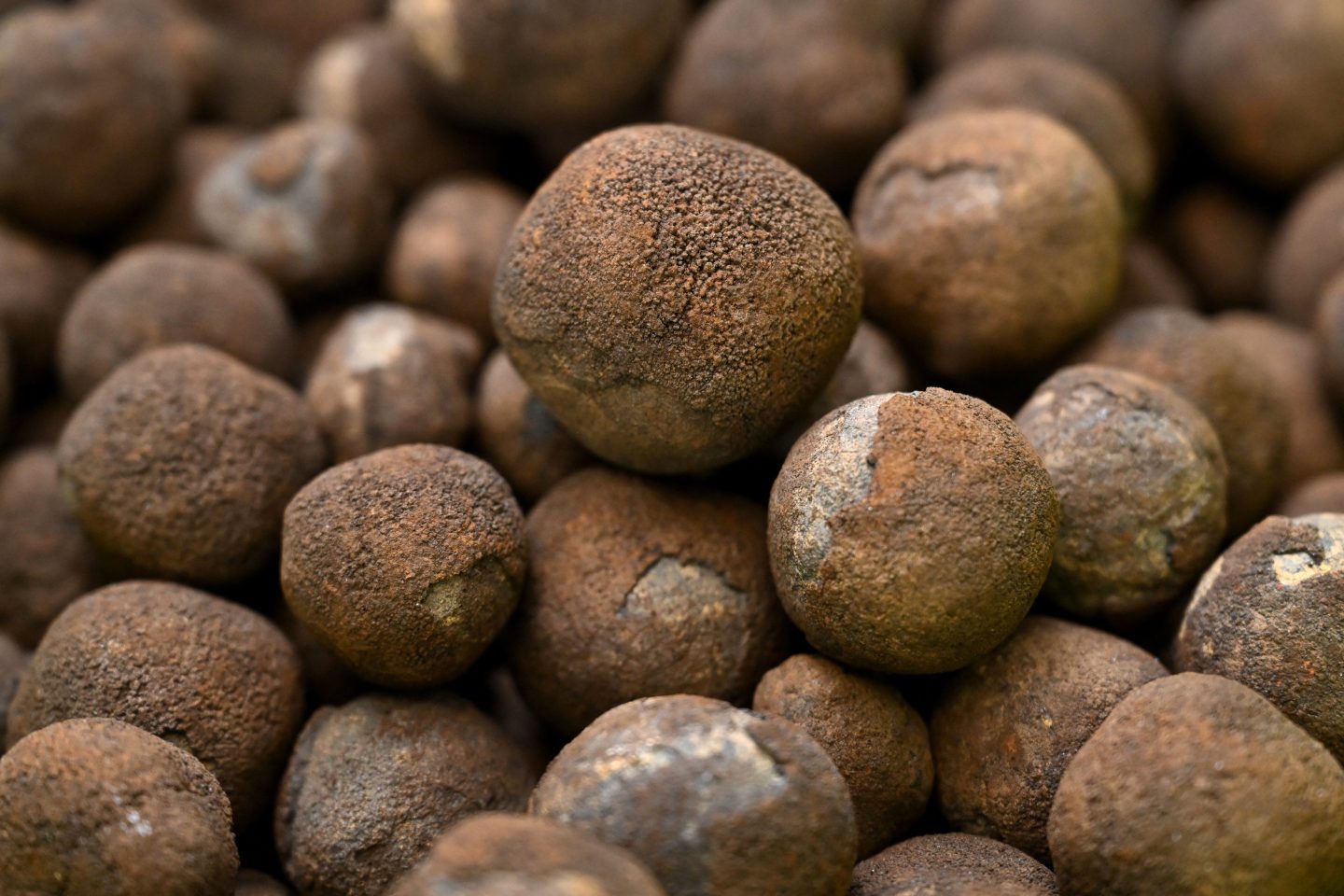
William West/AFP via Getty Images
The Cook Islands EEZ is more than 770,000 square miles wide, nearly five times the size of California.
“You can imagine it’s dotted with nodules,” Albanese said.
The Cook Islands Seabed Minerals Authority, which ensures the responsible management of the country’s seabed minerals, said the region holds 6.7 billion tonnes of PMN. This includes an estimated 20 million tonnes of cobalt, about 100 times the annual amount from the Democratic Republic of the Congo, the world’s largest producer, with China controlling most of the production.
Environmental, governance and scientific considerations
American Ocean Minerals has invested in two companies that hold exploration licenses within the Cook Islands EEZ, but commercial mining is still a long way off. In fact, there are currently no deep-sea mining activities taking place anywhere in the world. These minerals are rather extracted from terrestrial sources.
The International Seabed Authority, which regulates mineral-related activities in the ocean, has not yet approved any companies to extract minerals commercially, and a meeting in March ended in a deadlock.
And a growing coalition of 40 countries now supports a moratorium on deep sea mining, raising environmental, governance and scientific concerns. Some countries, including some island nations in the South Pacific, are calling for a complete ban.
The ocean floor is extremely rich in biodiversity. The Ocean Exploration Trust, a non-profit ocean discovery organization, led a seabed survey around the Cook Islands last year, discovering “so many creatures we know nothing about.” Deep sea mining will probably destroy life in the sea.
Another report from the American Museum of Natural History estimates that animal populations in the Clarion-Clipperton Zone will decline by 37% as a result of deep-sea mining. This region is also in the Pacific region, which is said to be rich in PMN.
Still, proponents argue that deep-sea mining may be less damaging than land-based mining, which contributes to large-scale habitat destruction, biodiversity loss and toxic contamination of water sources. Additionally, many operations, such as those in the Democratic Republic of the Congo, rely on forced labor.
Demand for minerals is expected to continue to increase. The International Energy Agency estimates that demand for nickel, cobalt and rare earth elements could more than double by 2040. For Albanians, the lack of mineral resource diversification will remain a key geopolitical tension unless new independent resources are explored.
“While we understand the benefits of continuing to engage with China, we also recognize the risks of becoming overly dependent on Chinese industry in some critical supply chains,” he said.