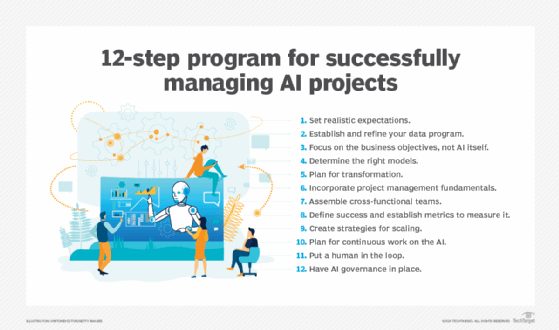
Because AI systems do more than just generate content, companies are finding it harder to control AI models once they’re deployed than to build them.
AI agents can get stuck in a loop. Errors can move through the workflow before anyone discovers them. And when something goes wrong, companies have a hard time determining exactly what happened and why. As a result, attention is increasingly shifting to what industry observers refer to as the AI control layer. This includes the orchestration, monitoring, evaluation, governance, authority, audit responsibility, accountability, escalation paths, and human oversight required to make AI systems operate safely and effectively.
“The hardest part of enterprise AI is no longer just selecting and building models,” said Judah Phillips, chief AI and product officer at Market Holdings/Squark AI. “The real challenge is everything that happens after a model is deployed in a business: what data it touches, what actions it can take, who is held accountable if the model is wrong, and how the organization proves that the model created value.”
it’s all about control
Towards greater autonomy, AI systems must earn increasingly higher levels of trust. “It starts with assistance, moves to recommendations, then approved actions, and only then moves to limited autonomy where the system has demonstrated reliability, accountability and economic value,” Phillips explained.
When AI is introduced into business processes, the challenge shifts from generating output to managing decision-making, workflow, and accountability. The question is no longer whether a model can derive an answer, but whether an enterprise can understand, manage, and control the behavior of AI across its systems.
Creating a human approval factory becomes an expensive bottleneck as humans spend time reviewing, escalating, and remediating agents.
tori pollmanGartner Vice President Analyst
Tori Pohlman, deputy analyst at Gartner, said many companies underestimate the amount of workflow redesign required before autonomous systems can operate with minimal human involvement. Regulatory requirements, decision-making structures, and exception handling processes make it difficult to completely exclude humans.
“Building a human approval factory has become an expensive bottleneck because humans spend time reviewing, escalating, and remediating agents instead of doing more valuable work,” Pohlman said. As a result, companies may struggle to realize the full value of autonomous systems.
As AI systems interact with multiple applications, tools, and data sources, governance extends beyond model performance to visibility, responsibility, and control. “To unlock real value, companies need to break down workflows, set decision rights, define supervisor roles, and make agents visible and auditable in systems of record,” Pohlman advised.
The control layer is critical to successfully managing AI deployments.
Infrastructure is key to performance and accountability
Companies have been focusing on the capabilities of AI models for years, but this model “has never been the hard part,” said Lexi Reese, CEO and co-founder of AI workflow platform provider Lanai and former Google vice president. “The hard part is the moment when AI touches real-world organizations, and most organizations are completely unprepared for that moment.”
Reese said that once AI is introduced into production, companies can struggle with management and operational challenges. “The model is working, but what is not working is the management team,” she explained. “The question is no longer, ‘Does AI work?’ The real question now is, ‘How does it know, for whom, and on what basis?’”
According to Reese, many companies lack the infrastructure needed to understand what AI systems are doing once they are in production and how their activities contribute to business outcomes. “Companies are using AI like a workforce, but doing accounting like software,” she pointed out.
There is no item related to AI labor in the income statement. There is no box for agents in the org chart. There is no column for supervised mechanical labor in the workforce plan.
Lexi ReeseLanai CEO and Co-Founder
Companies may know how much they are spending on AI tools, but they often lack clear mechanisms to determine what those systems are producing, who owns the results, and whether the technology is creating measurable business value. “Profit and Loss Statement” [profit and loss statement] “There is no room on the organizational chart to put AI workers,” Reese said. There is no section in the manpower plan for supervised machine labor. ”
Companies struggle to answer fundamental questions about AI performance and ownership once systems are deployed. “The real issue for enterprise AI in 2026 will not be model performance,” Reese says. “It’s the missing infrastructure that allows AI employees to know what they’re doing, who owns it, and whether they’re actually creating value.”
Business and technology leaders are beginning to realize that successful AI implementation depends as much on organizational processes and communications as the underlying technology. “The biggest misconception we see right now is that AI can bypass organizational walls,” said Randall Hunt, CTO of cloud-native service provider Caylent. “Most of the challenges faced during implementation are communication and process barriers rather than technical barriers.”
Before deploying an AI model, establish clear ownership, redesign processes, define decision rights, and build the controls needed to safely scale autonomous systems. “The winners will be the organizations that treat AI like an operational capability rather than a tool,” Phillips said.
Liz Hughes is an award-winning editor and writer covering AI and emerging technologies and a former magazine editor. AI business and Today’s IoT world.